

What if the best first step after grooming isn’t reaching for a soothing product, but calmly looking at your dog’s skin? A little redness can be worrying, especially when you’re unsure whether it’s mild irritation or something more serious. A therapeutic mud bath for dogs Lisle pet parents can book at Bohemian Spaw is a grooming service, not a remedy for razor burn, so it’s important to respond to irritation with care.
If your dog’s skin looks uncomfortable after a trim, you’ll want to know what’s safe to do at home and when to call a veterinarian. This guide covers gentle first steps for mild irritation, signs such as swelling, open sores, or discharge that call for prompt veterinary attention, and ways to make future grooming conversations more useful. Sharing skin sensitivities and grooming history can help you discuss care that suits your companion. A calm, observant approach helps you decide what to do next without guessing.
Key Takeaways
- “Razor burn” describes irritation; it is not a confirmed diagnosis. Notice changes in redness, sensitivity, or licking.
- For mild irritation, keep care gentle and discourage licking. Avoid scrubbing, shaving the area, or applying human products without veterinary guidance.
- Worsening discomfort and open sores are among the changes that call for veterinary advice.
- For the next appointment, share your dog’s grooming history, skin sensitivities, and any veterinary advice. Discuss coat condition and trim length with the groomer.
- A therapeutic mud bath for dogs Lisle owners book is a grooming treatment, while medical questions about irritated skin belong with a veterinarian.
Dog razor burn after grooming: what the irritation may look and feel like
After a close trim, you may notice a patch of pink skin or your dog suddenly licking a freshly groomed area. “Razor burn” is a descriptive term for irritation that appears after shaving or clipping, not a confirmed veterinary diagnosis. The timing is useful to note, but it cannot tell you exactly what caused the skin change.
What signs might owners notice after a close trim?
Look gently, without rubbing or stretching the skin. Signs may include redness, tenderness when touched, scratching, or repeated licking of one spot. Note where the change is, whether it seems to be spreading, and whether your dog’s behavior has changed. Coat type and condition, skin sensitivity, and previous grooming experiences can all affect what you notice after a trim.
Make a brief note of when you first saw the irritation and which areas are affected. A clear photo in good light can help you compare the area later and describe the change to your veterinarian. If your dog has a dense double coat, double-coat grooming considerations can help you prepare for a more informed conversation about coat care and trim preferences.
Why does timing alone not prove the cause?
Skin changes noticed after grooming may be related to the appointment, but they can also have other causes. Parasites, allergies, and infections can cause irritation too, and a veterinarian is the right person to assess those possibilities. A rash appearing after an appointment establishes a sequence, not a diagnosis. Avoid assuming clippers are responsible or trying to treat an unknown condition yourself.
Dermatitis is a broad term for skin inflammation, not one specific cause or appearance. The overview of dermatitis in dogs can offer context, but it cannot identify what is happening on your dog’s skin. A veterinary assessment is needed to determine whether redness or discomfort reflects a diagnosed skin condition. A groomer can share observations about the appointment, but does not diagnose medical problems.
Pay attention to the pattern as well as the color. Is your dog licking one small patch, or are several areas affected? Did the redness appear soon after the trim, or did you notice it later? Those details can help your veterinarian understand the timeline without turning a guess into a conclusion. If the area becomes more uncomfortable or your dog seems unwell, prioritize veterinary guidance rather than relying on a grooming treatment.
A therapeutic mud bath for dogs Lisle owners can book at Bohemian Spaw is a grooming service, not a way to diagnose or treat razor burn. Keep medical concerns with your veterinarian and discuss grooming preferences with your groomer. That distinction makes the next step clearer for you and your companion.
How to care for mild grooming irritation at home
If your dog has a small area of mild irritation but is otherwise comfortable, keep care quiet and simple. Don’t scrub, shave, or repeatedly handle the spot; extra friction can make a sensitive area more uncomfortable. Watch your dog’s behavior and the skin’s appearance. If you’re unsure what you’re seeing or it gets worse, contact a veterinarian for advice.
What can you do during the first few hours?
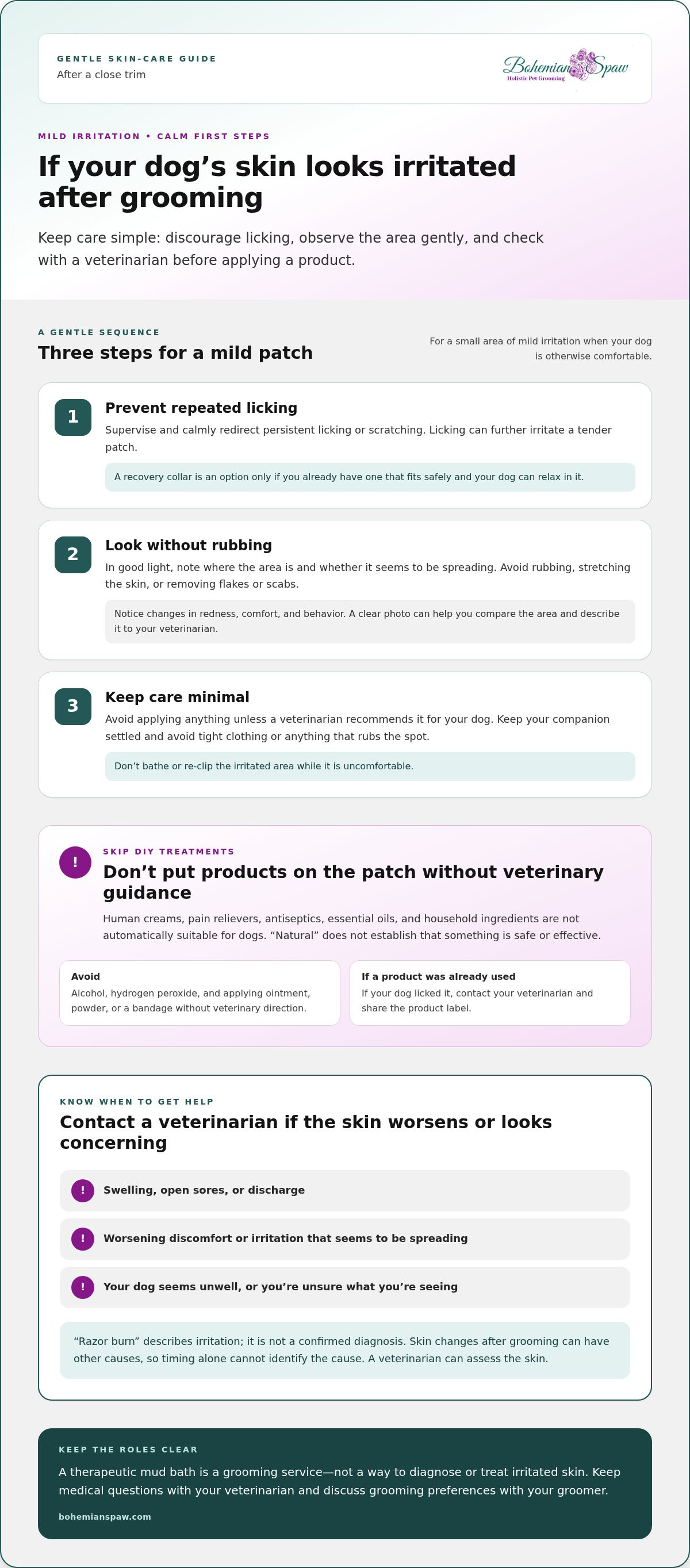
Help your dog leave the area alone. Calmly redirect licking or scratching, and use a recovery collar only if you already have one that fits safely and your dog can relax in it. Keep your companion settled, avoid tight clothing or anything that rubs the spot, and don’t bathe or re-clip the area while it’s irritated.
Use this gentle sequence:
- Prevent repeated licking. Supervise your dog and redirect persistent attention to the skin. Licking can further irritate a tender patch.
- Look without rubbing. In good light, note the location and size of the affected area. Don’t pull at the skin or try to remove flakes or scabs.
- Keep care minimal. Avoid applying anything unless a veterinarian recommends it for your dog. Record changes in redness, comfort, and behavior so you can describe them accurately.
Keep first steps simple: limit licking, avoid friction, observe the skin, and ask a veterinarian before applying a product. Texas A&M’s overview of common canine skin irritations explains why similar-looking changes can have different causes and may need veterinary assessment. If the area becomes more painful or worsens, don’t rely on home care alone.
Which home remedies and products should you avoid?
Skip human creams, pain relievers, antiseptics, and other medications unless your veterinarian specifically recommends them. A product made for people isn’t automatically suitable for a dog’s skin, and licking can expose your pet to something never intended to be swallowed. Avoid essential oils and household ingredients too. “Natural” does not establish that a substance is safe or effective for your dog.
Don’t use alcohol or hydrogen peroxide, and resist covering the patch with ointment, powder, or a bandage without veterinary direction. These approaches may irritate the area, be licked off, or make it harder to monitor what’s happening. If you’ve already applied a product and your dog has licked it, contact your veterinarian for guidance and share the product label.
A therapeutic mud bath for dogs Lisle pet parents book is a grooming service, not first aid for irritated skin. Once the skin concern has been assessed, share what you noticed and any veterinary guidance when planning future grooming. For an appointment, discuss your dog’s grooming preferences with Bohemian Spaw. Keep medical questions with your veterinarian and comfort preferences with your groomer.
When grooming-related redness needs a veterinarian
A small, stable patch of redness on a dog who is otherwise acting normally may be watched closely, but worsening skin or clear discomfort calls for veterinary advice. Appearance alone can’t confirm the cause. A groomer can describe what they observed during the appointment and discuss grooming preferences, but can’t diagnose or treat a medical skin condition.
Which symptoms should prompt a veterinary call?
Contact your veterinarian if redness spreads or worsens, your dog keeps licking or scratching the area, or you notice a change in comfort or behavior. Swelling, open skin, discharge, or a bad odor also warrant prompt veterinary guidance. These signs don’t prove a particular condition, but they mean it’s safer to have a professional assess the skin than to assume it’s simple clipper irritation.
Use this guide to choose your next step:
- Monitor: The area is mildly pink, stable, and not especially bothersome, and your dog is otherwise comfortable. Keep an eye on it and seek advice if it changes.
- Call a veterinarian: Redness persists or worsens, licking continues, or your dog seems more sensitive or behaves differently. Describe what you see and ask how soon your dog should be examined.
- Seek urgent veterinary care: There are open sores, swelling, pus or other discharge, a strong unpleasant odor, or significant pain. Don’t delay care to see whether these symptoms settle on their own.
Trust your sense of your dog’s normal behavior. A companion who can’t settle, pulls away from gentle contact, or persistently fixates on one spot may be uncomfortable, even if the skin change looks small. If you’re unsure which category fits, calling your veterinarian for direction is a reasonable next step.
What information helps a veterinarian assess the problem?
Share when you first noticed the change, which areas are affected, when grooming took place, and whether the skin or your dog’s behavior has changed since. Mention previous skin concerns, sensitivities, and any products applied. A photo may help show how the area looked, but don’t postpone urgent care to take pictures or gather records.
Once medical concerns are addressed, share the veterinarian’s advice and your dog’s grooming history when discussing future appointments. Resources from the National Dog Groomers Association of America focus on grooming professionalism and education, but skin symptoms still need veterinary judgment. A therapeutic mud bath for dogs Lisle owners book is a grooming service, not a substitute for medical assessment or treatment. Your veterinarian guides health decisions, while your groomer can discuss coat care and comfort preferences.
How to reduce the chance of irritation at the next grooming appointment
A useful grooming conversation starts before the clippers come out. Tell the groomer about any redness or tenderness you noticed after a previous appointment, even if it settled, and share whether a veterinarian assessed it. This history helps the groomer understand what you observed and discuss an approach suited to your dog’s comfort. It doesn’t replace veterinary advice or guarantee irritation won’t happen, but it gives everyone a clearer starting point.
What should you tell the groomer before the appointment?
Be specific about when the irritation occurred, which areas were affected, and whether it has happened more than once. Mention known sensitivities, places your dog dislikes being touched, and any advice your veterinarian gave about grooming. Describe your preferred coat length, too. A shorter trim may not suit every dog’s coat or comfort needs, so discuss what’s practical for your companion rather than assuming one length works for all.
Sharing context makes the appointment discussion more useful. For example, explain if your dog became uncomfortable around the belly after a close trim, or if a veterinarian advised avoiding grooming a particular area until it settles. Mention handling preferences, such as needing patience around the feet or face. These details help the groomer tailor the conversation and set realistic expectations, whether you’re considering a Bath & Brush or Full Groom.
How can coat care support a comfortable grooming experience?
Regular brushing can loosen surface tangles before they tighten into mats, making it easier to understand your dog’s coat condition at appointment time. Brush gently, and stop if your dog shows discomfort; pulling at a knot can tug on the skin. Brushing supports coat maintenance, but it doesn’t prevent skin disease or guarantee a comfortable, irritation-free grooming visit.
Coat type, tangles, and your requested trim all shape the grooming discussion. Mats may affect what length is workable, while a dog with a history of sensitivity may need a careful conversation about handling and areas of concern. Ask your groomer about a routine suited to your dog’s coat, and describe what brushing is like at home. A local overview of dog grooming in Lisle can also offer broader context as you plan routine care.
Keep medical guidance and grooming preferences in their proper places: your veterinarian advises on skin health, while your groomer can discuss coat care and the appointment itself. If you’re planning a therapeutic mud bath for dogs Lisle pet owners can book, share any skin concerns first and follow veterinary advice about irritated skin. For a future appointment, talk with Bohemian Spaw about your dog’s grooming needs and the comfort details you’d like the groomer to know.
A calm next step for Lisle dog owners
It’s reasonable to ask questions about your dog’s comfort before, during, and after grooming. You know your companion’s usual behavior, while your veterinarian is best placed to assess skin concerns and give medical advice. Your groomer can use your observations to discuss coat goals, handling preferences, and grooming choices. Keeping those roles clear helps make the next conversation calmer and more useful.
How can owners prepare for a grooming conversation?
Bring a simple timeline: when you noticed the irritation, which areas were involved, and what has changed since. Share whether a veterinarian has assessed the skin and any instructions that could affect grooming or handling. Then explain your coat-length preferences and what helps your dog feel at ease. You don’t need to have all the answers; clear observations are a helpful place to begin.
- Describe what you saw: Note the location, timing, and any changes in your dog’s comfort or behavior.
- Share relevant guidance: Pass along veterinary instructions that affect grooming decisions.
- Talk through preferences: Explain your desired coat length and any handling sensitivities you’ve observed.
What does a supportive local grooming relationship look like?
It starts with attentive communication. A groomer can listen to your concerns, learn about your dog’s grooming history, and discuss an approach that considers coat condition and comfort. Individualized grooming is a conversation, not a promise that irritation can always be avoided. Medical questions belong with your veterinarian; trim preferences and coat-care routines belong in the grooming discussion.
For Lisle dog owners, a therapeutic mud bath for dogs is one grooming option at Bohemian Spaw, not a treatment for a medical skin concern. Share current irritation with your veterinarian before deciding on grooming plans, and let your groomer know about relevant guidance. A calm, candid exchange helps keep your dog’s experience and individual needs at the center.
Bohemian Spaw is an independently owned, dog-focused grooming salon in Lisle. Its professional groomer can discuss a thoughtful appointment plan, whether you’re considering a Bath & Brush, Full Groom, or another grooming service. Bohemian Spaw serves dog owners in Lisle and nearby Naperville, Downers Grove, Wheaton, Glen Ellyn, Bolingbrook, and Warrenville.
Notice changes without jumping to conclusions, keep home care gentle, and seek veterinary guidance when symptoms are concerning or worsening. Then bring your observations and grooming preferences into the next appointment conversation. Small details can help you make a more informed choice for your companion.
Make your dog’s next grooming conversation a thoughtful one
Your dog’s skin and comfort can change over time, so let the next appointment begin with an open conversation rather than assumptions. Share what you’ve noticed, what your dog enjoys or finds stressful, and the coat style you hope to maintain. If a skin concern is still present, keep decisions about treatment with your veterinarian before planning grooming services.
A therapeutic mud bath for dogs Lisle owners consider belongs in a grooming routine, not in place of veterinary care. Choose grooming services based on your dog’s current needs and keep comfort at the heart of the experience. Bohemian Spaw offers Full Grooms, Bath & Brush appointments, Therapeutic Mud Baths, and other dog grooming services.
Explore dog grooming services at Bohemian Spaw in Lisle and share your dog’s coat goals and comfort preferences when planning an appointment.
Frequently Asked Questions
Can I treat mild dog razor burn at home?
Mild, stable irritation may be observed at home while you keep your dog from rubbing or licking the area. Keep handling gentle, and check the skin periodically rather than repeatedly touching it. If the patch spreads, becomes more uncomfortable, or your dog’s behavior changes, call your veterinarian. Home observation is not a substitute for an exam when symptoms are worsening or you’re unsure what caused them.
What can I put on my dog’s skin after grooming?
Don’t apply creams, sprays, oils, or medications unless your veterinarian recommends a specific product for your dog. Products made for people may not be suitable, and dogs can lick substances from their coat or skin. If you’ve already applied something, keep the packaging so you can tell your veterinarian its ingredients. Until you receive guidance, avoid layering products that could make the skin harder to assess.
How long does dog grooming irritation usually last?
There isn’t one reliable timeline for every dog because irritation can have different causes and levels of severity. A Petco veterinary-platform response has estimated that razor-burn irritation may take about 10 days to heal, but that older estimate shouldn’t be treated as a deadline or diagnosis. If the skin isn’t improving, worsens, or seems painful, ask your veterinarian rather than waiting for a set number of days.
Is razor burn after dog grooming always caused by clippers?
No. Redness noticed after grooming doesn’t prove that clippers caused it. Skin irritation can also be associated with other issues, including allergies, parasites, or infection, and those possibilities need veterinary assessment. Note whether your dog has had similar changes before and whether the affected area is where the coat was clipped. That context can help your veterinarian consider the timing without relying on appearance alone.
When should I call a veterinarian about my dog’s irritated skin?
Call your veterinarian if the irritated area is spreading, becoming more painful, or accompanied by swelling, open skin, discharge, or a bad odor. Persistent licking, scratching, or an unusual change in behavior also deserves professional advice. If your dog seems to be in significant pain, seek prompt veterinary care. Don’t wait to assemble a perfect timeline or take photos before reaching out about urgent symptoms.
Can I bathe my dog to soothe skin irritation after grooming?
It’s best not to bathe an irritated area unless your veterinarian advises it. Another wash, shampoo, or vigorous towel-drying may add friction or expose sensitive skin to products that aren’t appropriate for the cause. Owners searching for “therapeutic mud bath for dogs Lisle” should know that a mud bath is a grooming service, not a treatment for irritated skin. Ask your veterinarian before scheduling a bath while symptoms remain.
How can I prevent irritation during my dog’s next grooming appointment?
Before the next appointment, tell the groomer about previous skin reactions, sensitive areas, and any veterinary instructions. Discuss the coat length you prefer and mention where your dog is uneasy with handling, such as around the belly or paws. A gentle, coat-appropriate brushing routine can help you notice tangles early. For appointments in Lisle, Naperville, Downers Grove, Wheaton, Glen Ellyn, Bolingbrook, or Warrenville, share these details with Bohemian Spaw to make the grooming conversation more specific to your dog.


