

Scissors can turn a stubborn dog mat into a painful skin injury. For safe de-matting for dogs in Lisle, don’t cut mats at home: they can lie close to the skin, making it hard to tell where hair ends and skin begins. A professional groomer can assess whether a tangle can be gently loosened or should be clipped.
It’s understandable to want to free your dog from a tight knot quickly, especially when it catches beneath a collar or behind an ear. The safest approach depends on what caused the mat, how close it is to the skin, and whether the area is already irritated.
This guide explains common causes of matting and how regular brushing can help prevent tangles from tightening. You’ll also learn why bathing before dematting can make mats harder to remove, which signs call for professional or veterinary attention, and how careful grooming can support your dog’s comfort.
Key Takeaways
- Learn which coat areas are especially prone to tangles and what everyday friction can do to fur.
- See why cutting a mat with household scissors or bathing before detangling can put your dog’s comfort at risk.
- Understand how coat length, texture, and grooming habits influence matting and prevention.
- Recognize when a mat calls for gentle professional care rather than continued brushing at home.
What Are Common Causes of Matting?
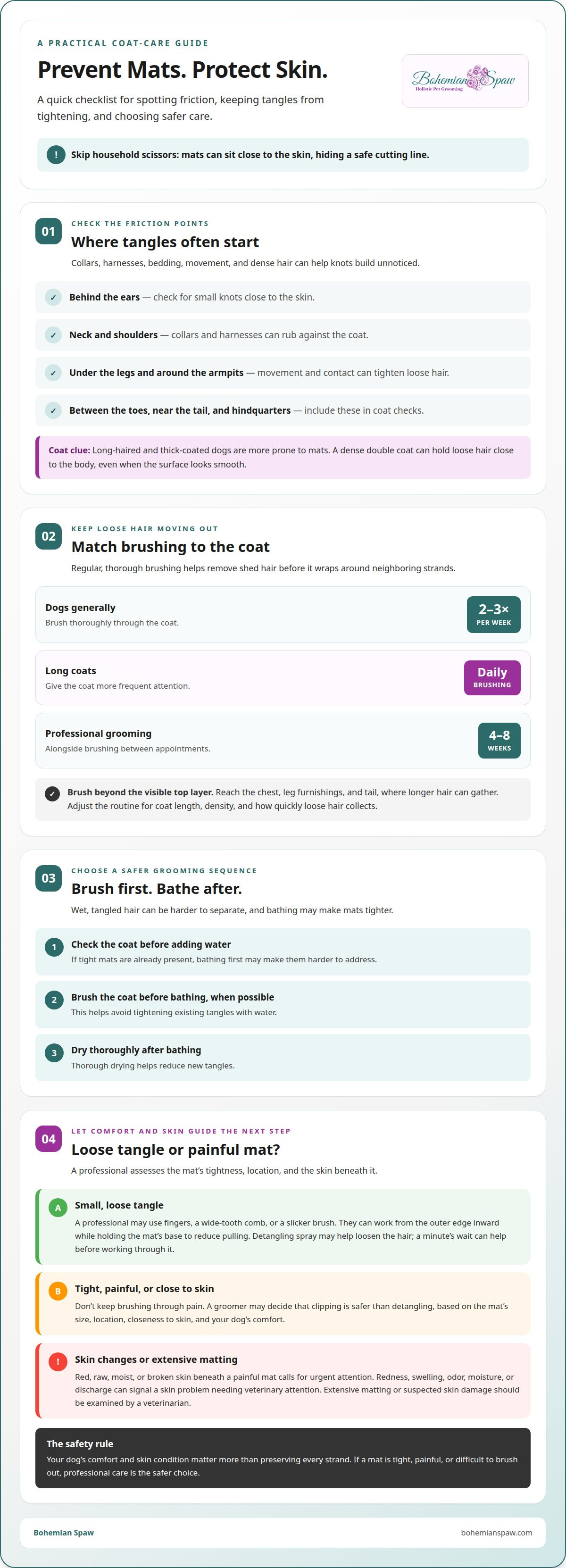
Dog mats form when loose hair tangles and tightens instead of separating with movement or brushing. Long-haired and thick-coated dogs face a higher risk, while friction makes certain spots especially vulnerable. Collars and harnesses rub the neck and shoulders, and bedding can cause repeated friction. Check behind the ears, under the legs, around the armpits, between the toes, and near the tail and hindquarters. Movement, contact, and dense hair can let knots build unnoticed in these areas.
A mat is more than a cosmetic knot. It can pull at the skin, trap moisture and debris, and cause pain or irritation. Even a mild mat can irritate skin and develop into an infected lesion. Mats near a dog’s hind end may catch feces, and severe buildup can impede defecation. Red, raw, moist, or broken skin beneath a painful mat calls for urgent attention. If the skin looks red or irritated, a groomer or veterinarian should assess it rather than leaving the area untreated.
For a mild, loose tangle, a professional may use detangling spray to help loosen the hair before working through it. The spray or cornstarch can sit on the mat briefly before detangling begins. This approach isn’t suitable for every knot: a tight mat close to the skin can tug painfully, so its size, location, and your dog’s comfort guide the next step.
Coat type matters. A dense double coat can hold loose hair close to the body, while long fur may knot where it brushes against a collar or leg. The care needs of double-coated dogs help explain why coat structure matters. Regular brushing and checking high-friction spots can catch tangles before they tighten. Pain or skin changes may also make a dog less comfortable with grooming, so a sudden increase in mats deserves attention. Safe de-matting for dogs in Lisle starts with recognizing these causes and choosing care suited to the coat and skin.
How professional groomers avoid scissors and bathing before dematting
A professional groomer assesses where each mat sits, how tightly it holds the coat, and whether the skin looks irritated. Household scissors are risky because a mat can lie close against the skin, hiding a safe cutting line. A small movement from your dog can bring the blades against skin instead of loose hair. That’s why scissors aren’t a safe shortcut for removing a knot at home.
Loose tangles may be gently worked apart, but tight or advanced mats may need clipping. A groomer can judge whether the coat can be detangled without painful pulling or whether clipping is safer. Your dog’s comfort and the mat’s closeness to the skin matter more than preserving every strand. Redness, moisture, or broken skin shifts the concern from coat care to possible skin injury.
Bathing before dematting can make mats tighter because wet, tangled hair is harder to separate. When possible, brush the coat before bathing, then dry it thoroughly to help reduce new tangles. If your dog already has tight mats, bathing first may make them harder to address. A careful grooming sequence takes the coat’s condition into account before adding water.
These decisions are especially relevant around the collar, armpits, and behind the ears, where friction can leave knots close to the skin. For loose tangles, a groomer may use detangling spray; a minute’s wait can help before working through the hair. More stubborn mats may call for safe clipping instead. The approach to brushing matted hair can help explain why prevention and removal call for different care. Professional grooming is a sensible next step when a mat is tight, painful, or difficult to brush out.
Causes of matting
Matting develops when loose hairs remain caught in the surrounding coat. Movement can tighten a small tangle, turning shed fur into a knot. In a dense coat, loose undercoat may stay hidden beneath longer guard hairs, and a brush that only smooths the surface can miss it. Coat structure matters: long-haired and thick-coated dogs are more prone to mats than short-coated dogs.
Brushing frequency also affects how loose hair moves through the coat. Dogs should be brushed thoroughly 2-3 times per week, while long coats benefit from daily brushing. These rhythms help remove shed hair before it wraps around neighboring strands. A quick pass over the back may not reach the chest, leg furnishings, or tail, where longer hair can gather. Coat length and density shape how much attention each area needs.
Friction is another common cause. A harness rubbing during walks, a collar shifting as your dog moves, or repeated contact with bedding can catch loose hairs. The knot may start small, then tighten as the coat rubs against itself. Moisture and debris trapped in tangled hair can complicate coat care, so brushing and drying after bathing matter. Changes in your dog’s comfort with handling can also make regular brushing harder to maintain.
Grooming intervals help prevent loose tangles from becoming established mats. Professional grooming every 4-8 weeks can support coat maintenance, alongside brushing between appointments. The right schedule depends on coat length, density, and how quickly loose hair collects. For example, a long coat that tangles behind the legs may need more frequent brushing than a short coat with little friction. The practical takeaway is simple: match brushing to the coat, reach beyond the visible top layer, and keep routine care consistent.
What is the safest professional way to remove mats from a dog's coat?
A groomer first assesses the mat’s size, tightness, location, and the skin beneath it. Redness, swelling, odor, moisture, or discharge can signal a skin problem requiring veterinary attention. Extensive matting or suspected skin damage should be examined by a veterinarian, who may recommend sedation or anesthesia for safe removal. The assessment helps distinguish a loose tangle from a knot that should not be pulled apart.
For small, loose tangles, a professional may use fingers, a wide-tooth comb, or a slicker brush. The groomer works from the outer edge inward, toward the skin, while holding the mat’s base to reduce pulling. Gentle progress matters more than speed. Your dog’s response, the mat’s closeness to the skin, and the teeth or blades of grooming tools all shape the approach.
Early, mild mats may brush out; advanced mats often need clipping. If a knot resists careful detangling, clipping by a groomer or veterinarian can be safer than continued brushing. Mats covering more than 25% of a dog’s coat are a reason to seek professional care. Widespread, tight matting can require extensive clipping, while painful areas need special attention. A professional can adjust the plan to the coat and the dog’s comfort.
Patient handling includes pauses when a dog needs a break. Work on a mat for no more than 15 minutes before resting the dog. If the coat is extensively matted or the skin appears damaged, medical assessment takes priority over cosmetic results. For careful grooming support, explore professional grooming services.
Bohemian Spaw
Bohemian Spaw provides professional dog grooming for coats that need attentive care. If mats are making brushing difficult, a grooming appointment can address the coat and help you plan a more manageable routine. Tight mats, pain, or irritated skin may need assessment before grooming proceeds, especially when the skin looks red, moist, or broken.
A Full Groom or Bath & Brush can suit different coat-care needs, while a De-Shedding Treatment supports care for dogs with shedding coats. The right option depends on your dog’s coat and grooming needs. For puppies beginning a grooming routine, Puppy’s First Groom offers a starting point for that stage.
For a calm next step with your dog’s coat care, contact Bohemian Spaw.
Make Coat Care a Gentle Routine
Your dog’s coat can signal changing needs. A new tangle in a familiar spot may mean the current brushing routine no longer suits the coat’s length, texture, or daily activity. Use that pattern to adjust the care routine before knots become difficult to manage.
For safe de-matting for dogs in Lisle, choose care that respects both the coat and your dog’s comfort. Bohemian Spaw offers Full Groom, Bath & Brush, and Puppy’s First Groom for different grooming needs. A conversation about your dog’s coat and grooming history can help you choose an appropriate next step.
Contact Bohemian Spaw for grooming help, and take a gentle step toward a more comfortable coat-care routine.
Frequently Asked Questions
Should a professional groomer cut mats out with scissors?
Scissors aren’t a safe choice for cutting out a mat that lies close to the skin. A professional assesses the knot and coat, then decides whether gentle detangling is appropriate or clipping is safer. For example, a dense mat beneath a collar may hide the skin in its folds. If the mat is tight, painful, or resistant, don’t try to trim it at home.
When is matting considered an emergency?
A painful mat, or one accompanied by red, raw, moist, or broken skin, needs urgent attention. Don’t wait for a routine grooming appointment if you see these signs. A mat that hides a wound also needs prompt assessment, since skin damage can be difficult to see beneath the coat. A veterinarian can evaluate a suspected injury and decide whether medical care is needed.
Why Do Dogs and Cats Get Mats?
Loose hair can tangle with surrounding fur, especially in long-haired or thick-coated pets. Friction from a collar, harness, or bedding can encourage knots in those contact areas. Cats may also develop mats when illness, pain, or arthritis makes self-grooming harder. For example, a cat that can no longer comfortably reach its back may develop tangles there.
Why Do Mats Become Painful?
As a knot tightens, it pulls on the skin beneath it. Movement can tug the same area repeatedly, making a mat near a leg or shoulder uncomfortable while walking. Trapped moisture and debris can add irritation. If your dog flinches when you touch a particular area, a painful mat may be the cause. Avoid pulling at it and seek professional assessment.
What are the risks of cutting mats out with scissors?
The main risk is cutting skin hidden beneath tangled hair. A mat can sit close to the body, making its boundary difficult to see, and even a small shift can bring scissors against the skin. The risk is greater around folds or moving areas, such as an armpit. Choose professional assessment rather than trying to slip scissors under a knot.
Which dog groomers in or near Lisle offer safe de-matting?
Bohemian Spaw in Lisle provides dog grooming and brushing for matted hair, serving families in nearby Naperville, Downers Grove, Wheaton, Glen Ellyn, Bolingbrook, and Warrenville. If your dog has a painful mat or visibly damaged skin, seek veterinary assessment. For coat tangles without those warning signs, book a grooming appointment with Bohemian Spaw.


