
Could a soft, polished coat come from a patient hand rather than powerful airflow? If the term fluff drying dog grooming sounds unfamiliar, it’s natural to wonder how the technique feels and whether it suits your dog.
Fluff drying combines drying with brushing to separate and smooth the coat. The right approach depends on coat texture, length, condition, the planned haircut, and your dog’s comfort. A curly coat may need a different finish from a short, smooth one, while a sensitive dog may benefit from a slower pace or another drying method.
This guide explains what fluff drying does, which coats may benefit, and what a comfort-conscious drying process can involve. It also covers the details to share with a groomer, from sensitivities to coat-care needs. Bohemian Spaw in Lisle offers Full Groom and Bath & Brush services as part of its dog grooming and coat care.
Key Takeaways
- Fluff drying dog grooming combines drying and brushing to separate and shape the coat, creating an even finish rather than simply adding volume.
- Coat texture, condition, and the planned haircut help determine whether fluff drying or another finish is a better fit.
- Dryer sounds and airflow can feel unfamiliar, so sharing your dog’s sensitivities helps the groomer plan a more considerate experience.
- When arranging a Full Groom or Bath & Brush in Lisle, describe your dog’s coat and the finish you prefer to set clear expectations.
- The finished look varies with coat type and condition, so an individualized approach is more useful than a one-size-fits-all expectation.
What Is Fluff Drying in Dog Grooming, and What Is It For?
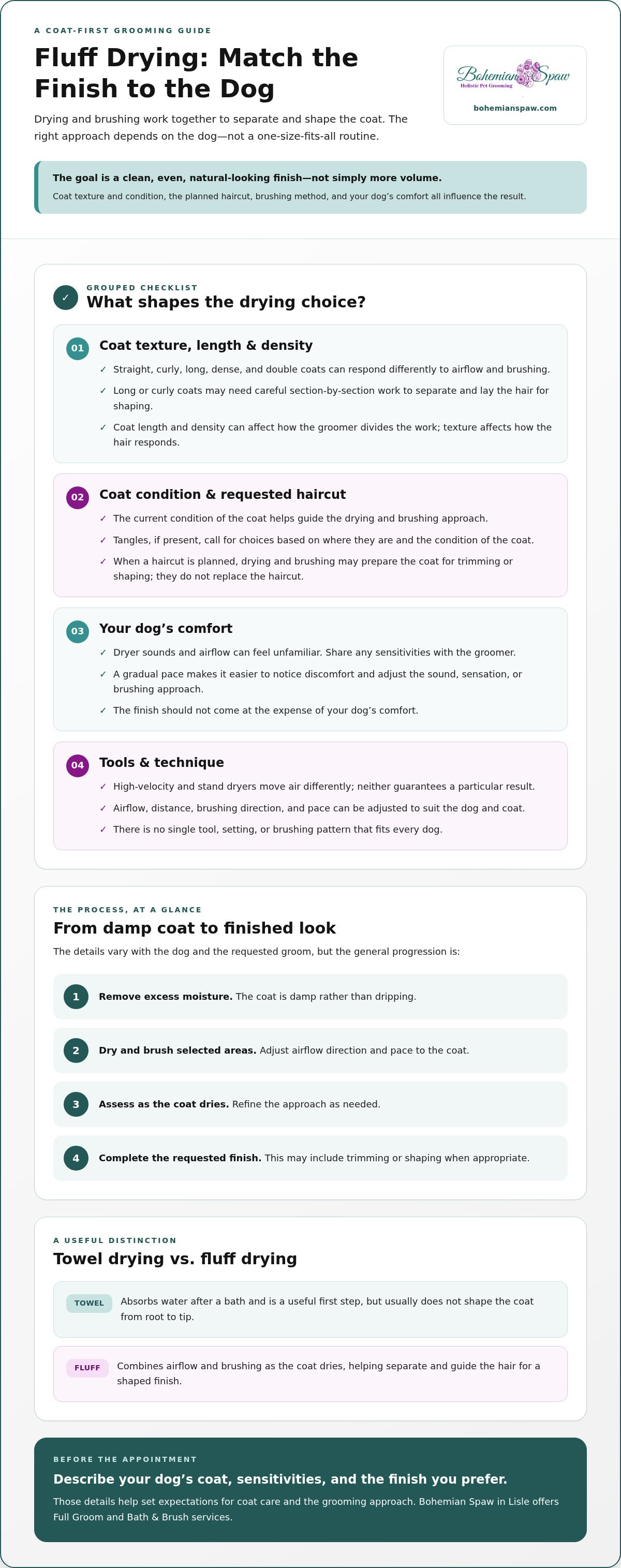
Fluff drying is a grooming technique that dries and brushes a dog’s coat at the same time, separating and shaping the hair as it dries. The aim isn’t simply to make a coat look bigger. It’s to create a clean, even, natural-looking finish suited to the dog’s coat and planned haircut.
In fluff drying dog grooming, the result depends on several factors: coat texture and condition, haircut shape, brushing method, and how comfortably the dog tolerates the process. A groomer may smooth and separate a coat before trimming, while another coat may call for a different approach. There isn’t one finish or brushing pattern that works for every dog.
That distinction matters because drying after a bath is not automatically fluff drying. Dog grooming includes a range of care and finishing steps, as outlined in this Dog Grooming Overview. Fluff drying is a more specific method of shaping the coat while removing moisture.
How fluff drying differs from basic towel drying
A towel absorbs water after a bath, making it a useful first step, but it doesn’t usually shape the coat from root to tip. During fluff drying, brushing as the coat dries can separate the hairs and reveal their natural texture. That may help the groomer assess the coat before a suitable trim. The brushing method should suit both the coat and the dog’s tolerance, rather than being repeated the same way on every dog.
Where fluff drying fits into a dog groom
A groom often moves from bathing to removing excess water, then drying and finishing. The sequence and finish vary with the dog’s needs. If a haircut is planned, drying and brushing may prepare the coat for trimming or shaping, but they don’t replace the haircut itself.
For owners, this puts the technique in context: fluff drying is one possible part of a broader grooming appointment, not another name for every post-bath dry. Bohemian Spaw in Lisle offers Full Groom and Bath & Brush services. If a puppy is still getting used to grooming, a puppy’s first grooming experience can introduce the sights, sounds, and handling involved at an age-appropriate pace.
Knowing the difference makes it easier to describe the finish you have in mind and share what your dog finds comfortable. Those details help set realistic expectations before grooming begins.
How Fluff Drying Works: Airflow, Brushing, and a Gradual Finish
Fluff drying is a series of adjustments, not a single routine for every dog. The groomer works with the coat in front of them, choosing airflow and brushing methods suited to its texture and length while observing the dog’s response. A gradual pace makes it easier to notice if a sound, sensation, or section of brushing seems uncomfortable and adjust the approach.
Airflow dries the coat while brushing separates and guides the hair, shaping the finish one section at a time. The goal is to work with the coat, not force every dog into the same result.
The main stages from damp coat to finished look
After bathing, excess water is removed before the groomer works through the coat in manageable sections. The general progression may look like this, though the details change with the dog and requested groom:
- Remove excess moisture so the coat is damp rather than dripping.
- Apply airflow while brushing selected areas, adjusting direction and pace to the coat.
- Assess how the coat is drying and refine the approach as needed.
- Complete the requested finishing work, which may include trimming or shaping when appropriate.
Brushing direction matters. A longer coat may need patient work in sections to keep the strands separated, while a shorter or more textured coat may call for a different touch. If tangles are present, the groomer’s choices depend on their location and the coat’s condition. A finished look shouldn’t come at the expense of comfort.
Why dryer style and technique can vary
High-velocity and stand dryers are two types of equipment a groomer may use, but neither guarantees a particular result. A high-velocity dryer moves air differently from a stand dryer. The groomer can adjust factors such as airflow, distance, and brushing technique to suit the dog. No single tool or setting fits every coat.
Coat length and density can affect how the groomer divides the work, while texture influences how the hair responds to brushing as it dries. The dog’s reactions matter, too. An observant approach lets the groomer respond to the dog in front of them rather than follow a rigid sequence. Timing and finishing details vary with coat condition and the requested haircut.
When arranging a dog grooming appointment, describe your dog’s coat and the finish you prefer. At Bohemian Spaw in Lisle, Full Groom and Bath & Brush services provide a broader context for your dog’s coat care.
Which Dog Coats Benefit from Fluff Drying, and When Is Another Finish Better?
Fluff drying can be useful when a groom calls for hair to be separated and shaped as it dries, but coat type alone doesn’t determine whether it’s the right finish. Straight, curly, long, dense, and double coats respond differently to airflow and brushing. The groomer also considers the coat’s current condition, the haircut you want, and your dog’s comfort.
The best drying choice follows the coat in front of the groomer, not a universal rule for every dog. The same technique may help one dog and be less suitable for another, even when their coats look similar at first glance.
Fluff drying for long, curly, or shaping-focused coats
On some long or curly coats, carefully separating and laying the hair as it dries can create an even foundation for shaping. This may be useful before a trim, since the groomer can see how the coat sits and assess its length and texture. A straight coat may respond differently, so brushing direction and the desired finish guide the approach.
Doodle coats are a helpful example, but they don’t form one coat category with one required routine. Their texture, length, condition, and grooming history can vary, so two doodles may need different handling. Regular home maintenance also affects how easily the coat can be worked through. Bohemian Spaw’s guide to doodle grooming care offers related context for understanding individual coat needs.
Dense coats, undercoats, and comfort-led alternatives
Dense and double coats call for coat-specific decisions. The groomer considers how the outer coat and undercoat are sitting, what the appointment is meant to accomplish, and how the dog responds. Fluff drying doesn’t remove all shedding, and it isn’t automatically the right finish for every double-coated dog. Another drying or brushing approach may better suit the coat and the dog’s tolerance. For more background, see this guide to grooming care for double-coated dogs.
Condition matters as much as coat type. Loose hair, tangles, and matting can change what’s comfortable and achievable. Brushing through mats can be painful, and shaping a tightly matted coat may not produce the intended finish. The groomer may need to adapt the plan rather than pursue a particular look. Sensitivity to handling, sound, or airflow can also affect the pace and technique, so share those concerns to keep your dog’s experience at the center.
When discussing a Full Groom or Bath & Brush, describe the finish you prefer and mention tangles, shedding patterns, or sensitivities you’ve noticed at home. In fluff drying dog grooming, those details help match the method to your dog’s coat and comfort while keeping expectations grounded in its current condition.
Keeping Fluff Drying Comfortable: What Owners Should Know
A dryer’s hum and the feeling of moving air can be unfamiliar, especially for a dog who hasn’t experienced professional grooming. Comfort isn’t a minor detail to set aside for a particular finish. A thoughtful approach gives the groomer room to observe your dog and adjust the pace or technique instead of pushing through signs of discomfort.
Before the appointment, share practical context: how your dog handles brushing, whether household appliances startle them, which areas are sensitive to touch, and how past grooming visits have gone. Even a small observation, such as your dog turning away when air moves near their face, can help guide handling. First-visit information can also help you prepare and decide what details to share.
Signs a dog may need a gentler approach
Pulling away, holding a tense posture, repeatedly turning from the airflow, or trying to move away may signal that a dog needs a pause or a change in approach. These actions don’t tell the whole story on their own. Behavior can vary with the setting, handling, and the part of the body being groomed. A grooming professional can read those cues in context and respond rather than ignore them.
A dog’s cooperation can change during a visit. They may seem comfortable at first and become unsettled as grooming continues, so observation throughout the process matters. The goal isn’t to insist on fluff drying or any specific finish at all costs. The dog’s well-being comes before appearance.
Helping puppies and sensitive dogs feel more prepared
For puppies and dogs with sensitivities, tell the salon what they’ve already experienced, including brushing, bathing, dryer sounds, and handling around their paws, face, or ears. At home, you can build familiarity gradually with brief, positive exposure to gentle brushing or ordinary grooming sounds at a comfortable distance. Keep these moments short, stop if your dog seems unsettled, and don’t force close contact with loud noise or strong airflow.
An early grooming introduction can help a puppy become more familiar with the appointment experience over time, but every puppy responds differently. Bohemian Spaw’s puppy’s first grooming experience provides context for those early visits. Whether your dog is young, noise-sensitive, or new to fluff drying dog grooming, honest notes about their comfort help guide a considerate conversation about coat care.
For a grooming visit in Lisle, share your dog’s sensitivities and preferred finish as you plan their care. Plan a thoughtful grooming visit around your dog’s individual needs.
Fluff Drying at a Lisle Dog Grooming Salon: Setting Realistic Expectations
Understanding fluff drying can help you describe how you hope your dog’s coat will look and feel after grooming. Rather than requesting a technique by name alone, share the details that shape a useful plan: your dog’s coat texture and condition, the haircut you have in mind, and any concerns about dryer sounds, airflow, or handling. These practical notes put your dog’s needs at the center of the grooming conversation.
What to share before a grooming appointment
Tell the groomer how your dog has responded to dryers in the past, including whether they’ve pulled away, seemed comfortable, or never experienced one. Mention sensitivities to brushing or touch, and note any tangles or matting you’ve noticed. For the finish, everyday descriptions such as “neat and smooth,” “natural-looking,” or “ready for an even trim” communicate your preference without requiring technical grooming terms.
Keep expectations flexible. Coat type, condition, comfort, and the agreed grooming service all influence the approach and achievable finish. If your dog is uneasy or the coat needs different attention than expected, the groomer may adapt the plan. The aim is thoughtful care, not a particular look at the expense of your dog’s well-being.
Bohemian Spaw offers Full Groom and Bath & Brush services as part of broader coat care. Sharing your priorities when arranging an appointment puts the finish you want in context with the service your dog needs.
A thoughtful grooming experience in the Lisle area
Bohemian Spaw is an independently owned, holistic dog grooming salon in Lisle, Illinois. Local dog owners from Naperville, Downers Grove, Wheaton, Glen Ellyn, Bolingbrook, and Warrenville can discuss coat care as well as the finished look. Clear communication helps connect the grooming plan to your dog’s temperament, coat, and everyday needs.
In fluff drying dog grooming, a polished finish depends on more than the drying technique. A coat that’s tangled, shedding, or sensitive to handling may call for a different approach from a coat in good condition, and the service you choose matters too. Consider the finish you like while allowing the groomer to tailor the process to what’s comfortable and suitable for your dog.
If you’re considering your dog’s next appointment, explore a grooming service suited to their needs. You can also plan a thoughtful grooming visit with your dog’s comfort and coat care in mind.
Make Your Dog’s Next Grooming Conversation Count
Before the next appointment, take a moment to notice what your dog seems to enjoy and what they’d rather avoid. You might note how they respond to brushing around the legs, whether household sounds catch their attention, or how their coat looks between visits. These everyday observations can turn a broad request into a conversation grounded in your dog’s needs.
Think of fluff drying dog grooming as one part of a larger care experience, not a finish your dog has to accept to look well-groomed. Sharing your priorities gives the grooming plan room to account for both the coat and the dog wearing it. A little preparation can help you feel informed and involved from the first conversation.
For a thoughtful next step, explore dog grooming services in Lisle and find a starting point that feels right for your dog. Clear communication and care tailored to the individual can make it easier to approach the next visit with confidence.
Frequently Asked Questions
Is fluff drying safe for dogs?
Fluff drying can be safe when the groomer uses appropriate equipment, adjusts the approach to the dog, and pays attention to the dog’s response. In fluff drying dog grooming, comfort is part of the technique, not an afterthought. Human hair dryers shouldn’t be used on dogs because they can burn sensitive skin. If your dog shows discomfort, tell the groomer so the drying plan can be adapted.
Can fluff drying help a dog's coat look fuller?
It can make some coats look more lifted or defined by separating the hairs as they dry, but it doesn’t add hair or permanently change coat density. The effect depends on the dog’s natural texture and haircut. A coat that naturally lies close to the body, for example, may not look dramatically fuller afterward. A groomer can set a realistic expectation based on your dog’s coat.
How long does it take to fluff dry a dog?
There isn’t one reliable time estimate for every dog. A small dog with a short coat may need less drying and brushing than a larger dog with a long, dense coat. Tangles, coat condition, the requested groom, and how comfortably the dog tolerates the process can also affect the appointment. The time needed depends on your dog’s coat and grooming needs, rather than a fixed duration.
What happens if my dog is afraid of the grooming dryer?
If your dog is frightened, the groomer can pause and consider a gentler approach or another way to complete the grooming. A dog who turns away when air reaches the face, for instance, may need that area handled differently. Share what you’ve observed rather than trying to make your dog endure the dryer at home. Their response helps inform a more comfortable plan.
Is fluff drying suitable for puppies?
It may suit a puppy if the coat and grooming goal call for it and the puppy can manage the experience comfortably. A first appointment can introduce grooming sights, sounds, and handling without assuming a young dog is ready for every step. Keep any home practice gentle and brief, and share what your puppy has already encountered. Bohemian Spaw offers Puppy’s First Groom in Lisle.
Can I fluff dry my dog at home?
You can brush your dog as the coat dries, but a professional finish takes suitable grooming equipment and experience with coat-specific handling. Don’t use a human hair dryer, which can burn a dog’s sensitive skin. If you try at-home drying, stop if your dog pulls away or seems uncomfortable, and don’t force the process. For complex coats or trims, a professional groom can help you understand what’s appropriate.
Does fluff drying work for double-coated dogs?
It can be considered for some double-coated dogs, but it isn’t automatically the right finish for every one. The groomer weighs the coat’s condition, the grooming goal, and the dog’s comfort before choosing how to dry and brush. Fluff drying also shouldn’t be treated as a way to eliminate shedding. Bohemian Spaw provides dog grooming in Lisle for local families, including those from Naperville, Downers Grove, Wheaton, Glen Ellyn, Bolingbrook, and Warrenville.


