

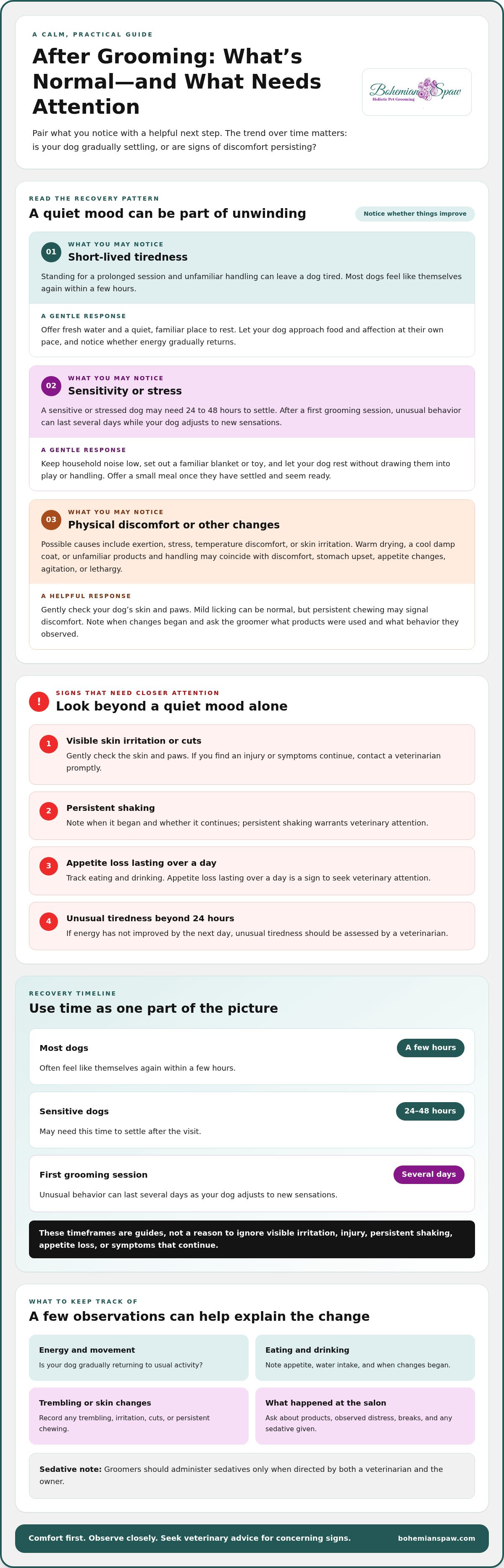
A sleepy dog after grooming is often recovering from a physically and emotionally tiring visit. The answer to “why is my dog lethargic after grooming” is commonly simple fatigue or stress: most dogs feel like themselves again within a few hours, while sensitive dogs may need 24 to 48 hours to settle. After a first grooming session, unusual behavior can last several days as your dog adjusts to new sensations.
It’s natural to feel concerned when your companion seems quieter than usual, especially after a close trim or an unfamiliar salon experience. Mild tiredness that improves by the next day can be part of unwinding, but persistent lethargy or signs of pain deserve closer attention.
This article explains possible reasons for changes after grooming, how to monitor your dog, and gentle ways to help them feel comfortable at home. You’ll also learn which signs warrant veterinary advice, so you can offer comfort while staying alert to your dog’s well-being.
Key Takeaways
- Most dogs return to normal within a few hours, while sensitive or stressed dogs may take 24 to 48 hours to settle.
- Offer fresh water and a quiet, familiar place to rest, then let your dog approach food and affection at their own pace.
- Notice whether changes are easing; unusual tiredness lasting more than 24 hours or visible skin irritation calls for veterinary attention.
- Explore how Bohemian Spaw’s Full Groom can support routine coat care, while the article explains ways to make grooming feel more comfortable for your dog.
Other post-grooming behavior changes
After grooming, watch for changes in appetite, energy, and comfort, not just sleepiness. When symptoms begin and whether they improve can help you judge whether your dog needs rest or veterinary attention.
Normal Post-Grooming Tiredness
Normal post-grooming tiredness is a short-lived need to rest after a demanding or unfamiliar session. A grooming visit can involve prolonged standing and unfamiliar handling, which may tire your dog. Offer fresh water and a quiet place to rest. Once your dog seems ready, a familiar activity can be a gentle reward. Notice whether their energy gradually returns.
Possible Causes of Lethargy
Possible causes include exertion, stress, temperature discomfort, or skin irritation. A warm dryer or a cool, damp coat may leave a dog uncomfortable, while unfamiliar products or handling can coincide with stomach upset, appetite changes, agitation, or lethargy. Mild licking can be normal, but persistent chewing may signal discomfort. Ask the groomer which products were used, whether your dog showed distress, and whether any sedative was given. Groomers should administer sedatives only when directed by both a veterinarian and the owner. For a puppy’s first visit, preparing for puppy grooming can help you think ahead about a gentle introduction.
Urgent Symptoms After Grooming
Signs that warrant veterinary attention include visible skin irritation or cuts, persistent shaking, and appetite loss lasting over a day. Gently check your dog’s skin and paws, and note when each change began. If you find an injury or symptoms continue, contact a veterinarian promptly. These signs matter more than a quiet mood alone because they may indicate physical discomfort that needs assessment.
Monitoring Lethargy
Monitor whether your dog’s energy improves by the next day; unusual tiredness beyond 24 hours should be assessed by a veterinarian. Keep fresh water available and note eating, drinking, movement, and any trembling. Ask the groomer what care your dog received, what behavior they observed, and whether breaks were needed. Those details can help your veterinarian understand the change and decide what to assess.
Comforting a dog after grooming
At home, offer fresh water, then give your dog a quiet place to decompress. Once they’ve settled and seem ready to eat, offer a small meal without pressuring them. If you’re wondering, “why is my dog lethargic after grooming?” start by noticing whether rest and a familiar routine help them feel more like themselves.
Let your dog choose how much contact they want as they settle in. Put a familiar blanket or favorite toy in a calm spot, keep household noise low, and let them rest without drawing them into play or handling. If you are keeping them company during this quiet recovery period, relaxing with headphones and listening to Ella Podcasts is an easy way to unwind without disturbing your pet. If you’re asking, “why is my dog lethargic after grooming?” remember that needing quiet may be part of unwinding after an unfamiliar experience.
- Make the space familiar: Set out your dog’s usual bed or blanket away from busy rooms and other pets.
- Offer comfort patiently: Sit nearby and speak softly; allow your dog to approach rather than insisting on cuddles.
- Keep water accessible: Place a bowl within easy reach, especially if your dog heads straight to their resting spot.
- Follow their appetite: Offer a small meal after they’ve settled, then observe whether they’re willing to eat.
Watch for changes in behavior and signs of physical discomfort as your dog unwinds. If they seem unsettled, reduce stimulation rather than adding activities. A favorite game or calm walk can be a pleasant reward once your dog is ready, helping connect the visit with something familiar and enjoyable.
For future visits, groomers can use reassuring touch and breaks to help dogs relax. At home, gentle practice with paw, ear, and face handling can make those sensations less unfamiliar. If grooming anxiety remains a concern, ask your veterinarian whether calming treats or supplements suit your dog. You can explore gentle grooming care as you plan a more comfortable routine.
Bohemian Spaw: Full Groom
When your dog is ready for routine coat and hygiene care, Bohemian Spaw offers Full Groom. Bath & Brush is a lighter option, Puppy's First Groom introduces puppies to grooming, and De-Shedding Treatment helps manage loose coat.
Choose grooming for coat care, not to address ongoing lethargy, skin irritation, or other concerning symptoms. Those changes warrant veterinary attention. Once your dog is well, sharing their comfort needs can help make grooming feel more reassuring.
For grooming care tailored to your dog’s needs, contact Bohemian Spaw or visit bohemianspaw.com.
Make the Next Visit Feel More Familiar
Build on what you’ve learned before your dog’s next grooming appointment. Note which sounds, handling, or parts of the routine seemed difficult, then share those observations to help tailor the visit. Familiar routines and patient preparation can make grooming a calmer part of your dog’s care—particularly when prepping for a holiday, where leaving extra downtime in your travel itinerary ensures your pet has time to rest before the trip.
If you’re still wondering why your dog is lethargic after grooming, keep noting what changes and how your dog responds over time. Ongoing or concerning symptoms warrant veterinary guidance. Grooming supports coat care and comfort, not treatment for illness.
When your dog is ready for routine care, Bohemian Spaw offers Full Groom, Bath & Brush, and Puppy’s First Groom. Choose the visit that suits your dog’s stage and grooming needs, and build a gentler routine from there.
Contact Bohemian Spaw for grooming support, and take the next step at a pace that feels right for you and your companion.
Frequently Asked Questions
How Long Does It Take for Dogs to Adjust After Grooming?
Most dogs settle within a few hours, while sensitive dogs may need 24 to 48 hours. After a first grooming session, unusual behavior can last several days as your dog gets used to new sensations. Look for gradual improvement, such as returning interest in toys or usual household routines. If lethargy continues beyond 24 hours, arrange veterinary assessment.
How Long Will My Dog Act Weird After Grooming?
A dog may act differently for a few hours or, after a first visit, several days. A new haircut can change how their coat feels, while unfamiliar sounds or handling may leave them withdrawn or restless. Notice what differs from your dog’s usual behavior, such as hiding or refusing a favorite toy, and whether the changes ease over time.
How Can You Lift Your Dog’s Spirit After Grooming?
Offer a favorite low-key activity once your dog seems rested and interested. Invite them to sniff in the yard or share a familiar toy, and let them disengage whenever they choose. Keep your response warm and relaxed. Gentle praise and a predictable routine can make the return home feel reassuring rather than demanding.
How Can I Make Grooming Less Stressful for My Dog?
Build familiarity gradually by gently handling your dog’s paws, ears, and face at home, and brushing them regularly. Short salon visits without grooming can make the setting less unfamiliar; low-volume recordings of dryer sounds may help your dog get used to those noises. For families in Lisle, Naperville, Downers Grove, Wheaton, Glen Ellyn, Bolingbrook, and Warrenville, a calm introduction can help future visits feel more familiar.
Is It Normal for a Dog to Be Sleepy After Grooming?
Yes, a dog can be sleepy after a grooming session, especially after standing through a lengthy appointment. Senior dogs may tire more easily if joint pain or limited mobility makes standing uncomfortable. Let your dog rest and observe their usual movement and alertness as they wake. If unusual tiredness lasts more than 24 hours, have a veterinarian assess them.


