

A comfortable grooming routine changes with the season, but coat type sets the starting point. For many medium- and long-coated dogs, professional grooming every four to six weeks is a useful guide; short-coated dogs often need it every six to eight weeks. Meeting seasonal grooming needs for dogs also means adjusting brushing and bathing: long or curly coats may need daily brushing, while most healthy dogs need baths every four to eight weeks depending on coat and lifestyle.
It’s easy to think of grooming as a tidy-up, but the right routine can help your dog stay comfortable as shedding, outdoor adventures, and colder weather affect their coat and skin. This guide explains how to adjust brushing, bathing, and professional grooming through spring, summer, fall, and winter. You’ll also learn what to look for during gentle skin and coat checks, making everyday care feel less like guesswork and more like a calm, attentive ritual.
Key Takeaways
- Set brushing and grooming intervals around your dog’s coat type, then increase brushing when seasonal shedding picks up.
- In colder weather, space out baths as needed, dry your dog thoroughly, and keep an eye on skin that may become dry or flaky.
- Part the coat during regular checks to spot irritation, dry patches, or parasites that can hide beneath thicker fur.
- Adapt care to the season: protect paws from winter residue and avoid shaving a double coat for summer comfort.
1. Year-round brushing, nail trimming, and ear cleaning
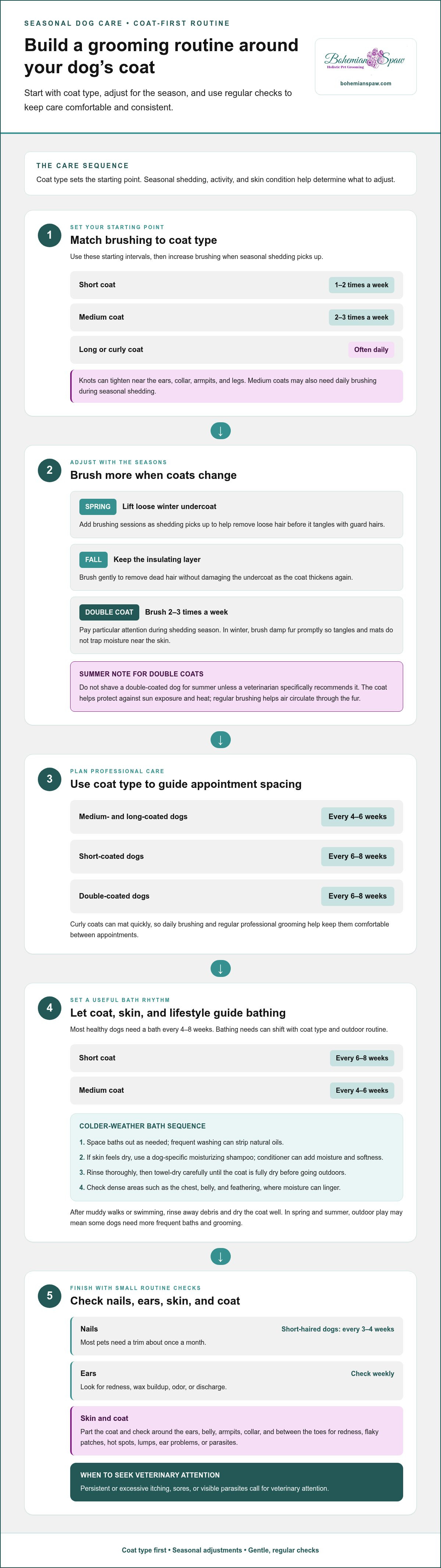
Start with your dog’s coat type, then adjust brushing as shedding changes. Brush short coats once or twice a week and medium coats two to three times a week. Long-haired and curly-coated dogs often need daily brushing because knots can tighten near the ears, collar, armpits, and legs. Medium coats may also need daily brushing during seasonal shedding.
During spring and fall shedding seasons, increase brushing to remove loose undercoat before it tangles with guard hairs. Double-coated dogs benefit from brushing two to three times a week, especially during shedding season. In spring, add sessions as shedding picks up; in fall, gentle brushing removes dead hair without damaging the insulating undercoat. A double-coat care routine can help you match brushing and tools to your dog’s layered coat. In winter, brush damp fur promptly, since tangles and mats can trap moisture and bacteria near the skin.
Don’t shave a double-coated dog for summer unless a veterinarian specifically recommends it. The coat helps protect against sun exposure and heat, while regular brushing helps air circulate through the fur. Check for loose hair and tangles rather than removing the coat entirely.
Grooming frequency depends on coat type. Medium- and long-coated dogs often need professional grooming every four to six weeks, while short-coated dogs typically benefit from appointments every six to eight weeks. Curly coats can mat quickly, so daily brushing and regular professional grooming help keep them comfortable between appointments.
Keep small care checks on your calendar, too. Short-haired dogs’ nails generally need trimming every three to four weeks, and most pets need a trim about once a month. Check ears weekly for redness, wax buildup, odor, or discharge. These simple steps support skin and coat health and make seasonal grooming needs for dogs easier to manage.
2. Bathing and moisturizing in colder weather
Winter air can dry a dog’s skin, so bathing may be needed less often than during active summer months. Most healthy dogs need baths every four to eight weeks, depending on coat type and lifestyle. Short-coated dogs often benefit from a bath every six to eight weeks, while medium-coated dogs generally need one every four to six weeks. Let your dog’s coat, skin, and outdoor routine guide the schedule.
If cold weather leaves your dog’s skin feeling dry, choose a moisturizing shampoo that may help reduce irritation. Conditioner can add moisture and softness during a winter bath. Use products made for dogs, rinse thoroughly, and avoid bathing just because the coat feels dusty. Frequent washing can strip natural oils that help protect skin through dry indoor heating and brisk outdoor walks.
Drying matters as much as washing. After a winter bath, towel-dry carefully and make sure the coat is fully dry before heading outdoors. Thorough drying helps prevent chilling and keeps snow or ice from sticking to damp fur. Pay attention to dense areas such as the chest, belly, and feathering, where moisture can linger.
For a puppy’s early baths, prepare a nonslip surface, keep the water gentle, and introduce each step slowly. Let the puppy explore the bathing area before wetting the coat, then use calm handling and brief pauses. A relaxed first experience can make later grooming appointments easier. A gentle puppy grooming experience can support a positive introduction to coat care.
In spring and summer, outdoor play can bring dirt, allergens, and parasites into the coat, so some dogs may need more frequent baths and grooming. After muddy walks or swimming, rinse away debris and dry the coat well. Adjust the schedule to your dog’s activity, coat, and skin. Seasonal changes can affect comfort, but bathing should still serve a clear purpose.
3. Checking skin and coat for irritation or parasites
Regular grooming gives you a chance to notice changes beneath loose fur. Part the coat with your fingers and look for redness, flaky patches, hot spots, lumps, ear problems, or parasites. Check around the ears, belly, armpits, collar, and between the toes, where dense fur or outdoor debris can hide irritation. A groomer may also notice early signs of skin concerns during routine care.
Seasonal allergies can worsen at certain times of year, causing itchiness or irritation that affects your dog’s grooming routine. Watch for repeated scratching, licking, or a newly sensitive patch, and adjust coat care to avoid aggravating the area. After walks, gently remove leaves, burrs, and dirt with your fingers or a comb. Work from the ends of tangled fur inward rather than pulling. Part the coat to look for ticks, then use a tick-removal tool according to its directions.
Coat changes in fall and winter call for regular brushing and close skin checks. Dogs grow thicker coats during these seasons, which can conceal dry patches, hot spots, or parasites. Brushing also spreads natural oils along the hair shafts, helping moisturize the coat in dry winter air. For a coated dog with tangles, careful, repeated strokes are kinder than forcing a brush through a tight mat. Brushing techniques for matted hair can help you approach knots without rough pulling.
Professional grooming frequency depends on coat type: medium- and long-coated dogs often need appointments every four to six weeks, while short-coated dogs typically benefit every six to eight weeks. Double-coated dogs also benefit from grooming every six to eight weeks, especially during seasonal shedding. Regular grooming supports skin and coat health, but persistent or excessive itching, sores, or visible parasites call for veterinary attention.
4. Seasonal grooming and comfort
Let seasonal coat changes guide your dog’s grooming routine, rather than following the calendar alone. In spring, double-coated breeds shed their dense winter undercoat, so brush more often to lift loose hair and reduce tangles. In fall, the coat thickens again; gentle brushing removes dead hair while preserving the insulating layer. Check the skin as you work, especially where shedding gathers around the neck, chest, and hindquarters.
Summer care focuses on keeping the coat clean, brushed, and comfortable. Dogs often spend more time outdoors in warmer months, where dirt, allergens, and parasites can cling to fur. Brush regularly to remove loose hair and help air circulate through the coat. Depending on coat type and exposure, some dogs may need more frequent bathing or grooming after active outdoor days.
Don’t shave a double-coated dog for summer unless a veterinarian specifically recommends it. The coat helps regulate body temperature and protects skin from sun exposure, so removing it entirely can raise the risk of sunburn and overheating. Instead, brush out loose undercoat, and ask for trimming only where the coat needs shaping or tidying.
For a more comfortable seasonal routine, note changes in shedding, tangles, and skin condition after outdoor outings. A sudden increase in shedding or persistent irritation differs from ordinary seasonal coat release and deserves attention. In winter, brush damp fur promptly and wipe paws after walks to remove salt or de-icing residue. Check between the paw pads for trapped snow, ice, or compacted fur.
Match grooming choices to your dog’s coat type, outdoor habits, and visible comfort. If shedding is difficult to manage at home, a professional De-Shedding Treatment can help remove loose coat while keeping routine care focused on comfort. Explore seasonal grooming options for help with a coat-care plan.
Bohemian Spaw: Full Groom
Bohemian Spaw’s Full Groom can help when seasonal shedding, coat growth, or tangles make home care harder to manage. Choose it when your dog needs more complete grooming, while a Bath & Brush suits a coat that mainly needs washing and brushing. A De-Shedding Treatment can complement your regular routine when loose undercoat is the main concern.
Seasonal care can be gentle and gradual, too. Puppies can begin with Puppy’s First Groom, an introduction to handling and coat care at a comfortable pace. For winter walks, Paw Pad Treatment is an option for seasonal paw care.
Every dog’s coat and comfort needs are individual, so choose a routine that fits what you see at home. Contact Bohemian Spaw or visit bohemianspaw.com to explore grooming options.
Make the next grooming step feel simple
A useful routine doesn’t have to be perfect. Notice what changes between grooming days: where your dog’s coat catches, which handling steps feel easy, and when outdoor adventures mean they need extra care. These small observations help you shape seasonal grooming needs for dogs around your companion, rather than following the same plan through every change in weather.
When home brushing becomes difficult or your dog needs a fresh start, Bohemian Spaw offers Full Groom and Bath & Brush services. Puppies can start with Puppy’s First Groom for a gentle introduction to professional coat care. Choose the service that fits your dog’s current needs and build a calm, consistent routine from there.
Contact Bohemian Spaw about dog grooming to take the next step. With thoughtful care and a little seasonal flexibility, you can help your dog feel comfortable in every coat-changing season.
Frequently Asked Questions
How Often Do Dogs Need Grooming?
Most dogs need professional grooming based on coat growth, shedding, and how easily their fur tangles. As a starting point, medium- and long-coated dogs often need appointments every four to six weeks, while short-coated dogs commonly go every six to eight weeks. At home, keep a simple calendar for brushing, nail checks, and baths, then adjust it if your dog’s coat becomes difficult to maintain.
How Often Should You Groom Your Dog Based on Their Breed?
Coat type is usually a more useful guide than breed name alone. Curly-coated dogs, including many Poodles and doodles, can mat quickly and often need daily brushing. Shih Tzus and Yorkshire Terriers commonly need professional grooming every four to six weeks. Double-coated breeds benefit from regular appointments during shedding periods, while short-coated dogs generally need less frequent coat maintenance.
What winter grooming do dogs need to protect their skin and paws?
In winter, brush gently to loosen tangles and spread natural oils, then check beneath thicker fur for dry patches or irritation. After walks, wipe or rinse paws to remove salt and de-icing chemicals, and look between the pads for trapped snow. Dry paws and damp coat areas before settling indoors. Paw Pad Treatment is another option for seasonal paw care.
How often should dogs be bathed in each season?
Most healthy dogs need a bath every four to eight weeks, with coat type and lifestyle guiding the interval. In colder weather, bathing less often can help preserve natural skin oils. During spring and summer, muddy walks, outdoor play, and allergens may call for an earlier bath. For example, rinse a dirty belly after a trail walk, then dry the coat thoroughly.
What seasonal paw-care steps protect dogs from heat, ice, salt, and de-icers?
Check paw pads after walks in every season, looking for redness, cracks, lodged debris, or sensitivity. In winter, wipe or rinse away salt and de-icing chemicals, and trim fur between the pads to reduce trapped snow and ice. In warm weather, inspect pads after outdoor time and remove debris between the toes. Bohemian Spaw serves dog grooming clients in Lisle and nearby Naperville, Downers Grove, Wheaton, Glen Ellyn, Bolingbrook, and Warrenville.


