
The gentlest-looking brush isn’t always the right one. To answer how to choose the right brush for my dog's coat, match the tool to the coat’s length, texture, undercoat, skin sensitivity, and tendency to tangle. Rubber or bristle brushes suit short, smooth coats, while slicker brushes and combs can help with longer, curly, or easily tangled coats.
One brush rarely suits every coat. Choosing the right match makes grooming more comfortable and helps you care for your dog’s coat without unnecessary tugging. This guide explains which brush styles suit different coats, how size and skin sensitivity affect the choice, and what to do when tangles or loose undercoat need extra attention. You’ll have a practical way to choose a brush for a calmer, more comfortable grooming routine at home.
Key Takeaways
- For a short, smooth coat, a rubber mitt can loosen shed hair before a bristle brush smooths the coat.
- Match brush size and pin length to your dog’s body and coat, and choose gentler tools for sensitive skin.
- Ease through tangles with light, steady strokes; pulling or repeated pressure can make grooming uncomfortable.
- Severe mats or specialized coat care may call for professional grooming rather than home brushing.
Bristle brushes for short, smooth coats
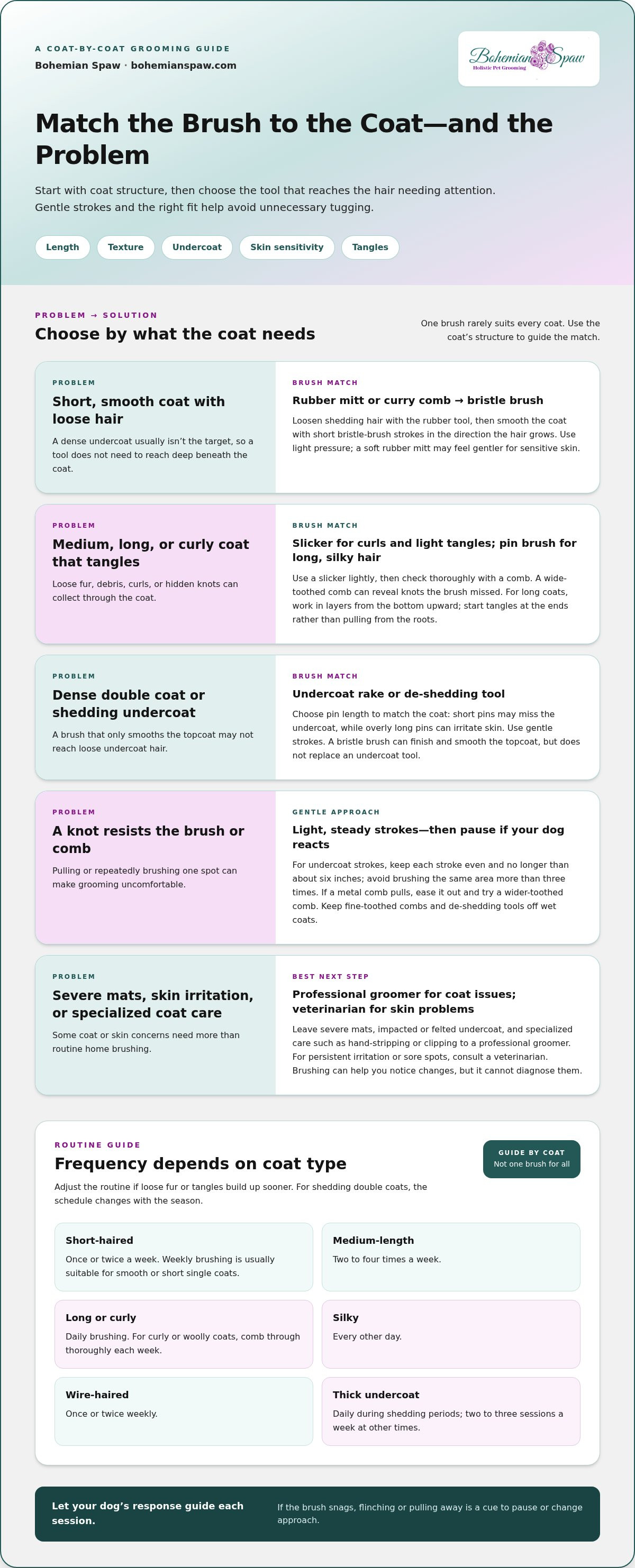
For a short, smooth coat, choose a bristle brush or rubber brush. Short bristles sweep away loose hair and smooth the coat without needing to reach a dense undercoat. You can first loosen shedding hair with a rubber curry comb or grooming mitt, then finish with short strokes from a bristle brush. A soft rubber mitt may feel gentler on a smooth-coated dog with sensitive skin. Brush in the direction the hair grows with light pressure. Weekly brushing is usually suitable for smooth or short single coats.
Coat length and texture affect which tool works best. Medium-length coats may need a slicker brush for loose hair and light tangles, while long, silky coats can benefit from a pin brush that detangles without breaking strands. For curly or woolly coats, use a slicker lightly to work through the curls, then check thoroughly with a comb. Light daily brushing and a weekly comb-through help prevent mats. A wide-toothed comb can reveal knots the brush has missed. Choose a tool that reaches the coat without scraping the skin.
A slicker brush has fine, closely spaced wires and can help with medium-to-long or curly coats where loose fur, debris, and mats collect. Golden Retrievers and Cocker Spaniels are examples of breeds for which slicker brushes are recommended. Use gentle pressure to avoid discomfort, and don’t repeatedly brush the same spot. On a small dog, a smaller brush is easier to guide around the legs and chest. A wider brush can cover broad areas on a larger dog more efficiently.
Bristle brushes can also finish a double-coated dog’s topcoat, smoothing the hair and adding shine after undercoat grooming. They do not replace a tool designed to reach loose undercoat hair. Let your dog’s response guide each session: if the brush snags, try a different tool or gentler handling. If your dog flinches or pulls away, pause instead of brushing through discomfort. A suitable brush should move through the coat without tugging or scraping.
Choosing a brush based on coat type, breed, and dog size
When deciding how to choose the right brush for my dog's coat, start with coat structure, then consider your dog’s size and skin sensitivity. A short-haired dog without a dense undercoat may need a soft bristle brush or rubber mitt. A double-coated breed needs a rake or de-shedding tool that reaches loose undercoat hair. Match the rake’s pin length to the coat: short pins may miss the undercoat, while overly long pins can irritate the skin. Choose a brush that’s easy to guide around a small dog’s legs or comfortable to use across a larger dog’s body.
Brushing frequency varies by coat type and season. Short-haired dogs may need brushing once or twice a week, while medium-length coats may need it two to four times a week. Long or curly coats benefit from daily brushing, and silky coats need attention every other day. Brush wire-haired coats once or twice weekly. Thick undercoats need daily brushing during shedding periods and two to three sessions a week at other times. Adjust the routine if loose fur or tangles build up sooner.
To decide how to choose the right brush for my dog's coat, identify which layer needs attention. An undercoat rake removes loose dead hair, while a de-shedding tool is designed to lift undercoat while preserving the topcoat. Select the tool for the dog’s coat length, and use gentle strokes rather than pressing down. For coat-specific guidance on dense fur, explore double-coat grooming.
Ask a professional groomer to handle severe mats, an impacted or felted undercoat, or specialized coat care such as hand-stripping or clipping. For skin problems such as persistent irritation or sore spots, consult a veterinarian. Brushing can help you notice changes, but it cannot diagnose them.
Brush and comb choices for removing mats and tangles
Match the tool to where tangles form. An undercoat rake reaches loose dead hair and knots near the skin on thick-coated breeds; choose pins roughly as long as the coat. Short pins may miss the undercoat, while overly long pins can irritate the skin. For a medium coat with little undercoat, a straight pin brush can loosen light mats before a wide-toothed comb separates the remaining knots. Start at the ends of a tangle instead of dragging the brush from the roots.
To avoid pain or skin irritation, use gentle, steady strokes and don’t tug. Keep undercoat strokes even and no longer than about six inches, and avoid brushing the same area more than three times. Slicker brush pins can reach the skin, so use light pressure and pause if your dog flinches or moves away. A metal comb can also pull on knots if forced through. Ease it out and try a wider-toothed comb instead.
Regular brushing helps remove dirt, distribute natural oils, and stop tangles from tightening into painful mats. For a long coat, work in layers from the bottom upward to reach knots beneath the surface. A pin brush followed by a wide-toothed comb can help with light snarls in a medium-length coat. Doodle coats benefit from light daily slicker brushing and a thorough weekly comb-through, which helps uncover hidden mats before they spread.
During shedding, an undercoat rake can remove loose fur from double-coated breeds before it gathers around the home. Use minimal pressure, then finish longer hair with a pinhead brush to smooth the coat and lift surface dirt. Keep fine-toothed combs and de-shedding tools off wet coats, where they can snag and pull hair. If mats are severe or the undercoat is impacted or felted, leave removal to a professional groomer. Gentle brushing for matted hair can help you understand when coat tangles need more than routine home care.
Brush styles suited to different coat types
For curly or woolly coats, use a slicker for light daily brushing and comb thoroughly each week. Wiry coats need regular, gentle care. Double-coated dogs need tools that address both layers, not just loose hair on top.
Brush Styles for Curly, Wiry, and Double Coats
Choose a brush that suits the coat’s texture and reaches the hair that needs attention. Curly and woolly coats can trap tangles, so a slicker helps separate curls while a comb checks for knots beneath the surface. For wiry coats, use a comfortable tool with a light touch to avoid scraping the skin. Groom both the undercoat and topcoat of double-coated dogs, especially when loose undercoat gathers during shedding season.
Comparing Common Brush and Rake Types
A slicker brush uses fine wires to work through medium-to-long, curly, or thick coats; use gentle pressure because its pins can irritate the skin. A bristle brush smooths short coats and can finish the topcoat on a double-coated dog. A pin brush helps detangle long, silky hair and tidy the surface. An undercoat rake reaches loose hair near the skin, with pin length matched to the coat.
The practical rule is to choose by coat layer and texture: use a rake for a dense undercoat, a slicker for curls or surface tangles, and a pin or bristle brush for finishing. For curly or woolly coats, light daily slicker brushing and thorough weekly combing help manage mats. Thick undercoats need daily brushing during shedding periods. Gentle, steady strokes help keep grooming comfortable while removing loose hair and distributing natural oils.
If you’d like a professional hand with maintaining a dense double coat, explore double-coat grooming support.
Bohemian Spaw: Full Groom
When a thick or double coat needs more care than your home routine can provide, Bohemian Spaw’s Full Groom is a practical next step. A De-Shedding Treatment can help manage loose undercoat hair, and Bath & Brush is another option for routine coat care. Bohemian Spaw serves dogs in Lisle, Naperville, Downers Grove, Wheaton, Glen Ellyn, Bolingbrook, and Warrenville.
Use your brush choice to maintain the coat between grooming sessions, and turn to professional care when tangles or shedding feel difficult to manage at home. For a calm next step, contact Bohemian Spaw.
Make Grooming a Calmer Part of Your Routine
Knowing how to choose the right brush for my dog's coat is a helpful start, but your dog’s comfort should guide the routine over time. Notice how your dog responds and keep sessions gentle and positive. If brushing becomes difficult or your dog needs hands-on coat care, professional grooming can help. Bohemian Spaw offers Full Groom, Bath & Brush, and Puppy’s First Groom for young dogs beginning their grooming routine.
Each calm, patient session can help make coat care feel more familiar for you and your dog. If you’d like grooming support, contact Bohemian Spaw. A thoughtful brush and a gentle approach can help you make grooming a more comfortable part of life together.
Frequently Asked Questions
How Do I Pick the Right Brush for my Dog?
Choose a brush based on coat texture, layers, skin sensitivity, and your dog’s size. Part the fur gently to see whether loose hair gathers near the skin or mainly on the surface. This helps distinguish undercoat care from simple coat smoothing. Try a few light strokes on an easy-to-reach area. If the tool catches or scrapes, or your dog pulls away, stop and reassess the brush or your technique.
Grooming Checklist: What's in Your Kit?
Keep a coat-appropriate brush, a comb for checking knots, and a towel together in one grooming spot. Use treats to reward calm pauses, especially when your dog is new to brushing. A small container or brush-cleaning tool helps remove collected hair between passes. For example, a long-coated dog may need both a slicker and a wide-toothed comb, while a short-coated dog may need fewer tools.
How do I know if I’m using the right brush?
The brush should move through the coat without snagging, while your dog remains settled during gentle strokes. After grooming, check the skin for redness or scratches, especially where you brushed repeatedly. Assess the result, too: if the outer coat looks neat but dense loose hair remains underneath, your brush may not be reaching the layer that needs attention.
What types of dog coats are there?
Common coat descriptions include short and smooth, long or silky, curly or woolly, wiry, and double-coated. A double coat has a topcoat and softer undercoat; a short, smooth coat generally lies close to the body. Coat type can vary even among dogs of similar size, so look at texture and layers rather than choosing a tool based on appearance or breed name alone.
What’s the difference between a brush and a comb?
A brush covers broader areas and helps lift loose hair, smooth the coat, or work through surface tangles. A comb’s separated teeth can reveal smaller knots a brush might glide over, especially beneath long hair. Use a comb for a gentle check after brushing instead of forcing it through a snag. If the teeth stop at a knot, ease the comb away and loosen the area first.
Which brush is often used incorrectly, and why?
Slicker brushes are often misused because their fine wire pins can irritate the skin if pressed firmly or dragged repeatedly over one spot. Keep strokes light and deliberate, adjusting your angle around sensitive areas such as the legs. If the pins snag or your dog flinches, pause rather than pushing through. A slicker should separate coat strands, not scrape the skin beneath them.


