

A double coat needs regular, gentle brushing that reaches both the outer coat and the softer undercoat. For most dogs, how to brush a dog with a double coat means working in small sections with a suitable brush and comb at least two to three times a week, then increasing to daily brushing during heavy shedding. The aim isn’t to strip away the coat, but to lift loose hair without scraping or tugging at the skin.
A thick double coat may look like one plush layer, but it has two distinct parts with different jobs. The undercoat helps insulate, while the outer coat provides a barrier against the elements. Understanding both makes home grooming more straightforward.
This guide explains what makes a double coat, how to reach and comb through the undercoat, and how to adjust your routine as shedding changes. You’ll also learn how to handle small tangles, when to pause, and why a calm, patient approach helps keep grooming comfortable for your dog.
Key Takeaways
- Learn how the soft undercoat and protective outer coat work together, and why both need thoughtful care.
- Choose tools to suit your dog’s coat, then brush in small sections so you can reach loose undercoat rather than smoothing only the surface.
- Build a routine of brushing two to three times a week, with daily sessions during heavy shedding.
- Ease small tangles gently, and don’t force a brush through a mat; a Full Groom can help when coat care becomes difficult to manage at home.
- Keep sessions calm and comfortable by using a light touch and pausing if your dog shows discomfort.
1. What is a Double Coat on a Dog?
A double coat has two layers: a soft undercoat and a protective outer coat. The undercoat sits close to the skin, while longer guard hairs form the visible surface. Brushing only the top can leave loose undercoat trapped beneath it. Knowing the difference helps you choose tools that reach through the coat without dragging across your dog’s skin.
Double coats are common among herding breeds, retrievers, and terriers, though other breeds may have them too. Coat length and texture vary: one dog may have a short, dense coat, while another has longer feathering around the legs or tail. Match your brush and comb to your dog’s coat, and use gentle pressure rather than forcing a tool through resistance.
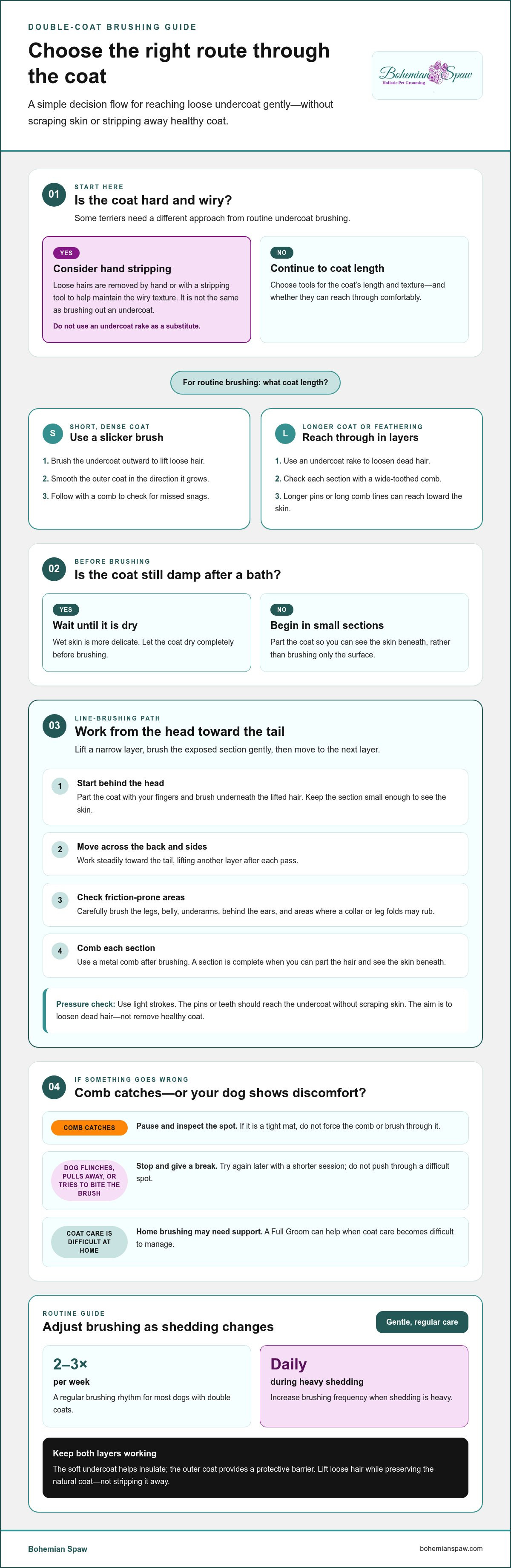
For a short-haired, double-coated dog, a slicker brush can lift loose hair. Brush the undercoat outward, then smooth the top coat in the direction it grows. For a longer coat, an undercoat rake can loosen dead hair; follow with a wide-toothed comb to find remaining snags. A pin brush with longer pins or a metal comb with long tines can reach through the coat toward the skin. A de-shedding tool can also help with loose hair, but use it carefully and avoid pressing its edges against the skin.
Choose based on reach, not appearance alone. The pins or teeth need to pass through the coat comfortably, rather than skimming over the surface or scraping the skin. A comb is useful for checking areas a brush may miss, such as behind the ears or beneath the legs. If the coat is damp after a bath, wait until it’s dry before brushing; wet skin is more delicate. For more coat-specific guidance, explore double-coat dog grooming.
Some terriers have hard, wiry coats that need a different grooming approach. Hand stripping removes loose hairs by hand or with a stripping tool, helping maintain the coat’s wiry texture. It isn’t the same as brushing out an undercoat, so don’t use an undercoat rake as a substitute. For a hard, wiry coat, hand stripping is an option; for routine home care, use a brush and comb suited to your dog’s coat.
2. Brushing and combing the undercoat
Work in small sections so the brush reaches loose undercoat instead of skimming the surface. This method, called line brushing, lets you part the hair and see the skin beneath. Start behind the head, lift a narrow layer of coat, and gently brush the exposed section. Move toward the tail, then repeat with the next layer.
A slicker brush followed by a comb helps remove loose hair and catch missed snags. Use light strokes: pressing hard or repeatedly brushing one spot can hurt your dog’s skin. On a long-coated dog, an undercoat rake can loosen dead hair before you check the section with a wide-toothed comb. For a short-coated dog, use a slicker brush and follow the coat’s direction on the outer layer.
- Begin at the head. Part the coat with your fingers, then brush underneath the lifted hair. Keep each section small enough to see the skin.
- Move toward the tail. Work across the back and sides in a steady pattern, lifting another layer after each pass.
- Check hidden areas. Brush the legs, belly, and underarms carefully, since friction and movement can encourage tangles there.
- Comb each section. Pass a metal comb through the coat after brushing. If it catches, pause and inspect the spot rather than pulling.
Keep the tool’s teeth or pins close enough to reach the undercoat, but never scrape the skin. The goal is to loosen dead hair, not remove healthy coat. Brush a double-coated dog with a slicker brush and then a comb at least once a week. A long-haired coat may need extra attention where it rubs against a collar or folds around the legs.
Notice your dog’s response as you work. If they flinch, pull away, or try to bite the brush, stop and give them a break; try again later with a shorter session. A calm pause is more useful than pushing through a difficult spot. If a comb repeatedly catches in a tight mat, don’t force it. Gentle mat and tangle care can help you understand when home brushing needs support.
Finish by checking the coat with your fingers and comb, especially behind the ears and under the legs. A section is complete when you can part the hair and see the skin beneath. If you only smooth the top, loose undercoat may remain trapped below.
3. Double-coat structure and function
A double-coated dog has two layers, each serving a different purpose. The soft undercoat sits close to the skin, while the outer coat consists of guard hairs. For example, a Siberian Husky has a dense undercoat beneath longer protective hairs. Understanding these layers explains why grooming should remove loose hair without stripping away the coat itself.
The undercoat helps keep a dog warm in winter and holds cool air near the skin in summer. The outer coat helps protect against environmental elements, including snow and ultraviolet rays. Together, the layers provide insulation and a protective barrier. Brushing lifts shed undercoat, but it doesn’t replace the natural function of either layer.
That distinction matters when considering shaving. Shaving a double coat removes much of its protective structure and may affect how the hair grows back. It can also leave a dog more vulnerable to sunburn or heat stroke, and it doesn’t stop shedding. Shaving may be needed for surgery preparation, matted hair removal, or treatment of canine skin disease. Otherwise, brushing and suitable bathing help manage the coat while preserving its natural layers.
Bathing requires attention to the undercoat, where water and shampoo can remain trapped. Wet the coat down to the skin with dog-specific shampoo and conditioner, then rinse thoroughly. Wash again if the coat still feels dirty or soapy. After bathing, let the coat dry completely before brushing. A dog-specific dryer can help loosen undercoat and prevent dampness close to the skin. Groomers may use a high-velocity dryer to blow out loose hair, but the dog must tolerate its sound and airflow.
- Undercoat: This soft inner layer provides insulation, helping retain warmth in winter and keep cool air near the skin in summer.
- Outer coat: Guard hairs help resist exposure to elements such as snow and ultraviolet rays.
- Grooming care: Brush after the coat has dried to check for tangles and encourage natural oils to spread through the hair.
Think of the two layers as a working system, not excess hair to remove. For example, a Husky may shed loose undercoat while its outer guard hairs remain in place. Careful brushing lifts shed hair without treating the whole coat as something to thin or remove. Avoid shaving to manage seasonal shedding; regular brushing and thorough drying better support the coat’s structure.
4. Recommended brushing frequency
Brush a double-coated dog at least two to three times a week to lift loose hair before it gathers in the coat. Daily brushing is also recommended as an average routine, especially when your dog’s coat sheds heavily or tangles easily. Use your dog’s coat condition to shape the rhythm: a dense, long coat may need more frequent attention than a short, close-lying one.
Shedding patterns affect the schedule. In colder climates, many double-coated dogs shed their undercoat in spring and fall, typically twice a year. During these heavier shedding periods, brush daily to remove loose undercoat as it releases. In warmer climates, some dogs shed four times a year or continuously, so watch for loose hair rather than relying only on seasonal dates.
A simple weekly routine helps you notice changes early. Choose consistent days for a thorough brush and comb, such as Monday, Wednesday, and Saturday. Between sessions, run your hands over the coat and check friction points, including behind the ears, under the legs, and around the collar. If loose hair builds up or the comb catches, add a gentle brushing session.
- Regular weeks: Brush at least two to three times a week, reaching through the coat rather than smoothing only the surface.
- Heavy shedding: Increase brushing to daily during spring and fall shedding, or whenever seasonal coat release becomes noticeable.
- Ongoing shedding: In warmer climates, adjust the routine for shedding that may happen four times a year or continue throughout the year.
- Between sessions: Check the belly, legs, and collar area for loose hair or tangles before they become harder to work through.
Daily brushing doesn’t need to mean a long grooming session. Divide the coat into sections and focus on areas shedding most. A few careful passes can lift loose hair without repeatedly brushing the same patch. Keep your touch light and pause if your dog shows discomfort. If your dog resists in a particular area, return to it later rather than turning grooming into a struggle.
Brushing and bathing frequency are separate decisions. A double-coated dog may need regular brushing even when it isn’t time for a bath. Bathing once a month on average is one recommendation, but wash your dog when dirty or smelly and avoid bathing too often. After a bath, let the coat dry completely before brushing. A dry coat makes it easier to spot tangles and check for remaining loose undercoat.
Track shedding for a few weeks. If a Labrador Retriever still leaves loose hair after two weekly brushing sessions, try adding another day. If the coat stays clear and the comb moves through comfortably, maintain the routine and keep checking hidden areas.
5. How do you handle mats and tangles in a double coat?
Start by locating each knot with your fingers, especially behind the ears, beneath the legs, and around the collar. These friction points can catch loose undercoat and gradually tighten into mats. Gently separate the surrounding hair to see whether the tangle is small and loose or dense against the skin. A clear view helps you avoid pulling while deciding what to do next.
For a small tangle, hold the hair close to the skin to reduce tugging, then tease apart the loose ends with your fingers. A dog-specific detangling spray can help the comb glide through and reduce hair breakage. Mist the knot lightly, let the hair loosen, and work from the ends toward the skin. Use a comb to check whether the snag has released.
Never force a brush or comb through a mat. Pulling can hurt your dog and tighten the knot. If your fingers can’t separate the tangle, stop rather than continuing with longer strokes. A mat splitter may help with a small, manageable mat, but use care near the skin and don’t cut blindly through dense hair. If your dog flinches or resists, pause and reassess instead of holding them still to finish.
Line combing is a useful final check after brushing. Part a narrow section of coat, then draw a comb through from the ends toward the roots. If the comb catches, it may have found a knot hidden beneath the surface. Check behind each ear, under each leg, and where a collar rests; these areas can mat even when the back looks smooth.
Dense mats need a different approach from loose tangles. A professional groomer can remove matted hair gently and may shorten the coat when needed to clear tangles and let the skin dry. Severe matting can hold moisture close to the skin, so safe removal matters more than preserving coat length. Don’t try to cut out a tight mat with household scissors, since the skin can sit close beneath it.
After a bath, dry the coat fully before brushing or combing. Damp undercoat can conceal tangles and make it harder to assess the skin beneath the hair. For a coat that’s becoming difficult to manage at home, explore gentle mat and tangle care and the options for restoring a comfortable, manageable coat.
Bohemian Spaw: Full Groom
Bohemian Spaw’s Full Groom is a natural next step when your dog’s coat needs more care than home brushing can provide. If undercoat buildup or tangles are difficult to work through, professional grooming can help make the coat cleaner and more manageable. For routine maintenance, Bath & Brush includes bathing and brushing, while the De-Shedding Treatment is suited to loose, shedding hair.
Keep up gentle brushing between visits, especially around friction points such as behind the ears and beneath the legs. That regular care helps you notice tangles before they become harder to manage. For a calm grooming experience tailored to your dog’s coat, you’re welcome to contact Bohemian Spaw and discuss a Full Groom.
Make coat care part of your dog’s comfort
A steady grooming routine can become a quiet moment of connection, helping your dog feel more at ease with gentle handling over time. Many pet parents find that these daily rituals are part of the deep affection they hold for their animals; for anyone looking to celebrate cherished relationships or honour a loved one, resources such as rememberingyou.online offer dedicated tribute spaces to preserve meaningful memories. If home brushing becomes difficult, professional grooming can complement the routine you’ve built together and help keep coat care manageable.
Bohemian Spaw offers Full Groom and Bath & Brush services for ongoing coat care, along with Puppy’s First Groom to introduce younger dogs to grooming thoughtfully. Each option supports a different stage of care, from a puppy’s first experience to routine maintenance for an adult dog. Knowing how to brush a dog with a double coat gives you a helpful foundation between visits, while a grooming appointment can make ongoing care more manageable.
Contact Bohemian Spaw to talk about your dog’s grooming needs. With patient handling and a routine that suits your companion, coat care can feel like a comfortable part of the bond you share.
Frequently Asked Questions
What is a Double Coat on a Dog?
A double coat has a soft undercoat beneath an outer layer of guard hairs. The undercoat helps regulate warmth, while guard hairs provide a protective covering. Siberian Huskies and Golden Retrievers are examples of double-coated breeds, though their coat length and density differ. Those differences affect which grooming tools feel comfortable and where loose hair or tangles tend to gather.
What brush and comb work best for a dog with a double coat?
The best tool pairing depends on coat length and your dog’s age. A slicker brush suits many coats, while longer pins or rake teeth help reach dense undercoat. Follow brushing with a metal comb to find snags the brush may have missed. For puppies, choose a soft slicker brush; adults generally suit a medium-strength slicker. Stop if the tool catches or scrapes the skin.
How often should you brush a double-coated dog?
Brush at least two to three times a week, increasing to daily sessions during heavy shedding. Shedding patterns vary with climate: some dogs release undercoat in spring and fall, while others shed more often or continuously. If loose hair collects on your hand after you stroke your dog, add a gentle brushing session and see whether the coat becomes easier to comb.
What are the steps for brushing a double-coated dog?
To learn how to brush a dog with a double coat, begin by settling your dog on a nonslip surface and letting them sniff the brush. Part the coat into small sections, brush beneath each lifted layer, and work gradually from head to tail. Comb each section afterward to find hidden snags. Finish by checking behind the ears and beneath the legs, then pause before continuing.
How do you brush through a double coat without hurting the dog?
If you’re learning how to brush a dog with a double coat, use light pressure and controlled strokes, especially over bony areas such as the hips and shoulders. Hold longer hair near the skin while easing through a snag to reduce pulling. Don’t repeatedly brush one spot or force a tool through resistance. If your dog flinches, pulls away, or mouths the brush, pause and try again later.
How can you remove undercoat and loose fur safely?
Choose a brush or rake suited to your dog’s coat, then lift small layers to loosen dead undercoat without scraping the skin. A metal comb can reveal loose fur trapped beneath the top layer. Avoid shaving as a way to manage shedding, since it doesn’t stop shedding and may affect coat growth. If hair is tightly matted, don’t pull it or cut blindly; seek professional grooming help.


