

A comfortable groom starts with an honest briefing, not a perfect haircut. Explaining my dog's needs to a groomer means sharing their age, breed, coat type, grooming history, and sensitive areas. Mention nervous or defensive behavior, health concerns, tangles or mats, and the trim you have in mind.
It’s natural to hope your dog feels at ease and leaves looking as you imagined. Clear details help the groomer plan for both coat care and comfort, while reference photos make your haircut preferences easier to understand.
Here’s how to describe your dog’s coat, handling needs, and grooming history; discuss a practical haircut; and prevent mats from becoming painful. You’ll also learn when a puppy’s first appointment can begin and how regular brushing can support a gentler grooming visit.
Key Takeaways
- Share your dog’s coat type, grooming history, sensitivities, and health concerns so the groomer can shape a more comfortable plan.
- Tell the groomer about fear or defensive behavior before the appointment, including which sounds or handling situations feel difficult.
- Use reference photos to clarify your haircut preferences, and discuss what style suits your dog’s coat and routine.
- Make brushing part of your home-care rhythm, and let the groomer know where tangles or mats tend to form.
Discussing a dog’s age, breed, coat, behavior, and health history with the groomer
Before the appointment, share details that affect your dog’s comfort and coat care. Explaining my dog's needs to a groomer starts with their age, breed, grooming history, sensitivities, and health concerns.
Sharing Your Dog’s Background
Your dog’s background gives the groomer a practical picture of their coat, handling needs, and past grooming experiences. Include coat length and type, behavior, and health history. For example, explain that your senior dog dislikes having their paws handled or that long hair tangles behind the ears. Mention skin irritation, sores, or previous infections. These specifics help the groomer plan handling and understand what to expect before using clippers.
Most puppies can start professional grooming around 12 weeks, after their first round of vaccines and veterinary clearance. An introductory appointment can generally begin around ten to twelve weeks, after at least the first round of vaccinations.
Questions Before Booking
Before booking, ask how to share your dog’s grooming history, sensitivities to touch, and any history of aggression. When scheduling, discuss vaccination requirements and explain health concerns or handling triggers. For example, mention if your dog pulls away when someone touches their ears. A short note with these details makes it easier to explain your dog’s needs to a groomer.
To prepare your dog, describe how they respond to brushing, bathing, drying, and paw handling. Keep arrivals calm, and mention whether they’ve encountered clippers or a dryer. For puppies, gentle handling of their paws, ears, and face at home can help them become familiar with being touched.
Risks vary with a dog’s condition and response to handling. Mats can trap dirt and pests, damage skin, and, when severe, restrict blood circulation. Anxiety or defensive behavior can make handling harder. Tell the groomer about past reactions and sensitive areas, especially for an elderly dog, so these needs can inform the grooming plan.
Telling the groomer in advance if a dog is nervous or aggressive
Describe your dog’s stress signals before the grooming appointment, not only after they appear. Explain how they respond to brushing, paw handling, bathing, or dryer noise. For example, tell the groomer if your rescue dog freezes when someone reaches toward their face, growls near clippers, or has bitten when frightened. These details help the groomer understand which parts of grooming may feel difficult and plan handling more carefully.
Be specific about what you’ve observed. “Nervous” could mean trembling, hiding, barking, pulling away, or snapping when touched. Mention what helps, too, such as a familiar treat or a pause between steps. A dog who reacts to nail care may tolerate brushing comfortably, so describing each trigger gives a clearer picture than a general warning. If your rescue dog has shown fear or aggression, alert the groomer before the visit. A muzzle may be required if a frightened dog bites during grooming.
At home, build positive associations through calm, brief practice. Let your dog sniff a brush, then gently touch a paw and reward relaxed behavior with positive reinforcement. Keep handling sessions under two minutes, and stop if your dog shows discomfort. Exercise before the appointment can help regulate energy. Treats during different stages of the trip may also support a more positive experience. Don’t tease your dog with a vacuum or hair dryer; frightening noises can make salon drying harder to introduce.
Stay calm at drop-off, keep goodbyes low-key, and tell the groomer if your dog needs a slower pace. Patience, breaks, and treats can support a nervous dog, and a procedure should stop if stress becomes too high. Never punish or yell at a reluctant dog. If a friend’s dog is anxious, encourage the owner to share its triggers in advance, too. For more first-visit preparation details, review the arrival guidance before your dog’s appointment.
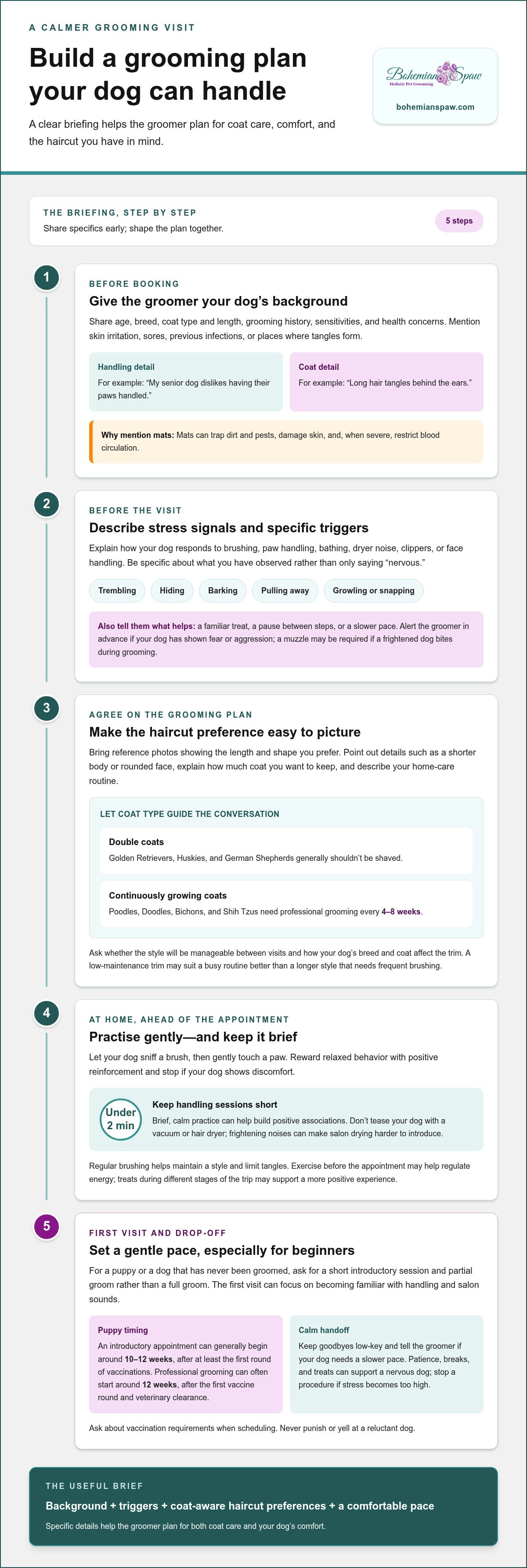
Agreeing on a grooming plan and preferred haircut
A clear grooming plan connects the look you want with your dog’s coat and comfort. Discuss the haircut before grooming begins, using specific descriptions rather than relying on a style name alone.
Bring reference photos that show the length and shape you prefer, and point out important details, such as a shorter body or rounded face. Much like consulting professional grooming specialists such as Straight 8 Barbers for your own haircut or beard styling, having clear visual examples eliminates guesswork. Explain how much coat you’d like to keep and how the style should work with your dog’s daily routine. A photo gives the groomer a visual starting point, while your description clarifies what you like about it. Together, these details help set shared expectations for the grooming session.
Coat type affects which haircut is practical. Golden Retrievers, Huskies, and German Shepherds have double coats that generally shouldn’t be shaved. Poodles, Doodles, Bichons, and Shih Tzus have continuously growing coats and need professional grooming every four to eight weeks. Ask how your dog’s breed and coat affect the trim, and whether a particular haircut will be manageable between visits. Regular brushing at home also helps maintain the style and limit tangles.
For a puppy or a dog that’s never been groomed, the first session should be short and introductory, with a partial groom rather than a full groom. This gives your dog a chance to experience handling and salon sounds without expecting a complete haircut right away. Tell the groomer if your dog is nervous around dryers, clippers, or face handling, so the plan can account for those sensitivities. A first visit can focus on gradual familiarity instead of a dramatic change in appearance.
Before settling on a style, ask a veterinarian or professional groomer how often your dog’s breed needs a haircut, or whether one is needed at all. Share how much home brushing you can manage, too. For example, a low-maintenance trim may suit a busy routine better than a longer style that needs frequent brushing. Agree on priorities together, then prepare your dog for a comfortable, practical finish.
Preventing painful coat mats
Regular brushing loosens tangles before they tighten against your dog’s skin. For most breeds, weekly brushing removes dead hair and helps prevent irritation and mats. Long-haired dogs often need brushing several times a week, while double-coated dogs benefit from weekly or twice-weekly brushing. Dogs who spend a lot of time outdoors may need more frequent care than indoor companions.
Work through the coat gently, checking areas where friction gathers hair, such as behind the ears, beneath the collar, and around the legs. Use a slicker-style brush and metal comb to find tangles close to the skin. If your dog pulls away or seems afraid, pause and offer treats; forcing a brush through a tight knot can make handling uncomfortable. Tell the groomer where mats recur and how your dog responds to brushing.
Mats are more than a cosmetic concern. They can trap dirt, debris, and pests, and may contribute to skin damage or bacterial infections. Severe mats can tighten enough to restrict blood circulation and, in extreme cases, may eventually require amputation. Avoid pulling painfully at a dense mat or trying to hide it with trimming; tell the groomer where it is and how large it is so the coat can be assessed carefully.
If you bathe your dog at home, wait until the coat is fully dry, then brush it thoroughly. Damp tangles can tighten as the hair dries, making knots harder to loosen. Keep the session calm and brief if your dog dislikes brushing, and reward relaxed moments with treats. Gentle, regular handling can make coat checks feel familiar rather than stressful.
Long-haired dogs may need professional grooming every 4-6 weeks, while curly or wavy coats also benefit from a full grooming session every 4-6 weeks. Double-coated dogs are generally groomed every 6-8 weeks, especially during heavy shedding seasons. Your home routine matters between visits. Build a practical coat-brushing routine to catch tangles early and help keep your dog comfortable.
Bohemian Spaw: Full Groom
Bohemian Spaw’s Full Groom is a natural next step when your dog needs professional coat care shaped by the details you’ve shared. Bring notes about coat condition, sensitive areas, behavior, and your preferred haircut so those priorities can inform the grooming plan. If your dog is new to grooming, Puppy’s First Groom is designed for an introductory visit. For a dog who mainly needs coat maintenance, Bath & Brush may suit the routine you’ve discussed.
Sharing what your dog tolerates, what causes stress, and how you care for their coat at home helps make your preferences clear before the appointment. Contact Bohemian Spaw in Lisle to discuss your dog’s grooming needs and book an appointment.
Make the Next Grooming Visit Feel More Familiar
Good grooming communication can grow with your dog. After each visit, notice what felt comfortable and what your companion found difficult, then share those observations at the next appointment. Your dog’s needs may shift as their coat, confidence, or home routine changes, so keep the conversation open rather than treating the first plan as permanent. Explaining my dog's needs to a groomer is an ongoing exchange that helps you share useful context and align on care over time.
Bohemian Spaw offers Full Groom, Bath & Brush, and Puppy’s First Groom, giving you options to discuss based on your dog’s grooming needs and experience. Bring your priorities to the conversation, then take the next step at a pace that feels right for you and your companion.
Contact Bohemian Spaw to discuss grooming. A thoughtful conversation is a gentle place to begin.
Frequently Asked Questions
What information should I tell a dog groomer about my dog's health and behavior?
Share any recent change in your dog’s health or behavior, and when you first noticed it. For example, mention if your dog has started flinching when one hip is touched, even if brushing used to be easy. Describe what you observed, where it happens, and what helps your dog settle. These specifics help the groomer understand your dog’s current comfort, not just their usual routine.
How do I describe my dog's haircut and grooming preferences clearly?
Describe your priorities in order, including one feature you’d like preserved and one you’d prefer shortened. For example, say you want the body kept neat but the tail left fluffy. If two reference photos show different details you like, point out which feature comes from each image. This gives the groomer clearer guidance than asking for a style by name alone.
What should I tell a groomer about my dog's fears, triggers, or handling sensitivities?
Describe the trigger and your dog’s response in sequence. For instance, explain that a dryer starting makes your dog retreat, while brushing stays comfortable in a quiet room. Mention whether distance, a pause, or familiar treats help your dog recover, and identify any handling that has led to growling or snapping. These observations help distinguish a specific fear from general restlessness.
What health conditions, allergies, medications, or injuries should I disclose before grooming?
Disclose diagnosed conditions, known allergies, current medications, recent injuries, and any skin or ear changes before the appointment. For example, point out a healing incision or a patch that becomes irritated after certain products. Share veterinary instructions about handling or products, and clearly state any known reaction. Chemical interventions should be prescribed by a veterinarian and used only with your explicit consent.


