
A summer shave can leave a double-coated dog with less protection, not more relief. If you're wondering whether you should shave your double-coated dog, the general answer is no: the coat helps regulate body temperature and shields the skin from sunlight and bites. Shaving can also change how the coat grows back.
It makes sense to think a shorter coat will help your dog feel cooler, especially when the undercoat seems thick or shedding is everywhere. You can support your dog’s comfort without removing this natural protection.
Here, you’ll learn how a double coat insulates in warm weather, what risks shaving may bring, and how regular brushing removes dead hair and helps prevent mats. We’ll also look at practical grooming alternatives, so you can care for your dog’s coat with a gentler touch.
Key Takeaways
- A double coat helps insulate a dog in warm and cold weather, so a thick-looking coat isn’t automatically a reason to shave.
- Shaving can expose skin to sun and insect bites, and the coat may grow back with a changed texture or appearance.
- Regular brushing lifts out dead hair, helps prevent mats, and lets air move more freely through the coat.
- Golden Retrievers, Border Collies, German Shepherd Dogs, Labrador Retrievers, Siberian Huskies, and English Springer Spaniels are examples of double-coated breeds.
- When coat care feels difficult, a De-Shedding Treatment or Full Groom can help support routine grooming without making shaving the default.
Brushing to remove dead hair and prevent matting
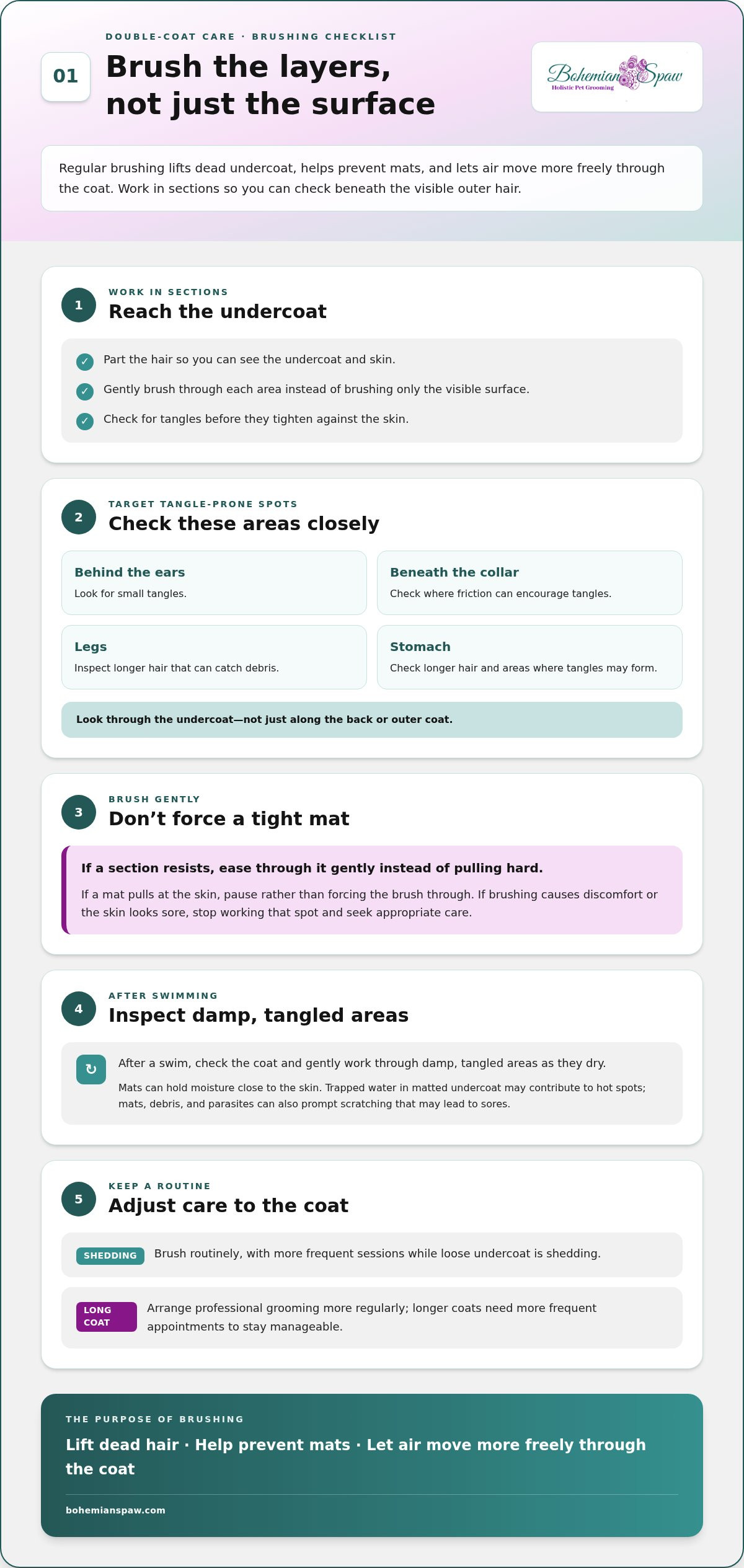
For a Golden Retriever or Siberian Husky, loose undercoat can gather close to the skin as it sheds. Regular brushing lifts away dead hair, helps prevent mats, and allows better air circulation through the coat. It also gives you a chance to spot tangles before they tighten against the skin.
Brush routinely, with extra attention as loose undercoat sheds and wherever the coat tangles. Arrange professional grooming more regularly for a long coat, since longer coats need more frequent appointments to stay manageable.
Work through the coat in sections rather than brushing only its visible surface. Part the hair so you can see the undercoat and skin, then gently brush through each area. Pay close attention behind the ears, around the collar, beneath the legs, and along the stomach, where friction or longer hair can encourage tangles. If a section resists, ease through it gently instead of pulling hard.
- Check behind the ears and beneath the collar for small tangles.
- Inspect the legs and stomach, where longer hair can catch debris.
- Look through the undercoat, not just the outer coat.
- Pause when a mat pulls at the skin instead of forcing the brush through.
Mats can hold moisture close to the skin. A dog that swims frequently may develop hot spots when water gets trapped in matted undercoat. Mats, debris, and parasites can also prompt scratching, which may lead to sores. After a swim, inspect the coat and gently work through damp, tangled areas as they dry.
Brushing is coat care, not simply a way to collect shed hair from the floor. Lifting loose undercoat helps reduce the hair that can bind into mats. Regular checks also help you spot trouble early, especially in dense areas that are easy to overlook on a large dog. A calm, section-by-section routine makes it easier to notice changes in coat condition.
For more coat-specific guidance, explore double-coated dog grooming. Consistent brushing can keep dead hair from building up, but a tight mat needs careful attention rather than force. If brushing causes discomfort or the skin looks sore, stop working that spot and seek appropriate care.
Brush regularly, with more frequent sessions while the undercoat is shedding; arrange professional grooming more often for long coats.
Examples of double-coated breeds
Breed can offer a useful clue when identifying coat type, but a dog’s size alone can’t tell you whether it has a double coat. Golden Retrievers, Border Collies, German Shepherd Dogs, Labrador Retrievers, Siberian Huskies, and English Springer Spaniels are examples. These breeds vary in build and coat appearance, so look beyond a fluffy outline when considering grooming needs.
A double coat has an outer layer and a softer undercoat. Its appearance varies between breeds and even between individual dogs. A Labrador Retriever’s coat, for example, may look short, while a Siberian Husky’s looks much fuller. Coat length alone doesn’t define the category. Recognizing the two layers gives you a better starting point for planning care.
These examples can help you focus on coat structure rather than relying only on appearance:
- Golden Retriever: a familiar example of a double-coated dog, with a longer-looking coat than a Labrador Retriever.
- Border Collie: another example, showing that double coats aren’t limited to large, heavy-built dogs.
- German Shepherd Dog: a breed commonly included among double-coated dogs.
- Labrador Retriever: its shorter-looking coat is a reminder that a double coat doesn’t have to look long or plush.
- Siberian Husky: a clear example of a dog with a visibly full coat.
- English Springer Spaniel: an example that broadens the picture beyond retrievers and northern breeds.
Use the list as a guide, not a substitute for looking closely at your own dog. A Siberian Husky and a Labrador Retriever can have very different silhouettes, yet both are considered double-coated breeds. That contrast matters because a sleek outer appearance doesn’t mean there’s no undercoat to care for.
If you’re unsure how your dog’s coat behaves, part the hair in a few places and look for a softer layer beneath the outer hairs. Check areas such as the shoulder, flank, and hindquarters. Comparing these spots can help you notice differences across your dog’s body instead of judging by the back alone.
Knowing your dog is a Golden Retriever, Border Collie, German Shepherd Dog, Labrador Retriever, Siberian Husky, or English Springer Spaniel can inform grooming conversations. It doesn’t mean every dog needs the same routine or trim. For more context on grooming double-coated dogs, consider how coat layers, length, and condition affect care choices.
How double coats insulate dogs
A double coat has two layers with different roles. The undercoat helps insulate a dog and regulate body temperature in cold and warm weather. The outer coat lies over it, creating a protective covering rather than simply adding warmth. This layered structure explains why a thick-looking coat doesn’t automatically mean a dog needs its hair removed in summer.
In warm weather, a double-coated dog sheds much of its undercoat. The remaining undercoat helps trap air and keep heat away from the body. This seasonal change matters for breeds such as Golden Retrievers and Siberian Huskies, whose coats can look especially full. A coat’s function depends on its layers, not just on how much hair you see from the outside.
Keep a double-coated dog comfortable with access to cool water and shade, and plan exercise during the coolest parts of the day. These simple steps support comfort without removing the coat that helps insulate the dog.
Dogs primarily regulate temperature by panting. They also use vasodilation, bringing hot blood closer to the skin’s surface, especially around the ears and face. Their merocrine sweat glands are located only in the paw pads and activate when the dog is hot. A thick coat doesn’t mean a dog cools itself by sweating across its body.
- Water: Keep cool drinking water available for a dog after resting or exercise.
- Shade: Make sure a Golden Retriever or Husky can rest away from direct sun.
- Timing: Choose the coolest parts of the day for walks and play.
- Paws: Keep excess fur trimmed from the paw pads to help sweat evaporate and cool the dog.
A cool bath can help keep a dog clean and free of pests, but it doesn’t replace shade, water, or sensible activity timing. After swimming, check the coat carefully: moisture trapped by matted undercoat near the skin can contribute to hot spots. This is one reason coat condition matters alongside the weather.
Removing the coat isn’t the same as addressing heat exposure. Shaving can expose a double-coated dog to heat stroke and sunburn, while the remaining undercoat normally helps keep heat away. Understanding the coat’s seasonal role can guide care decisions. Learn more about double-coated dog care before changing its length.
Risks of shaving a double coat
For a Golden Retriever or Siberian Husky, shaving removes more than visible length. The outer coat helps protect the skin from sunburn and insect bites. It also helps shield the skin from brambles, allergens, scratches, and other environmental contact. Removing that layer can leave a dog with less natural protection during walks, play, and time outdoors.
Sun exposure is one concern. Shaving a double-coated dog can expose the skin to sunburn and heat stroke, while the coat’s layers help insulate against warm weather. Dogs primarily cool themselves by panting, so removing hair has little impact on cooling. A close clip may seem like a direct solution to summer heat, but it doesn’t change the main way a dog regulates temperature.
Coat regrowth can also be unpredictable. The undercoat may grow back faster than the guard hairs, changing the coat’s texture or color. On a German Shepherd Dog, for example, uneven regrowth may make the coat look patchy. Shaving can permanently change coat texture or thickness, and some areas may grow back differently or not at all.
These possible changes matter because the coat is a working layer, not simply a style choice. If guard hairs return unevenly, the dog may have a different coat texture or appearance. A coat that grows back thinner or differently across areas can also provide less even coverage. Results vary, but the potential for lasting change makes shaving a poor default grooming choice.
- Reduced protection: Less outer coat can leave skin more exposed to sunlight, insect bites, brambles, and scratches.
- Heat concerns: Shaving can expose a double-coated dog to heat stroke and sunburn, without meaningfully improving cooling.
- Regrowth changes: Undercoat may outpace guard hairs, affecting texture, color, thickness, or coverage.
That doesn’t mean every coat-length concern should be ignored. Severe matting can make brushing difficult, and shaving may seem like the quickest way to remove mats. But cutting away the coat also carries the risks above. A dog that scratches at mats, debris, or parasites can develop sores, so pay attention to coat condition before tangles become tight or uncomfortable.
If you’re asking whether you should shave your double-coated dog for summer comfort, separate coat management from heat management. Brushing removes dead hair and helps prevent mats; shade, cool water, and exercise during cooler parts of the day address heat exposure. A coat-specific grooming approach can preserve more of the dog’s natural protection while keeping its skin and coat cared for.
Are there exceptions when a double-coated dog should be shaved for medical reasons?
Yes. A veterinarian may recommend clipping a specific area when it’s needed for medical care. That’s different from shaving a Golden Retriever or Siberian Husky simply for summer comfort. The reason, location, and amount of hair removed should follow the treatment plan, not a routine grooming preference.
For example, tight mats can sit against the skin and trap moisture. Dogs that swim frequently can develop hot spots when moisture remains beneath matted undercoat. Mats can also prompt scratching, which may lead to sores. If a veterinarian determines that clipping is needed to access or care for an affected area, the medical purpose guides that decision.
Think of medical clipping as targeted, not an automatic reason to remove the whole coat. A small area may need different handling from a full-body shave. Consider which area needs attention, the treatment goal, and how much coat must be removed. Those details help distinguish necessary access from shaving for appearance or perceived cooling.
- Identify the concern: Note where a mat, sore, or skin problem appears, such as behind the ear or beneath a leg.
- Follow the treatment plan: Keep clipping limited to the area and purpose specified by the veterinarian.
- Protect the remaining coat: Avoid extending a localized trim into a full-body shave without a medical reason.
A medical need doesn’t erase the risks of shaving a double coat. The outer coat helps protect the skin from sunlight and insect bites, and shaving can expose a dog to sunburn and heat stroke. Regrowth can also change texture, color, or thickness. Understand why the hair needs removal before treating a clip as ordinary coat maintenance.
After treatment, monitor the clipped area and surrounding coat as it grows. A German Shepherd Dog with a small clipped patch has different grooming needs from one whose entire coat has been removed. Regular brushing can help manage loose hair and prevent mats elsewhere, while attention to the treated spot helps you notice changes in its coat.
If you’re deciding whether a medical concern justifies shaving, follow the veterinarian’s specific recommendation rather than choosing a full shave for convenience. For grooming guidance that keeps double-coat needs in view, explore double-coat grooming care.
Bohemian Spaw: Full Groom
Bohemian Spaw offers Full Groom for owners seeking regular coat care without making shaving the default. If shedding undercoat or coat upkeep feels difficult to manage at home, a De-Shedding Treatment or Bath & Brush may also suit your dog’s grooming needs. These services support routine care while keeping the focus on your dog’s coat and comfort.
Choose grooming for maintenance, not as a substitute for veterinary care when a skin problem needs medical attention. For your dog’s grooming, contact Bohemian Spaw.
Choose a gentler next step for your dog’s coat
If you’re still weighing whether you should shave your double-coated dog, let the coat’s condition and your dog’s comfort guide your next steps. A grooming routine can be shaped around what your dog needs now, whether that means ongoing coat care or a gentle introduction to grooming for a puppy. A thoughtful approach helps make coat care manageable for both of you.
Bohemian Spaw offers Full Groom, Bath & Brush, and Puppy’s First Groom services for different stages of a dog’s grooming routine. Share what you’ve noticed about your companion’s coat and choose a comfortable next step together.
Contact Bohemian Spaw for grooming help, and take the next step toward calm, caring coat maintenance.
Frequently Asked Questions
Is It OK to Shave Your Dog’s Coat in Summer?
For a double-coated dog, a summer shave generally isn’t the best way to manage warm weather. The coat still serves a protective role, and a close clip can leave the skin exposed. A single-coated dog is different: if clipped, leave at least one inch of hair for protection. Consider the dog’s coat type first, then manage summer comfort with shade, cool water, and activity during cooler parts of the day.
Should you shave a double-coated dog?
Usually, no. A Golden Retriever or German Shepherd Dog generally benefits from coat care that manages loose hair without removing its protective layers. Shaving may be appropriate for a specific medical reason or severe matting, but those situations differ from routine summer grooming. Consider why hair needs removing, how much coat needs attention, and whether brushing or a targeted trim can address the concern.
Which dog breeds have double coats?
Examples include Golden Retrievers, Border Collies, German Shepherd Dogs, Labrador Retrievers, Siberian Huskies, and English Springer Spaniels. Their coats don’t all look alike: a Labrador Retriever may appear sleek, while a Siberian Husky looks much fuller. Breed can guide your expectations, but examine your own dog’s coat layers and condition before deciding how to manage it. A breed name alone doesn’t dictate every grooming choice.
What happens to a double-coated dog's coat after shaving?
Regrowth can look or feel different from the original coat. The undercoat may return faster than the guard hairs, so a German Shepherd Dog, for example, could develop uneven texture or patchy-looking coverage. Coat color or thickness may change, too. Some areas can grow back differently or fail to regrow. These changes make a full shave a consequential choice, rather than a temporary haircut that always returns to its previous state.
Does shaving a double-coated dog help keep it cool in summer?
Shaving has little impact on a dog’s cooling because dogs primarily regulate temperature by panting. Removing hair can instead reduce skin protection and expose the dog to sunburn or heat stroke. For a Husky on a warm day, focus on shade, cool water, and walks during cooler hours. These measures address heat exposure directly without relying on coat removal to change the dog’s cooling process.
What health risks can shaving a double-coated dog cause?
Shaving can expose a dog’s skin to sunburn and insect bites, and it can increase exposure to heat stroke. It may also damage follicles or lead to lasting coat changes, such as altered texture, color, or thickness. For example, a patch on a Border Collie may regrow differently from the surrounding coat. Consider both immediate skin protection and potential regrowth effects before removing the coat.
How should you groom and manage shedding in a double-coated dog?
Brush through the coat in sections so loose hair doesn’t stay hidden beneath the outer layer. Check friction areas, including behind the ears, under the collar, and around the legs. After swimming, inspect for damp tangles, since trapped moisture can contribute to hot spots. Owners in Lisle, Naperville, Downers Grove, Wheaton, Glen Ellyn, Bolingbrook, and Warrenville can also consider a local professional grooming routine suited to their dog’s coat condition.
What should you tell a groomer who recommends shaving a double-coated dog?
Explain what prompted the conversation, such as shedding, a tight mat, or concern about summer heat. Ask which area needs clipping and what the trim is meant to accomplish. If a medical issue is involved, share the veterinarian’s instructions and keep the grooming plan aligned with that need. A clear goal helps distinguish a targeted clip from a full shave and makes it easier to discuss coat-preserving alternatives.


