
A careful groom after surgery starts with the healing plan, not the haircut. For grooming a dog after surgery in Wheaton, follow your veterinarian’s advice on timing, handling, positioning, and rest breaks. Gentle techniques can reduce pressure on sore areas and help keep the experience calm for dogs with sensitivities or other health needs.
It’s natural to feel cautious: familiar grooming can feel different while a dog is recovering. Your veterinarian’s guidance can help you decide when to resume grooming, which low-stress handling methods and breaks may help, and when recovery should come first. Careful coat and nail care can fit into the wider recovery plan, but there’s no need to rush the process.
Key Takeaways
- Let your veterinarian’s recovery advice guide when grooming resumes and which areas need extra care.
- Gentle positioning, supportive cushioning, and quieter equipment can make grooming more comfortable for a dog with limited mobility.
- Short pauses, praise, and a slower pace can help an uneasy dog settle into the grooming process.
- Learn how to fit coat and hygiene care around rest and recovery, rather than rushing through a full grooming session.
Gentle handling and low-stress techniques
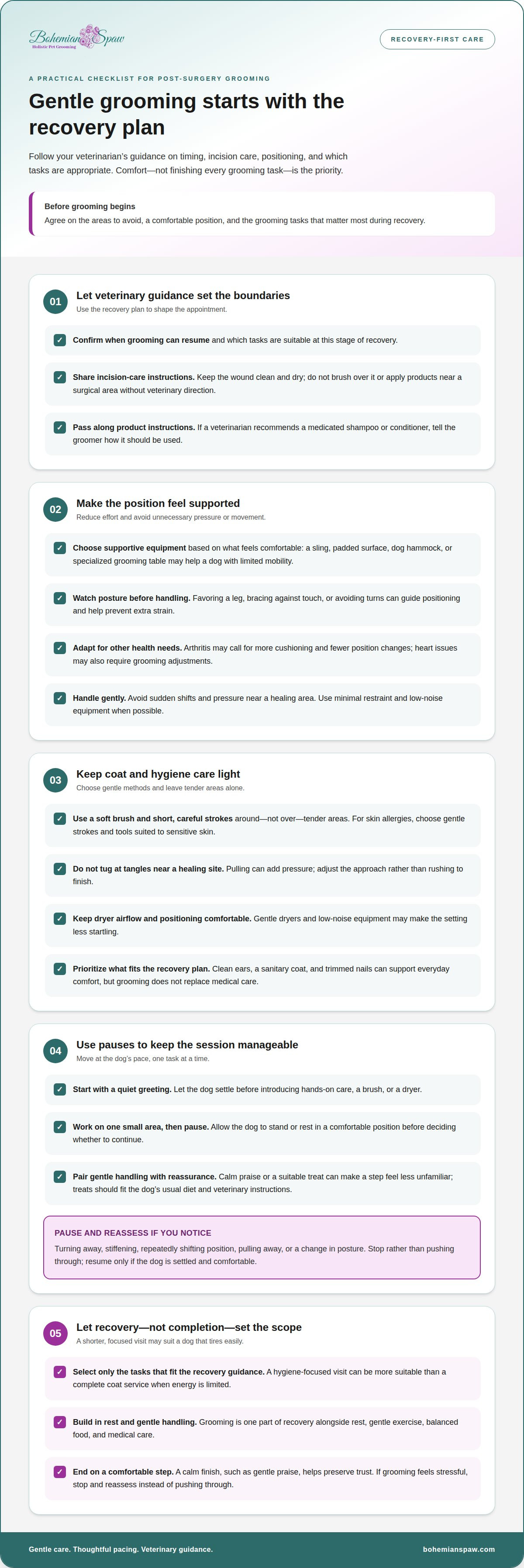
After surgery, a dog may have difficulty standing comfortably or holding a familiar position. A supportive sling, padded surface, or dog hammock may reduce the effort of standing during grooming. Specialized grooming tables can also accommodate limited mobility. The right setup depends on where your dog feels sore and which positions are comfortable. Handle your dog gently: sudden shifts or pressure near a healing area can cause discomfort or disturb the wound.
Begin with a calm arrival and observe your dog’s posture. Notice whether your dog favors a leg, braces against touch, or avoids turning. These cues can help guide positioning and prevent unnecessary strain. A dog with arthritis, for example, may need more cushioning and fewer position changes. Heart issues may also call for grooming adjustments. If skin allergies make brushing uncomfortable, use gentle strokes and tools suited to sensitive skin.
Keep coat care light around tender areas. A soft brush and short, careful strokes can help avoid pulling delicate skin. Don’t brush over a wound, and keep it clean and dry. If the coat is tangled near a healing site, don’t tug at it, as this can add pressure. Gentle dryers and low-noise equipment may make the setting less startling. Adjust airflow and positioning to avoid discomfort rather than rushing to finish.
Familiarity can make handling feel less unsettling. A gradual grooming introduction can help a puppy learn the sounds and touch involved; the puppy grooming guidance offers a related example of gentle first experiences. For a recovering dog, move slowly from one manageable step to the next. Pause if posture changes or your dog pulls away. The aim is comfortable, careful care, not completing every grooming task in one sitting.
Grooming as part of recovery and well-being
Which groomers in Wheaton, Illinois, can accommodate dogs recovering from surgery? Choose a professional who can adapt the session to your veterinarian’s instructions. For grooming a dog after surgery in Wheaton, share the recovery guidance so the handling and care can suit your dog’s needs.
Are mobile dog grooming services available in Wheaton for dogs recovering from surgery? Mobile service availability depends on the provider. A salon visit can still be planned around your dog’s recovery guidance.
Grooming supports hygiene, but it’s only one part of recovery. Rest, gentle exercise, balanced food, and medical care matter too. If your dog tires easily, a short, hygiene-focused visit may be more suitable than a complete coat service. For grooming a dog after surgery near Wheaton, choose tasks that fit the recovery plan instead of trying to complete everything at once.
Clean ears, a sanitary coat, and trimmed nails can support everyday comfort. Nail length, for instance, can affect how a dog places its feet while walking carefully. A tidy coat can also make routine care easier. These grooming tasks support comfort, but they don’t replace medical care or guarantee faster healing.
Skin and coat needs can change during recovery. Dogs with health issues may be prone to irritation, dryness, or hot spots, so brushing and products should suit their condition. If your veterinarian recommends a medicated shampoo or conditioner, share those instructions with the groomer. Don’t apply products near a surgical area without veterinary direction.
Before the appointment, establish which areas to avoid, how your dog should be positioned, and which grooming tasks matter most. This focused plan helps limit unnecessary handling. Explore dog grooming services as you consider salon care within a veterinarian-guided recovery plan.
Professional groomers can coordinate with veterinarians to adapt grooming for dogs recovering from surgery or managing health conditions. Sessions may call for careful weight support, extra cushioning, adjusted positioning, minimal restraint, and low-noise equipment. Medicated shampoos and conditioners recommended by local veterinarians can suit dogs with health issues. Clean ears, a sanitary coat, trimmed nails, and a healthy skin environment can contribute to comfort and faster healing.
Patience, breaks, and trust-building
A slower grooming pace gives a recovering dog time to process each step. Start with a quiet greeting, then let the dog settle before introducing a brush or dryer. Watch for signs of rising tension, such as turning away, stiffening, or repeatedly shifting position. If you notice these signs, pause instead of adding more touch. A calm moment can help preserve trust.
Breaks work best before a dog becomes overwhelmed. After handling one area, pause and let the dog stand or rest in a comfortable position. For example, a groomer might brush the back, stop, then continue only if the dog remains settled. This measured pace makes it easier to notice discomfort and adjust the next step.
Pair gentle handling with praise or a suitable treat to make a grooming step feel less unfamiliar. A soft voice after a brief touch, followed by a pause, creates a clear, reassuring pattern. Treats should suit the dog’s usual diet and any veterinary instructions. If food isn’t appropriate, calm praise and a moment of rest can still reinforce a comfortable response.
- Begin simply: Let the dog explore the grooming space before starting hands-on care.
- Use one task at a time: Brush a small coat area, then pause before moving on.
- Notice changes: A tucked posture or pulling away signals a need to stop and reassess.
- End on a calm step: Finish with an action the dog tolerates comfortably, such as gentle praise.
Consistency builds familiarity across visits. The same calm greeting and predictable sequence can reduce uncertainty, while the pace should reflect the dog’s comfort that day. If grooming begins to feel stressful, stop rather than pushing through a checklist. Patient handling supports a gentler experience for a dog recovering from surgery, without making completion the priority.
Veterinary guidance for grooming after surgery
Your veterinarian’s instructions should guide grooming timing, incision care, and which tasks are appropriate during recovery.
Veterinary Guidance Before Grooming
Before scheduling grooming, follow your veterinarian’s advice about healing and activity limits. Ask which areas must remain untouched, whether positioning needs to change, and which coat-care tasks are suitable. A dog recovering from abdominal surgery, for example, may need different handling from one healing after a leg procedure. Sharing these instructions with the groomer helps keep the session aligned with the recovery plan.
Incision Protection During Grooming
Keep the incision clean and dry, and prevent brushes, combs, or hands from rubbing against it. The groomer should avoid pressure near the surgical site and position your dog carefully to avoid stretching the surrounding skin. If tangles sit close to the incision, don’t pull them free during the session. Adapt or skip any task that could disturb healing tissue.
Bathing and Incision Wetness
Keep your dog’s incision dry unless your veterinarian gives different care instructions. Don’t bathe your dog or let the incision get wet without veterinary guidance; moisture can make it harder to keep the site clean and dry. If the coat needs attention, a groomer can focus on areas away from the incision and avoid bathing until it fits the recovery plan.
Safe Grooming Tasks
Brushing or nail trimming may be appropriate when the veterinarian’s instructions and your dog’s comfort allow them. A groomer can use gentle strokes on unaffected coat areas and avoid positions that strain a healing limb or incision. Risks of grooming too soon include reopening a wound, aggravating sore joints, or causing additional discomfort. Choose only the tasks that suit your dog’s recovery; review grooming service options as you plan care around those instructions.
Bohemian Spaw
Bohemian Spaw offers grooming options for dogs whose care needs change during recovery. Once your veterinarian says grooming is appropriate, share any handling limits and areas to avoid so the session can account for your dog’s comfort. Depending on your dog’s coat and current needs, options include a Full Groom, Bath & Brush, or De-Shedding Treatment. Choose the service based on the recovery guidance, not on completing every grooming task at once.
If your dog is still healing, follow veterinary instructions before arranging a visit. For a calm next step, contact Bohemian Spaw to discuss your dog’s grooming needs.
Make the next step feel manageable
Recovery can make familiar routines feel uncertain, but you can plan the next grooming visit around your dog’s current needs. Once your veterinarian says grooming is appropriate, share the care instructions and decide which tasks are most useful now. A focused visit may suit your dog better than trying to do everything at once. For grooming a dog after surgery in Wheaton, let comfort and veterinary guidance shape the plan.
Bohemian Spaw offers Full Groom, Bath & Brush, and Puppy’s First Groom services. The right choice depends on your dog’s stage of recovery, coat needs, and veterinary guidance. Discussing those details can help you choose a suitable next step without rushing your companion.
Contact Bohemian Spaw about gentle care and share what your dog needs. With a thoughtful plan, you can move toward grooming at a pace that feels more comfortable for both of you.
Frequently Asked Questions
What if my pet has special needs or specific sensitivities?
Tell the grooming team what your dog finds difficult, such as pressure near a joint, brushing over itchy skin, or dryer noise. A dog with arthritis, skin allergies, or heart issues may need a different pace or selection of tasks. For example, note whether your dog settles more easily standing or lying down, and which areas should remain untouched.
How long after surgery can a dog be safely groomed?
A dog can be groomed when the veterinarian’s recovery instructions allow it; there’s no single safe number of days for every operation. Timing depends on factors such as the procedure, incision healing, mobility, and whether bathing or particular handling could interfere with recovery. A permitted light coat-care task may be appropriate before a full grooming session.
What does a veterinarian need to approve before a dog is groomed after surgery?
Your veterinarian can clarify whether grooming may resume and which activities fit the recovery plan. Ask about bathing, contact with the incision, handling or positioning limits, and any products used on the coat. If your dog also has a skin condition, mention it so the care instructions can account for both needs.
Do Wheaton dog groomers require veterinary clearance for post-surgery grooming?
Don’t assume every Wheaton groomer requires the same formal clearance document; salon intake requirements can differ. Veterinary guidance still provides the practical basis for planning a safe session, including whether grooming is appropriate and what restrictions apply. Have the relevant recovery instructions available when arranging the visit, especially if the dog has limited mobility or needs the incision kept dry.


