
A grooming plan should begin with your dog, not a standard routine. A groomer who takes detailed notes on your dog in Wheaton can use those notes, personality insights, and a sensitivity questionnaire to shape the appointment around your companion’s comfort and care needs. That gives you a clearer way to share what helps your dog feel at ease and what may make grooming more challenging.
It’s natural to want more than a tidy coat: you also want your dog’s temperament, sensitivities, and familiar routines understood. This article explains what grooming notes can include, how personality and sensitivity information can guide care, and what to share before an appointment. You’ll learn how practical details can help make the grooming experience more attentive, from the first conversation through the finishing touches.
Key Takeaways
- Look for customer feedback that describes how a groomer responds to each dog, not just how the finished coat looks.
- Notice how personality details can help shape a calmer, more comfortable grooming experience.
- Learn how one-on-one attention can make grooming choices feel more tailored to your dog.
- See how sharing sensitivities and special care needs can help guide the grooming plan.
Customer reviews
Reviews can offer clues about whether a grooming experience feels attentive beyond the finished haircut. Look for specific descriptions of communication, handling, and how the groomer responds when a dog needs a pause. A comment such as “the groomer remembered that Milo dislikes having his paws handled” is an illustrative example, not an actual review. It shows the kind of detail that can help you assess personalized care.
Notice whether reviewers explain what happened during the appointment, rather than offering only broad praise. For example, a review might describe a groomer listening to an owner’s concern about brushing near the ears and recording that preference for future visits. Details like these help you assess the process as well as the appearance. A polished photo may show the coat, but not how the dog was handled.
Look for signs of continuity, too. If a reviewer says the groomer remembered a previous note, that suggests useful communication between visits. Another example might describe the groomer adjusting the plan after noticing the dog seemed uncomfortable. Comments like these can show how a team responds to a dog’s behavior, without suggesting every appointment will go exactly the same way.
- Look for examples of the groomer listening to an owner’s instructions.
- Notice whether reviews describe gentle handling during a specific grooming step.
- Check for mentions of recorded preferences being remembered at a later appointment.
- Give more weight to clear details than to general praise alone.
For a Wheaton owner looking for a groomer who takes detailed notes on your dog, reviews can help identify what to discuss. If feedback mentions sensitivities to dryers, paw handling, or unfamiliar sounds, consider sharing your dog’s response to those situations. Reviews offer perspective, not a guarantee. The most useful ones describe how communication and care work together, helping you arrive with clear expectations and relevant details.
Getting to know a dog's personality
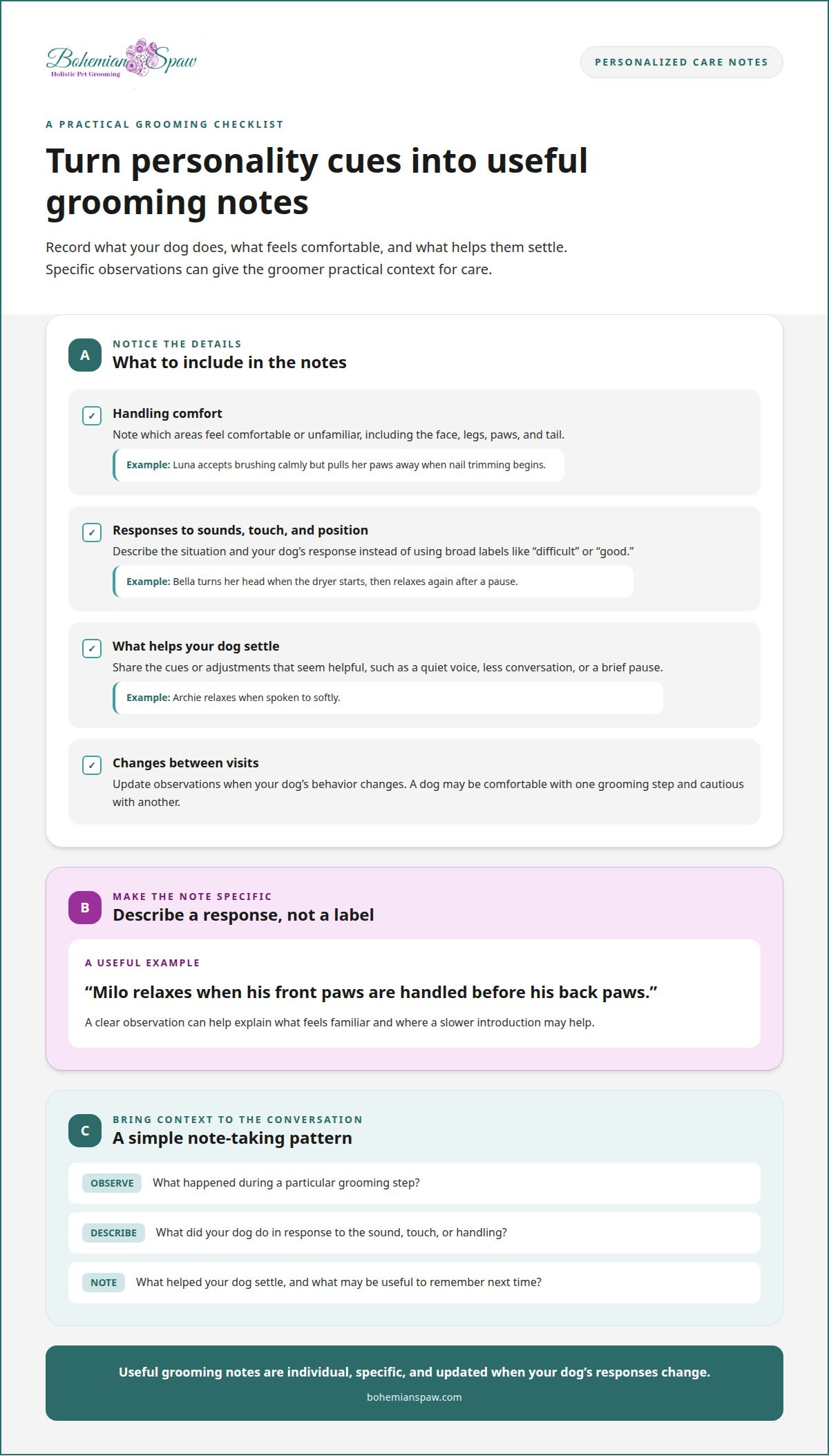
A dog’s personality often shows through small responses during grooming. For example, Luna may accept brushing calmly but pull her paws away when nail trimming begins. Recording that difference helps the groomer understand which steps feel familiar and where a slower introduction may help. Notes should describe what the dog does rather than label them “difficult” or “good.”
Start by sharing what your dog enjoys, avoids, and does when uncertain. A dog named Archie might relax when spoken to softly, while another may settle more easily with less conversation. Useful notes capture these individual cues, along with how the dog responds to touch around the face, legs, or tail. That makes personality information practical, not just a list of adjectives.
Observations during grooming can add context to what you share. If Bella turns her head when the dryer starts, the groomer can note the sound and her response. If she relaxes again after a pause, that detail matters too. The aim is to notice patterns and adjust the pace or order of care when appropriate, without assuming every dog reacts the same way.
- Record which handling areas feel comfortable or unfamiliar.
- Describe responses to sounds, touch, and changes in position.
- Note what helps the dog settle, such as a quiet voice or brief pause.
- Update observations when the dog’s behavior changes between visits.
These details can guide the conversation before the next appointment. You might explain that Max is playful at home but cautious around unfamiliar sounds. The groomer can consider that context alongside observed behavior and record useful details to guide future care. This is especially helpful when a dog’s confidence varies from one grooming step to another.
For a first appointment, sharing a simple example can make personality notes more useful: “Milo relaxes when his front paws are handled before his back paws.” The first-visit grooming information can help you understand how to prepare for that conversation.
One-on-one and personalized grooming
A personalized appointment takes your dog’s needs into account, not just the requested finish. Consider the consultation, handling approach, and written notes together to understand how grooming decisions are made.
Handling and Note-Taking
During a consultation, notice whether the groomer asks about specific steps, such as brushing the face or trimming nails. Consider how the groomer handles your dog, explains the process, and records preferences for future visits. For example, if Pepper pulls away when her paws are touched, a useful note would record that response and the handling adjustment that helped.
Ask how notes guide the appointment. A written record might distinguish between a dog who dislikes dryer noise and one who needs time to settle after entering the salon. Those details give the groomer practical context, while your dog’s behavior during the visit can help guide the pace.
When arranging an appointment in Wheaton, ask about vaccination records and bring the required documentation. Knowing the salon’s requirements ahead of time helps you prepare for the visit.
Booking and Written Care Notes
When booking, describe your dog’s age, grooming experience, sensitivities, and handling concerns. For example, explain that Olive is comfortable being brushed but uneasy when her ears are touched. Ask for care notes to summarize her preferences, observed reactions, and helpful adjustments.
Clear notes can make the next visit easier to plan. They might record which steps Olive accepted calmly, where she needed a pause, and what order worked best. Be specific: ask for observations that can guide handling, rather than a general description of her temperament.
To arrange an appointment and share care details, use the grooming contact page. A Full Groom or Puppy’s First Groom can be discussed in light of your dog’s experience and needs, with written observations helping shape the approach.
Special needs and sensitivity questionnaire
A sensitivity questionnaire can turn your dog’s care preferences into practical grooming guidance. For Wheaton pet owners, clear examples help explain which coat, handling, or health details may affect an appointment.
Recorded Preferences and Instructions
Share preferences such as brushing direction, areas your dog dislikes being touched, and sounds that cause unease. For example, a note for Daisy might say she accepts brushing along her back but pulls away near her tail. Specific instructions help the grooming team remember what to approach gently and what your dog already tolerates.
Describe handling requests plainly, then add what you’ve observed. “Charlie settles after a short pause” gives more useful context than “Charlie is nervous.” A Wheaton groomer who records grooming preferences can use those details to guide the routine and keep notes focused on observable responses.
Coat, Behavior, and Health Details
Describe your dog’s coat with useful specifics: where tangles form, whether brushing is comfortable, and which areas need a careful approach. For example, tell the groomer if Bailey’s coat mats behind her ears or she resists brushing around her legs. These observations help the groomer understand your coat-care preferences.
Include behavior cues and relevant health information you want the grooming team to know. Mention if Scout becomes unsettled when lifted, has difficulty standing for a grooming step, or needs a gentle approach around a particular area. Keep details factual and distinguish an observed response from a diagnosis. This helps the groomer understand what to consider during handling.
Before the appointment, organize the details into three areas: coat care, handling preferences, and relevant health or sensitivity notes. For example, “short brushing sessions, uneasy with paw handling, avoid pressure near a tender area” gives clear direction without a lengthy explanation. Update the notes if your dog’s comfort or routine changes.
To share your dog’s sensitivities and care preferences when arranging grooming, send your grooming inquiry.
Bohemian Spaw
Bohemian Spaw offers dog grooming in Lisle, a convenient option for pet owners in Wheaton and nearby communities who want individualized care. Share practical details about coat care, handling preferences, and sensitivities during the grooming conversation. This context helps match your dog’s needs to a suitable service, such as a Full Groom, Bath & Brush, Puppy’s First Groom, or De-Shedding Treatment.
For example, mention if brushing near your dog’s ears feels uncomfortable or if they’re new to grooming. Clear notes make those preferences easier to discuss and revisit, helping the appointment account for both coat care and comfort. Bring the details that matter most to your dog’s experience, and contact Bohemian Spaw to discuss your grooming needs.
Make the Next Visit Feel More Familiar
Your dog’s next grooming visit can begin with one clear question: what would help them feel more at ease? Naming that priority gives the conversation a thoughtful starting point, whether you’re planning a first appointment or refining an established routine. Choosing a groomer who takes detailed notes on your dog in Wheaton can help make those preferences part of a more personalized approach over time.
As you prepare, think about the experience you hope your dog will have, not only the finished look. A calmer introduction, a gentler pace, or extra care around a sensitive area can guide the discussion. You don’t need perfect wording. A simple, honest description of what matters to your dog is a helpful start.
When you’re ready to talk through your dog’s grooming needs, contact Bohemian Spaw about your dog. A caring next step can start with a conversation, and you can approach it at your dog’s pace.
Frequently Asked Questions
What if my pet has special needs or specific sensitivities?
Share the specific situation and what you observe, such as discomfort during brushing or unease around dryer sounds. Describe what helps, too, such as starting with the shoulders or allowing a pause. If a health concern affects handling, mention it when discussing grooming. Clear, practical details help keep the conversation focused on your dog’s comfort.
Which dog groomers in Wheaton, Illinois, take detailed notes on dogs?
Bohemian Spaw provides dog grooming in Lisle for pet owners in Wheaton, Naperville, Downers Grove, Glen Ellyn, and nearby communities. If detailed care notes matter to you, share your dog’s preferences and sensitivities during the grooming conversation. A groomer who takes detailed notes on your dog in Wheaton should be able to discuss how specific instructions can guide handling and care from one visit to the next.
What do Wheaton dog groomer reviews say about attentive communication and detailed records?
Look for reviews that describe a specific interaction, rather than simply calling a groomer “attentive.” A useful review might say the groomer listened to a concern about brushing, explained how it would shape the visit, or remembered a preference later. Those details offer a clearer picture of communication and record-keeping than general praise, without assuming every dog has the same experience.


