

Shaving may seem like a quick way to manage shedding, but it isn’t the right fix for a German Shepherd’s double coat. It can disrupt the coat’s role in temperature regulation and may contribute to skin problems. For a German shepherd undercoat blowout in Glen Ellyn, focus on removing loose undercoat while preserving the coat.
It’s understandable to wonder whether a sudden tumble of fur is normal or a sign that something’s wrong. Seasonal shedding typically lasts about three weeks, with heavier coat changes in spring and fall. A thorough grooming session for a large German Shepherd usually takes 2 to 3 hours.
This guide explains how to recognize a coat blowout, why thorough drying matters after a bath, and what a large-breed grooming session involves. You’ll also learn why shaving isn’t a shedding solution, so you can care for your dog’s coat with more confidence and less guesswork.
Key Takeaways
- Learn how a German Shepherd’s double coat sheds seasonally and what can help you distinguish a coat blowout from everyday loose fur.
- See why removing loose undercoat and drying thoroughly after a bath matter for coat care.
- Understand why shaving isn’t a suitable shortcut for managing shedding in a double-coated breed.
- Find out when a professional De-Shedding Treatment may help manage loose coat during a heavy shed.
1. Normal shedding versus blowing coat
A German Shepherd has a double coat: an outer layer of guard hairs and a dense, soft undercoat. The guard hairs form the visible outer layer, while the undercoat sheds more noticeably during seasonal coat changes. Understanding these two layers helps explain why a handful of loose hairs can become a surprising drift of fluff. The breed’s double coat needs care that removes loose undercoat without treating all shedding as unusual.
Normal shedding can leave scattered hairs on clothing, furniture, or a brush throughout the year. A coat blowout is a heavier seasonal release of undercoat, often seen as soft tufts that come away during brushing. The change can look dramatic, but loose fur alone doesn’t tell the whole story. Notice whether it’s a seasonal change across the coat or a few isolated patches.
German Shepherds typically shed their thick winter undercoat in spring, then their summer coat in fall. Each seasonal shedding period usually lasts about three weeks. During that stretch, loose undercoat may collect quickly, even with regular brushing. Some shedding continues outside these seasonal windows; the key difference is the concentrated wave of undercoat in spring or fall.
Use a simple brushing routine to track the change. German Shepherds should generally be brushed 2-3 times a week, with daily brushing beneficial during shedding seasons. A regular brush-out gives you a useful comparison: you can notice when the amount of loose undercoat increases, then watch whether it eases as the seasonal period passes. Keep sessions gentle and methodical, working through the coat rather than pulling at tangles.
- Everyday shedding: loose hairs appear gradually on a bed, brush, or favorite resting spot.
- Seasonal blowout: spring or fall brings a heavier release of soft undercoat, often in visible tufts.
- Routine clue: compare brush-outs across the usual three-week seasonal period.
For a German Shepherd undercoat blowout in Glen Ellyn, the season and shedding pattern offer useful context for choosing a grooming approach. A sudden increase in spring or fall can fit the expected seasonal cycle, while a few scattered hairs between those periods can be ordinary shedding. The calendar, amount of loose undercoat, and spread across the coat all help distinguish the two.
Daily brushing during a blowout helps remove loose undercoat before it gathers around the home. If brushing becomes difficult, avoid pulling forcefully; steady, gentle passes are more comfortable for your dog. Tracking the pattern from one spring or fall to the next can also make changes easier to recognize.
3. Professional deshedding appointments
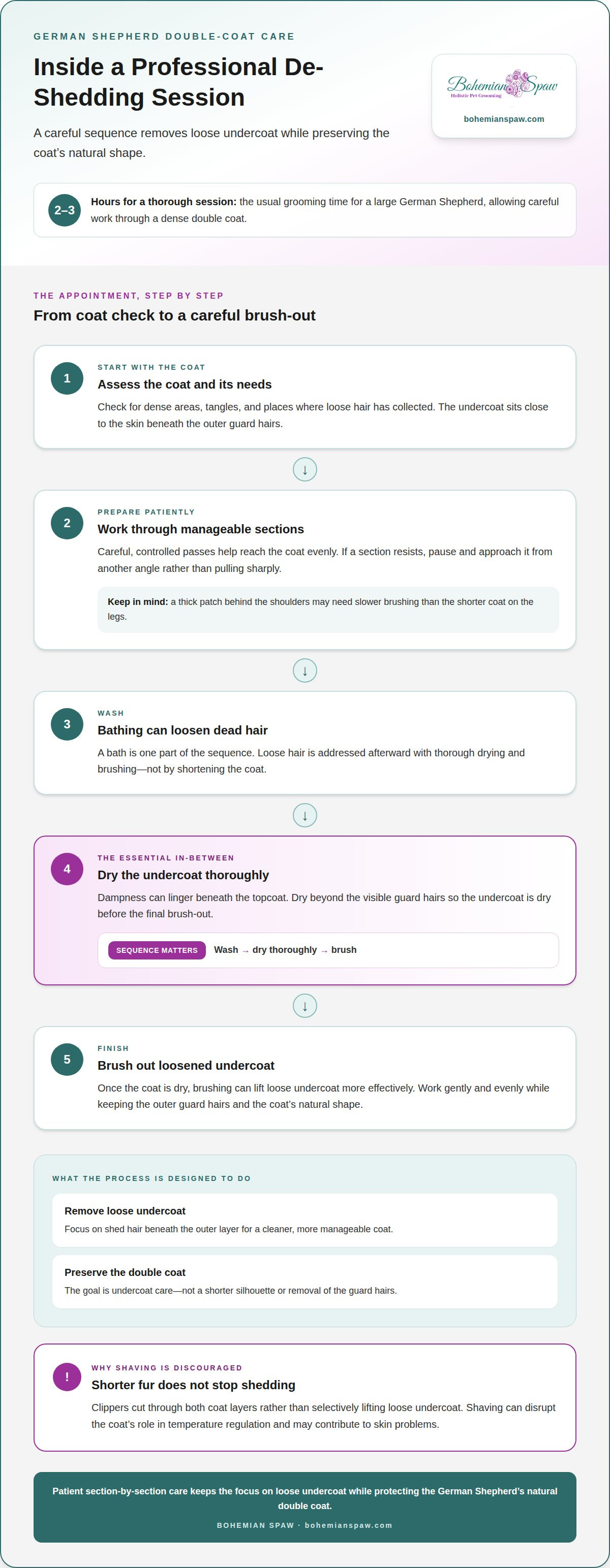
A thorough grooming session for a large German Shepherd usually takes 2 to 3 hours. The time allows careful work through a dense double coat, rather than brushing only the visible surface. A professional deshedding appointment focuses on releasing loose undercoat while preserving the outer guard hairs. The goal is a cleaner, more manageable coat, not a shorter silhouette.
A grooming session begins by assessing the coat and identifying areas that need extra care. Loose undercoat sits close to the skin, beneath the outer guard hairs. Working section by section helps reach the coat evenly and avoids tugging through resistant areas. A German Shepherd’s size and dense coat make a patient, methodical pace especially useful.
Bathing can help loosen dead hair, but the undercoat needs thorough drying afterward. Dampness can linger beneath the topcoat, so drying should reach beyond the outer hairs. Once the coat is dry, brushing can lift loosened undercoat more effectively. The sequence matters: wash, dry thoroughly, then work through the coat with suitable grooming tools.
- Coat assessment: note dense areas, tangles, and places where loose hair has collected.
- Careful preparation: work through the coat in manageable sections before bathing.
- Thorough drying: make sure the undercoat is dry, not just the guard hairs.
- Final brush-out: remove loosened fur while keeping the coat’s natural shape.
For example, a thick patch behind the shoulders may need slower brushing than the shorter coat on the legs. Gentle, controlled passes help separate loose hair without scraping the skin or pulling sharply. If a section resists, pause and approach it from another angle rather than forcing the brush through. A calm pace supports coat care and a more comfortable experience for your dog.
A professional appointment can be useful when loose undercoat is difficult to manage at home, or when the coat needs a full bath-and-dry routine. The time involved also gives the groomer room to work carefully across a large dog’s body. To explore professional grooming options, consider a session focused on undercoat care and a thorough finish.
After grooming, continue brushing regularly to keep loose hair from building up again. Notice how the coat feels and whether undercoat still lifts freely. A steady routine between visits helps maintain the result, while a professional De-Shedding Treatment can address heavier buildup when needed.
4. Why shaving is discouraged
Shaving a German Shepherd may seem like a direct way to reduce loose fur, but it removes more than shedding undercoat. The breed’s double coat helps regulate temperature. Shaving can disrupt that function and may contribute to skin problems, so it isn’t a recommended shortcut for managing seasonal shedding.
Your dog’s visible fur isn’t simply excess hair waiting to be cut away. The outer guard hairs and dense undercoat work together as a double coat. Clippers cut through both layers rather than selectively lifting loose undercoat. That difference matters: shortening the coat doesn’t address why loose hair is coming away during a seasonal shed.
Shaving also doesn’t stop shedding. Loose hairs can still emerge as the coat grows, while the trimmed coat no longer has its original length. Since shaving may cause skin problems, it can trade a temporary change in appearance for an avoidable concern. Keeping the coat intact and removing loose undercoat through grooming is the more suitable approach.
Instead of shaving, use a gentle coat-care routine:
- Brush through the coat: use steady, comfortable strokes to lift loose hair without scraping the skin.
- Address dirt with a bath: bathe as needed using a mild, dog-specific shampoo.
- Dry thoroughly: make sure the undercoat is dry, not only the visible top layer.
- Choose deshedding care: have loose undercoat removed without cutting the coat short.
For example, a German Shepherd with tufts of loose undercoat during a spring or fall shed needs those hairs removed, not a close clip. A bath followed by thorough drying can prepare the coat for brushing. A careful deshedding session works with the existing coat, while shaving removes both loose hair and coat length.
If the coat feels difficult to manage, identify the specific issue: loose undercoat, dirt, or a coat that needs drying after a bath. These needs call for grooming, not shaving. Maintaining the double coat also means resisting the urge to clip it just because shedding looks dramatic.
For hands-on help managing loose undercoat while preserving coat length, book a professional deshedding appointment.
Bohemian Spaw
Bohemian Spaw helps manage a German Shepherd’s loose undercoat with grooming focused on coat care rather than shaving. A De-Shedding Treatment can suit a heavier seasonal shed, while a Full Groom or Bath & Brush can address broader grooming needs. Choose based on whether your dog mainly needs loose hair removed or a more complete bath and grooming routine.
If you’re unsure which approach suits your dog’s coat, describe what you’re noticing, such as tufts of undercoat or difficulty brushing. That gives Bohemian Spaw a practical starting point for discussing a comfortable next step for your dog.
Contact Bohemian Spaw to talk about grooming support for your German Shepherd.
Make the Next Grooming Step Feel Simple
A thoughtful grooming plan can make seasonal coat care a steadier part of life with your dog. For a German Shepherd’s undercoat blowout in Glen Ellyn, choose support that fits your dog’s needs, whether that means removing loose coat or keeping up with a broader grooming routine.
Bohemian Spaw offers Full Groom and Bath & Brush services for ongoing care, along with Puppy’s First Groom for young dogs beginning their grooming experience. Share what you’ve noticed about your dog’s coat to start a useful conversation about the next step.
Contact Bohemian Spaw about grooming to discuss care for your companion. A calm, consistent approach can make coat care feel more manageable for both of you.
Frequently Asked Questions
Can I Shave My German Shepherd To Stop The Shedding?
No. Shaving shortens the coat but doesn’t stop shedding, and it can disrupt temperature regulation or contribute to skin problems. Keep the double coat intact and focus on removing loose hair instead. If persistent matting or another coat concern has you considering a clip, discuss the specific issue with a grooming professional before choosing an approach.
How often should I brush my German Shepherd to control the hair?
Brush your German Shepherd two to three times a week as a regular routine, and brush daily during seasonal shedding. A short, gentle session each day during a heavy shed can help keep loose fur from gathering in one large mass. Brush in the direction of the coat, and pause if your dog seems uncomfortable or the brush catches.
What Is a Double Coat?
A double coat has two distinct layers: outer guard hairs and a soft, dense undercoat. Think of the guard hairs as the visible layer and the undercoat as the softer layer beneath. German Shepherds have both, so coat care should preserve its natural length rather than treat it like hair that needs clipping.
Why Does My German Shepherd Shed So Much All Year Round?
German Shepherds can shed loose hairs throughout the year, with heavier undercoat shedding during seasonal coat changes. A few hairs on a blanket between those periods don’t necessarily mean a blowout is underway. Track whether shedding is steady or suddenly heavier, and note where loose fur gathers, such as your dog’s bed or favorite resting spot.
What is a German Shepherd undercoat blowout?
A German Shepherd undercoat blowout in Glen Ellyn means a heavier seasonal release of soft undercoat, rather than a few loose hairs from everyday shedding. You may notice soft tufts coming away during brushing. The seasonal pattern helps distinguish this concentrated shed from the gradual fur you find around the home throughout the year.
How often should a German Shepherd be groomed during coat blowout?
Brush daily during a coat blowout, and arrange professional deshedding when loose undercoat builds faster than your regular brushing can remove it. The amount of coat coming free, how easily it brushes out, and whether your dog needs a bath and thorough drying all help guide the timing. A professional De-Shedding Treatment can address accumulated loose coat without shaving.


