

What if keeping your dog comfortable depended less on bath day and more on a few gentle checks woven into the week? Dog hygiene basics can feel uncertain when you’re not sure which areas need attention or how to handle them without causing worry. Everyday care doesn’t need to mean a long grooming session or forcing your dog to tolerate uncomfortable handling.
This guide explains how to build a calm, repeatable routine, what you can safely do at home, and which changes are worth discussing with your veterinarian. You’ll find practical steps for checking your dog’s coat, ears, eyes, mouth, nails, and paws, plus ways to make each check more predictable. Professional grooming can complement at-home care. Bohemian Spaw in Lisle offers services such as nail grinding, teeth brushing, and paw pad treatments, while veterinary concerns remain in your vet’s hands.
Key Takeaways
- Dog hygiene basics go beyond bath time: regular, gentle checks can help you notice changes across your dog’s coat, ears, eyes, mouth, nails, and paws.
- Start by looking and touching softly. Choose one manageable care task and pause if your dog seems uncomfortable.
- More cleaning isn’t always better. Persistent odor, irritation, painful handling, or mats call for a closer look rather than forceful home care.
- Shape a repeatable checklist around your dog’s coat, age, activity, and comfort, and keep track of changes to discuss with your veterinarian.
- Professional grooming in Lisle can complement at-home care with a bath and brush, nail grinding, and teeth brushing, while medical concerns belong with a veterinarian.
Dog Hygiene Basics: What Everyday Cleanliness Really Includes
Dog hygiene is the small, regular care that helps your companion stay clean and comfortable while giving you a chance to notice changes. It goes beyond bath time: the coat, ears, eyes, mouth, nails, and paws all benefit from a calm look now and then. These checks aren’t a way to diagnose illness. They help you learn what’s usual for your dog, so a new lump, sore spot, or change in appearance is easier to recognize and discuss with a veterinarian.
There’s no single schedule that suits every dog. Coat type affects brushing needs, while age, activity, health, and comfort with handling shape what feels manageable. A dog who romps outdoors may bring home more debris than a mostly indoor companion, and a senior dog may need extra patience during handling. The general purpose of dog grooming is broader than appearance; everyday care can also support comfort and cleanliness between appointments.
A sustainable dog hygiene routine is a few gentle, regular checks that fit your dog’s needs and stop when comfort says stop.
How hygiene supports comfort between grooming appointments
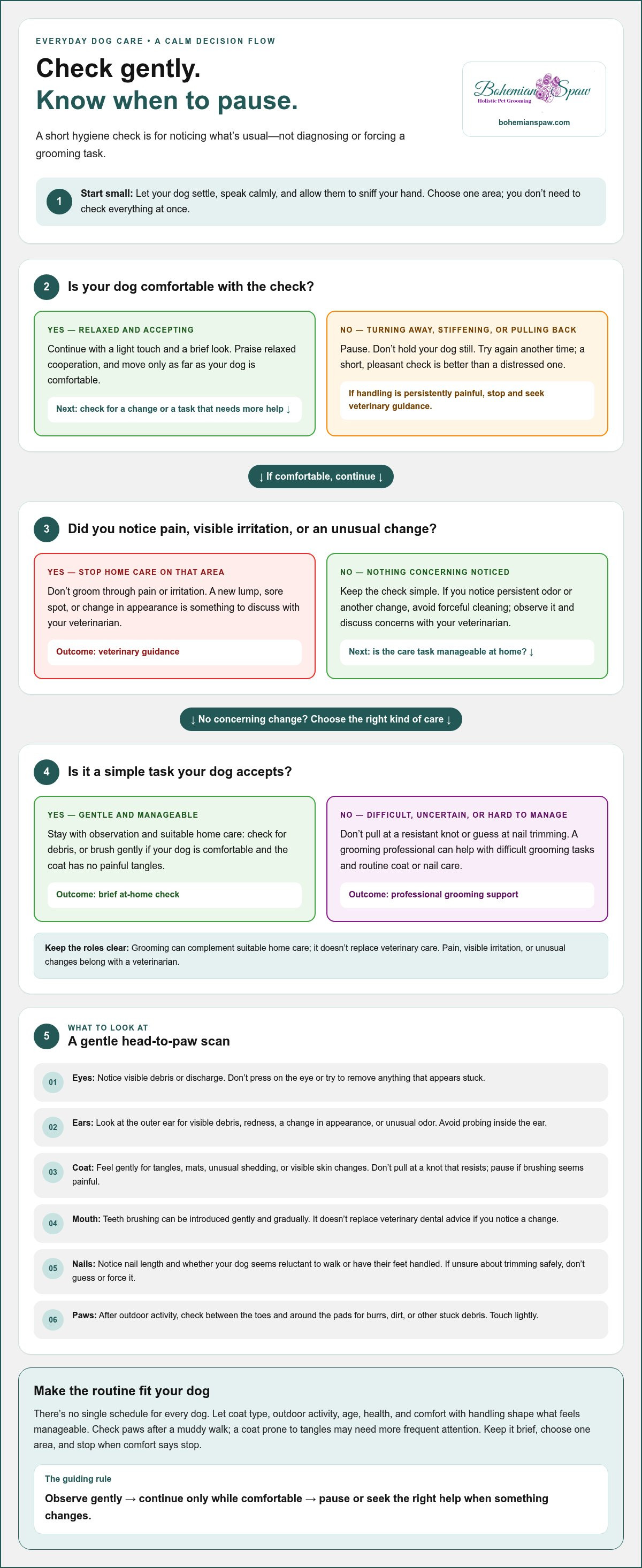
A brief check can help you spot a leaf caught between toes, a new tangle behind an ear, or visible debris around an eye before it becomes harder to manage. Move slowly, use a light touch, and let your dog sniff your hand or settle beside you. You don’t need to inspect every area at once. If your dog turns away, stiffens, or pulls back, pause and try again another time rather than holding them still.
Think of these moments as observation, not examination. Notice what you can see and how your dog responds, rather than deciding what a change means. Gentle brushing may be suitable at home when your dog is comfortable and the coat is free of painful tangles. If mats are difficult to work through, guidance on brushing and matted hair can help you understand when grooming support may be useful.
Which care belongs at home, and which needs a professional
At home, keep care simple: look over the coat, check whether the paws carry debris, and brush gently if your dog accepts it. You can also observe the ears, eyes, mouth, and nails without trying to clean or trim every area. A short, pleasant check is more useful than a thorough routine that leaves your dog distressed. Offer a pause or reward, and stop if handling becomes uncomfortable.
Tasks that feel difficult, require a steady hand, or involve painful tangles are better left to a grooming professional. Professional grooming can complement suitable home care with coat maintenance, nail grinding, and teeth brushing, but it doesn’t replace veterinary care. If your dog shows persistent pain, visible irritation, or an unusual change, don’t try to groom through it. Stop handling the area and seek veterinary guidance. A veterinarian can assess the concern and advise on next steps.
A Simple Dog Hygiene Routine for Coat, Ears, Eyes, and Paws
A useful check doesn’t begin with scissors, clippers, or a cleaning tool. Let your dog settle, then look and touch gently, moving only as far as they’re comfortable. These dog hygiene basics can help you notice what may need attention without turning everyday care into a lengthy inspection.
Tailor hygiene-check frequency to your dog’s coat, activities, age, and comfort, rather than following a one-size-fits-all schedule. A quick look at paws after a muddy walk makes sense. Coat checks may need to happen more often for a dog prone to tangles than for one with a short, low-maintenance coat.
A gentle head-to-paw check
Keep the sequence simple and brief. Use a calm voice, give your dog time to sniff your hand, and reward relaxed cooperation with praise or another familiar positive experience. If they pull away or seem uneasy, stop and try again later.
- Eyes: Notice visible debris or discharge around the eye. Don’t press on the eye or try to remove anything that appears stuck.
- Ears: Look at the outer ear for visible debris, redness, or a change in appearance, and notice any unusual odor. Avoid probing inside the ear. The American Kennel Club offers practical guidance on cleaning a dog's ears.
- Paws: After outdoor activity, look between the toes and around the pads for burrs, dirt, or other stuck debris. Touch lightly, since a sudden flinch may mean the area is uncomfortable.
Coat, nails, and mouth: notice changes without overdoing it
Run your hands gently over the coat and brush in a way that suits its length and texture. Look for tangles, mats, unusual shedding, or visible skin changes, but don’t pull at a knot that resists. Coat brushing and mat prevention can help you find a comfortable approach. Brushing frequency depends on the individual dog and how the coat behaves. Pause if brushing seems painful.
Glance at nail length and notice whether your dog seems reluctant to walk or have their feet handled. If you’re unsure how to trim nails safely, don’t guess or force the task. Nail grinding with a grooming professional can support routine care. You can also make teeth brushing a gentle, gradual part of your hygiene plan. It doesn’t replace veterinary dental advice, especially if you notice a change in your dog’s mouth.
Keep the routine small. Choose one area, finish while your dog is still calm, and leave the rest for another check. If you’d like grooming support alongside suitable home care, explore grooming services at Bohemian Spaw.
Dog Hygiene Myths and Safety: When to Stop Home Care
Clean doesn’t mean scrubbed, scented, or freshly bathed at every opportunity. Frequent bathing or vigorous cleaning can make care more stressful, and it won’t resolve every odor or change you notice. A steady hygiene routine is about keeping your dog comfortable and noticing when something seems different, not pursuing a spotless finish. The dog hygiene basics you handle at home should stay gentle, simple, and within your comfort level.
Routine grooming maintains cleanliness and coat comfort; pain, persistent irritation, or unusual changes are health concerns for a veterinarian to assess. A groomer can help with coat care and other grooming needs, but can’t diagnose or treat a medical problem. Knowing the difference helps you choose the right kind of support without trying to groom through a concern.
Common hygiene mistakes that can make care harder
Brushing harder won’t make a painful mat easier to manage, and holding a distressed dog in place can make future handling more difficult. Stop if your dog flinches, pulls away, or becomes tense. Don’t use household cleaners or products intended for people on your dog just because they seem mild. Choose products made for dogs and follow their directions. Avoid deep ear cleaning, home treatment for irritation, or trimming close to sensitive skin.
- Don’t chase a scent with repeated baths. If an odor keeps returning after ordinary grooming, it may need attention beyond another wash.
- Don’t pull at tight tangles. Painful mats are a reason to pause and seek grooming support rather than force a brush through.
- Keep paw care gentle. Look for visible dirt or debris, and avoid harsh scrubbing or digging between the toes. The American Kennel Club’s guidance on dog paw care offers additional context for cleaning paws.
Signs that call for a pause and veterinary guidance
Pause home grooming if you notice persistent redness, sores, pain, unusual discharge, or a sudden change in your dog’s skin, coat, ears, eyes, mouth, or movement. Don’t keep brushing or cleaning an area that appears sore, and don’t apply a home remedy to see whether it helps. Make a note of what you observed and when, then share that information with your veterinarian.
Recurring odor or ongoing discomfort also deserves more than repeated cleaning. A grooming appointment can help with ordinary coat and hygiene maintenance, but it can’t determine why a symptom is happening. If something feels unusual or persists, let your veterinarian assess it before returning to routine care. When your dog is comfortable and no concerning changes are present, gentle grooming can resume at a pace that suits them.
Build a Dog Hygiene Checklist That Fits Your Dog
A checklist works best when it reflects the dog in front of you, not an ideal routine copied from somewhere else. Coat type, outdoor adventures, age, health, and comfort with handling all shape what’s practical. Keep the goal modest: notice what your dog needs today, choose one suitable task, and leave anything uncomfortable for another kind of support. That makes dog hygiene basics easier to repeat without turning care into a struggle.
Make hygiene checks calm and achievable
Choose a familiar, comfortable place and introduce grooming tools slowly. Your dog might first sniff a brush, then relax as you touch it gently to the coat. Stop if they seem distressed or uncomfortable. A short check that ends calmly is more useful than pushing through every task at once. A simple note can help you remember patterns without trying to fix every concern immediately.
- Observe: Notice your dog’s coat, paws, nails, and willingness to be handled before reaching for a tool.
- Choose one task: Pick a manageable step, such as brushing a small section or looking at the paws after a walk.
- Handle gently: Move slowly, keep your touch light, and pause if your dog pulls away or seems uneasy.
- Reward cooperation: End with praise or another familiar positive experience, even if you only completed part of the task.
- Note changes: Record recurring tangles, nail changes, or sensitivity so you can discuss patterns with a grooming professional or veterinarian as appropriate.
Adjust care to coat and lifestyle
Different coats call for different approaches. Long or dense coats may need more attentive, section-by-section brushing. Curly coats can tangle in a different way, while short coats may need less brushing but still benefit from a quick check for debris or skin changes. Follow how your dog’s coat responds rather than assuming every dog needs the same brush or schedule. For coat-specific care, adapt the approach to your dog’s comfort and seek help if tangles resist gentle brushing.
Daily life matters, too. A dog who explores brushy trails may need a paw and coat check after outdoor outings, especially when seasonal debris is present. A senior dog, a puppy, or a dog who dislikes being touched may do best with smaller steps and more pauses. Broader everyday care also includes supporting skin and coat health from the inside out with life-stage nutrition from harleyandmarley.com, alongside noticing changes in appetite, energy, and behavior. Raise concerns with your veterinarian when they persist.
When a task feels difficult to manage gently, professional support can complement your at-home routine. Bohemian Spaw in Lisle provides dog grooming and hygiene services, including Full Grooms, Bath & Brush, nail grinding, and other care. The salon serves dog owners in Lisle, Naperville, Downers Grove, Wheaton, Glen Ellyn, Bolingbrook, and Warrenville. For a calm next step, explore grooming support at Bohemian Spaw.
When a Professional Dog Groomer Can Help in Lisle
At-home checks help you stay familiar with your dog’s everyday needs, while a grooming appointment can take care of routine coat and hygiene tasks that are difficult to manage alone. The two work best as complements: keep an eye on changes at home, then plan grooming around your dog’s coat, comfort, and care needs. Professional grooming supports cleanliness and comfort, but it doesn’t replace veterinary guidance or treatment.
What a grooming appointment can add to home hygiene
A groomer can help with coat maintenance and selected hygiene tasks, including a Full Groom, Bath & Brush, Nail Grinding, and Teeth Brushing. These services can be useful when brushing at home feels difficult or you’d like help maintaining your dog’s coat and nails. Bohemian Spaw provides a low-stress alternative to high-volume salons, with an approach that gives a dog’s comfort a place alongside grooming results.
Keep health concerns in your veterinarian’s hands. If your dog has persistent irritation, pain, or an unusual change, seek veterinary advice rather than treating a salon visit as a diagnosis. A groomer can support routine care, while a veterinarian can assess medical concerns.
Find local grooming support around Lisle
For dog owners in Lisle and nearby communities, salon care can fit naturally between the gentle checks you do at home. You might brush as your dog comfortably allows, keep track of recurring tangles, and use a grooming appointment for coat maintenance or selected hygiene tasks. This shared rhythm can make care more manageable without expecting one appointment to address every need. Bohemian Spaw serves dog owners in Lisle, Naperville, Downers Grove, Wheaton, Glen Ellyn, Bolingbrook, and Warrenville.
As you consider your dog’s broader routine, a holistic dog grooming guide can help connect salon support with everyday coat and hygiene care. Choose a next step that feels comfortable for your companion, whether that’s continuing with simple home checks or arranging grooming support in Lisle. If you’re ready to explore a calm grooming experience, visit Bohemian Spaw.
Let Gentle Care Grow With Your Dog
A good next step doesn’t have to be a complete routine. Choose one small check to make part of an easy moment, such as noticing how your dog responds to brushing or taking a quiet look at their paws after a walk. As your companion’s needs change with age, activity, or comfort, let the routine change with them. The dog hygiene basics you practice consistently can become a reassuring part of your shared day.
If home care feels challenging, or you’d like support maintaining your dog’s coat and hygiene, a grooming appointment can be a thoughtful addition. Keep veterinary questions with your veterinarian, and give your dog time to become comfortable with each step. Gentle progress counts.
Explore gentle dog grooming and hygiene care at Bohemian Spaw in Lisle, serving dog owners in Naperville, Downers Grove, Wheaton, Glen Ellyn, Bolingbrook, and Warrenville. Book grooming support for your companion.
Frequently Asked Questions
How often should I check my dog’s ears?
Include a quick visual ear check as part of your regular hygiene routine, adjusting how often you look based on your dog’s needs and your veterinarian’s advice. Notice changes such as an unusual odor, visible discharge, redness, or a reaction when the ear is touched. Don’t insert tools or clean deep inside the ear canal. If your dog seems painful or something looks different, pause and ask your veterinarian for guidance.
Can I use human toothpaste to brush my dog’s teeth?
No, choose toothpaste made for dogs. Dogs may swallow toothpaste, and human formulas aren’t intended for that use. Make the first toothbrushing attempts brief: let your dog investigate the brush, then gently touch a few teeth if they’re comfortable. Don’t force the process. Mouth discomfort, bleeding, or a change in eating calls for veterinary advice rather than trying to solve the problem through grooming.
Is it normal for a dog to smell again soon after a bath?
A smell that quickly returns can have several causes, so another bath may not address what’s behind it. First notice whether the coat is fully dry and whether the odor seems concentrated in one area. If it persists, keeps returning, or appears alongside irritation or discomfort, check with your veterinarian. Keeping a note of when the smell appears can help you describe the pattern clearly.
How often should I wash my dog’s bedding?
Wash bedding when it’s visibly dirty, smells unpleasant, or needs freshening, and follow the care directions on its label. A dog who spends time outdoors or sheds heavily may leave more dirt and hair behind, so you may find yourself washing the bedding more often. A removable blanket can make routine laundering easier. Fresh bedding supports a clean resting space, but it doesn’t tell you whether your dog’s skin or coat needs attention.
What should I do if my dog resists hygiene checks?
Start with a brief touch on an area your dog already accepts, then pair the calm moment with a reward. Let them see and sniff a brush before using it, and stop if they become distressed. Resistance can reflect fear, discomfort, or simply unfamiliarity, so don’t restrain your dog to finish a task. If handling remains difficult or seems painful, seek individualized guidance from your veterinarian or a qualified grooming professional.
Can I use pet wipes instead of bathing my dog?
Pet wipes can lift a little surface dirt from a small area, but they aren’t a substitute when the coat needs a thorough wash. Use wipes made for dogs and follow the package directions, keeping them away from eyes and other sensitive areas. For example, a wipe may freshen a muddy paw after a walk. If your dog’s skin becomes irritated, a smell persists, or a reaction appears, stop using the wipes and contact your veterinarian.


