

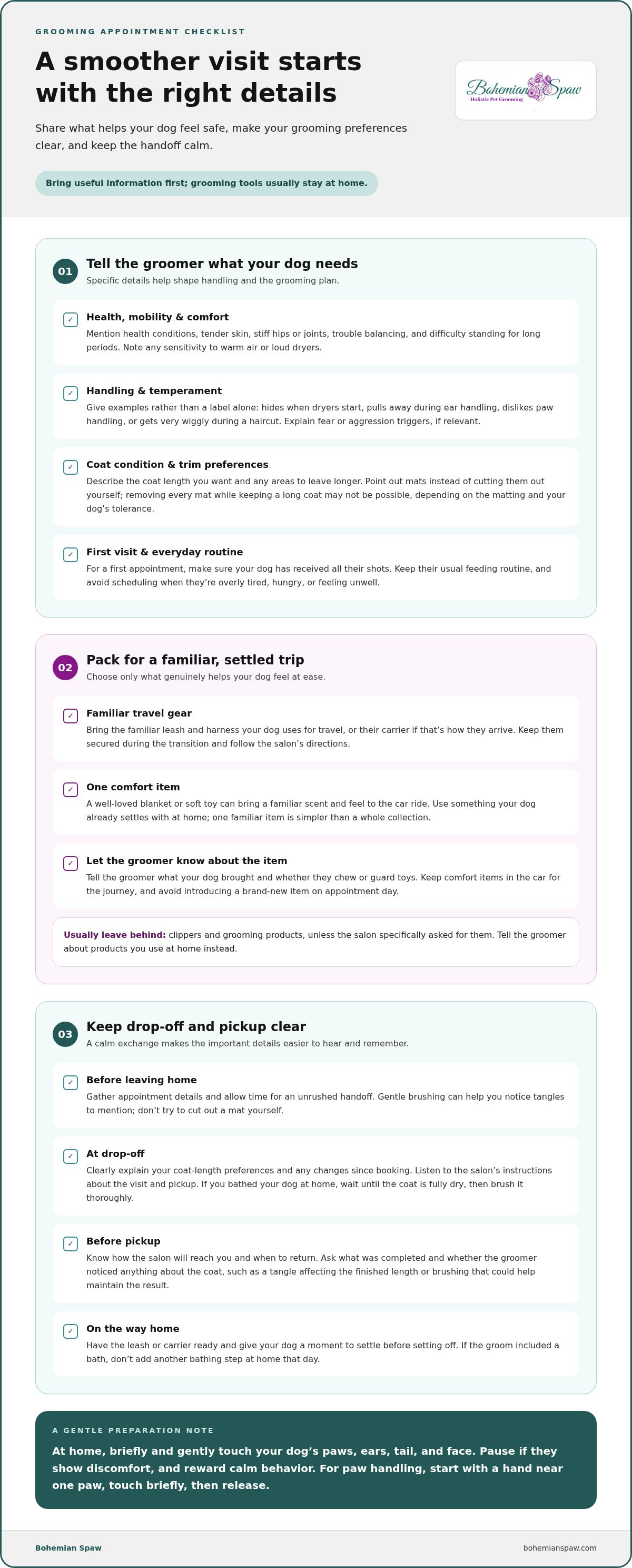
A calmer grooming visit starts with useful details, not a packed bag. For what to bring to a grooming appointment, focus on your dog’s health and handling information, a clear description of the trim you want, and a familiar blanket or toy for the car ride. Share any sensitivities or preferences with the groomer, too.
It’s natural to want your companion to feel safe and comfortable, especially if this is a first visit or they’re unsure about grooming. A little preparation helps the groomer understand your dog’s needs and makes the handoff smoother. You’ll learn which details to share, what comfort items may help, and how to keep drop-off and pickup calm and unhurried.
Key Takeaways
- Share relevant health, mobility, and handling details so the groomer can tailor the visit to your dog’s needs.
- A familiar blanket or toy can make the car ride feel more comforting; bring only items that help your dog settle.
- Plan a calm handoff, communicate your grooming preferences clearly, and know how you’ll coordinate pickup.
- Tell the groomer about your dog’s temperament, sensitivities, and any situations that may make grooming challenging.
1. Sharing health, mobility, and handling information
A practical checklist for what to bring to a grooming appointment starts with information, not equipment. Before drop-off, note your dog’s health conditions, mobility limitations, and any areas they dislike being touched. For example, mention stiff hips, tender skin, or difficulty standing for long periods. These details help the groomer understand what may affect the grooming process and how your dog may respond to handling.
Describe what your dog can comfortably manage. Tell the groomer if they need breaks, have trouble balancing, or pull away when their paws are handled. If there’s a mat, point it out and share your coat-length preference. Removing every mat while keeping the coat long may not be possible; the safest option depends on the matting and your dog’s tolerance for handling.
Practice brief, gentle handling at home. Touch your dog’s paws, ears, tail, and face, then pause if they show discomfort. For paw handling, start by resting a hand near one paw, briefly touch it, then release. Reward calm behavior after each step. This can help your dog become familiar with grooming sensations, including the sound and proximity of clippers.
For a first grooming appointment, make sure your pet has received all their shots. Puppies can also benefit from a gradual introduction to grooming-related handling. Review these puppy grooming details as you prepare for their first visit.
Should I bring grooming tools or products? Usually, no. Tell the groomer about products you use at home or your coat preferences, but leave clippers and grooming products behind unless the salon has specifically asked for them.
Should I feed my dog beforehand? Keep your dog’s usual feeding routine so they don’t arrive hungry. Avoid scheduling when they’re overly tired, hungry, or feeling unwell.
What if I forget something needed? Tell the groomer at drop-off, explain what’s missing, and clarify your priorities. They can adjust the plan using the information and items available.
2. Bringing a favorite blanket and toys for the car ride
A favorite blanket or toy can bring a familiar scent and feel to the car ride to a grooming appointment. Choose something your dog already settles with at home, such as a small fleece blanket or soft toy. One familiar item is usually simpler than bringing a whole collection.
Keep comfort items in the car for the journey, then tell the groomer what your dog brought. A blanket can offer a familiar place to settle during travel, while a favorite toy may help your dog relax before arrival. If your dog tends to chew or guard toys, mention that so the item can be handled thoughtfully.
Make the ride feel predictable with a calm routine. Place the blanket where your dog usually rests, bring the same toy they enjoy at home, and avoid introducing a brand-new item on appointment day. For a puppy’s first visit, one familiar comfort object can make the new trip feel less unfamiliar. These first-visit preparation details can help you plan a smooth arrival.
Use a positive tone before and after the grooming session. A gentle word or small reward after your dog settles into the car can reinforce calm behavior. When you collect your dog, praise them for the transition home, especially after a new experience such as a nail trim. Keep rewards familiar rather than making the ride feel like a big event.
Pack only what helps your dog feel at ease. A well-loved blanket may be enough for a dog who prefers resting, while another may find a familiar toy more comforting. Tell the groomer which item your dog responds to and whether it has any special meaning. That context helps make the comfort item part of a considerate handoff.
3. Preparing for drop-off and pickup
Before leaving home, gather your dog’s appointment details and allow time for an unrushed handoff. Be clear about your grooming preferences, such as the coat length you want or areas to leave longer. At drop-off, explain any changes since booking, then listen to instructions about the visit and pickup. A calm, concise exchange helps keep important details clear.
Should I bring my dog’s leash, carrier, or harness? Bring the familiar leash and harness your dog uses for travel, or their carrier if that’s how they arrive. Keep your dog secured during the transition and follow the salon’s directions for handing them over.
For a grooming service that includes bathing, your dog usually doesn’t need a bath immediately beforehand. If you bathed your dog at home, wait until the coat is fully dry, then brush it thoroughly to help prevent mats. Gentle brushing before the visit can also help you notice tangles to mention at drop-off. Don’t try to cut out a mat yourself; point it out and describe your coat-length preference.
Before pickup, know how the salon will reach you and when to return, following its instructions. When you collect your dog, ask what was completed and whether the groomer noticed anything about the coat that you should know. For example, find out if a tangle affected the finished length or whether brushing at home could help maintain the result.
Keep the trip home simple. Have your leash or carrier ready, and give your dog a moment to settle before setting off. If the groom included a bath, don’t add another bathing step at home that day. A predictable ride and familiar routine help bring the appointment to a gentle close.
4. Sharing temperament and health details with the groomer
Describe your dog’s temperament with specific examples, not labels alone. Instead of saying “nervous,” explain that they hide when dryers start or pull away during ear handling. Mention if your rescue dog has shown fear or aggression, and explain which situations trigger it. Clear details help the groomer plan safer handling and a more comfortable grooming process.
Share health and mobility changes that could affect standing, brushing, or drying. For example, tell the groomer if your dog has tender skin, stiff joints, or difficulty balancing on a grooming table. Note any sensitivity to warm air or loud dryers. A dog who gets very wiggly during a haircut may need a different handling approach to help keep them safe.
Before the first appointment, have your dog’s vaccination information ready and share their current status. Dogs should receive all their shots before their first grooming appointment. Bring the records you have, including rabies vaccination proof, and offer them during intake. Be clear about what the records show instead of guessing at dates or details.
At drop-off, describe what helps your dog settle. For instance, say whether they respond to a familiar cue, prefer space from other dogs, or relax when handling pauses. Mention past grooming experiences, including reactions to clippers, dryers, nail care, or water. These examples give the groomer useful context beyond a broad temperament description.
If your dog is new to grooming, share what they’ve practiced at home, such as tolerating gentle brushing or brief paw handling. For a puppy, explain which sounds or touches are still unfamiliar. You can use the first-visit preparation guide to help organize what to share before arrival.
What vaccination records do groomers require? Bring your dog’s available vaccination records and share their current status. All shots should be complete before a first grooming appointment.
Do grooming salons require proof of rabies vaccination? Have the rabies record ready and offer it at intake. State the vaccination details accurately rather than assuming a requirement.
Bohemian Spaw: Full Groom
Bohemian Spaw’s Full Groom is a natural next step when your dog needs a complete grooming appointment. The details you’ve prepared, including health notes, handling preferences, and your desired trim, help shape a clear conversation about your dog’s visit. Share what your companion finds comfortable, too, so their individual needs are part of the handoff.
If you’re bringing home a puppy for a first salon experience, Puppy’s First Groom offers an option for that introduction. For dogs who need coat maintenance rather than a full groom, Bath & Brush may suit the appointment you have in mind. Choose the service that matches your dog’s grooming needs, then bring the useful notes and familiar comfort items you’ve gathered.
Contact Bohemian Spaw to discuss your dog’s grooming appointment.
Make the Next Visit Feel Familiar
Let each grooming appointment become a gentle part of your dog’s routine. A simple plan for what to bring to a grooming appointment can help you feel organized, while your dog encounters familiar cues from the journey to the handoff. Keep useful notes together and update them when your dog’s comfort or needs change.
After the visit, notice what helped your companion settle and what felt difficult. Perhaps a familiar travel routine worked well, or a particular sound made your dog uneasy. Carry those observations into the next appointment so you can share practical details with the groomer. Preparation isn’t about making everything perfect; it’s about giving your dog’s care team a clearer picture of who they are.
If you’re ready to plan your dog’s visit, contact Bohemian Spaw about your visit. With a little thought and a caring handoff, you can take the next step with confidence and help make grooming feel more familiar.
Frequently Asked Questions
What should I do to prepare for my pet’s groom?
Decide what matters most about the finished groom before appointment day. For example, note whether keeping a particular facial shape matters more than preserving coat length. If you have a reference photo, choose one that shows the trim clearly and resembles your dog’s coat type. A short priority list helps explain your preferences if every detail can’t be achieved exactly.
What should I bring to a dog grooming appointment?
Bring a clear visual reference if you have a specific style in mind, along with a brief note about what you like. Point out details such as the face shape or leg finish, rather than expecting a photo alone to explain your goal. A picture is a guide, not a guarantee that the same result will suit every coat.
What information should I give the groomer about my pet's health and behavior?
Share changes that could affect the appointment, including a new limp, skin irritation, or an unusual reaction to handling. Describe what you observe and when it happens, rather than trying to diagnose the cause. If your dog becomes overwhelmed, explain how that looks, such as freezing, panting, or repeatedly turning away. These details give a clearer picture of your dog’s needs.
What should I do to prepare my dog for grooming?
Help your dog practice standing calmly on a stable, nonslip surface for a brief moment, then reward them and finish before they become restless. This can make standing still feel more familiar during grooming. Keep the practice gentle, especially if your dog has mobility concerns, and stop if they seem uncomfortable. The aim is a calm introduction, not a full grooming session at home.


