
A clean-looking smile doesn’t always mean a healthy mouth. Professional dog teeth brushing in Glen Ellyn can support your dog’s oral hygiene by helping manage plaque, but it cannot replace veterinary dental cleaning when tartar or disease is present. Knowing the difference helps you choose the right care for your companion.
Changes in a dog’s mouth can be easy to miss, especially when discomfort develops quietly. Persistent bad breath, red or bleeding gums, discolored teeth, difficulty eating, or pawing at the mouth can signal a dental concern. Disease may also develop below the gumline before obvious signs appear. This guide covers why routine dental care matters, signs of gum disease to watch for, and what professional brushing involves. You’ll also learn how grooming-level brushing differs from veterinary dental cleaning, so you can choose care that supports your dog’s comfort and oral health.
Key Takeaways
- Notice changes such as persistent bad breath, red or bleeding gums, and difficulty eating; dental problems can develop before discomfort is obvious.
- Routine brushing can support oral hygiene, while significant tartar or disease calls for veterinary dental care.
- Learn what professional brushing can and can’t address, so you can choose care that fits your dog’s needs.
- Bohemian Spaw’s Bath & Brush includes a teeth-brushing option as part of a grooming routine.
Professional dog teeth brushing in Glen Ellyn, Illinois
Dental care combines home habits with professional attention. For dogs in Glen Ellyn, the right approach depends on whether the goal is routine plaque management or treatment of dental disease.
Brushing and Veterinary Cleaning Differences
Professional dog teeth brushing supports routine oral hygiene, while veterinary dental cleaning addresses plaque and tartar above and below the gumline. A complete veterinary evaluation can reveal problems that an awake examination alone may not identify. The difference is scope: brushing is preventive grooming care, while disease, damaged teeth, or substantial tartar call for veterinary assessment and potentially more comprehensive procedures.
Brushing with animal-safe toothpaste can help manage plaque as part of a wellness routine. It does not remove significant tartar that has hardened on the teeth. Brown buildup along the gumline, red or bleeding gums, and persistent bad breath deserve attention. Difficulty chewing, dropping food, or pawing at the face can also point to oral pain.
Dental disease can develop below the gumline before a dog shows clear discomfort, so clean-looking teeth do not reveal the full health of the gums or tooth roots. A dog may continue eating despite an underlying problem. Watch for changes in eating habits or sensitivity around the mouth, and share what you notice during a veterinary examination.
Dental Cleaning Frequency
An annual veterinary dental health examination is recommended for pets. A veterinarian can assess the mouth and determine whether routine monitoring, professional cleaning, or further evaluation is appropriate. Cleaning frequency depends on the dog’s oral health, including tartar buildup, gum condition, and signs of disease. A calendar reminder can help keep annual examinations on track.
Between examinations, regular brushing with animal-safe toothpaste helps manage plaque at home. Introduce it gradually: first help your dog get comfortable with gentle handling around the muzzle, then begin brushing. Watch for changes in gum color, breath, or willingness to chew. A small dog with crowded-looking teeth, for example, may need close attention to changes rather than waiting for visible discomfort.
Anesthesia-Free Cleaning Risks
An awake, anesthesia-free cleaning cannot access below-gumline areas as a veterinary dental cleaning can. Since dental disease may develop beneath the gums, surface cleaning can leave important areas unassessed. A complete evaluation may also uncover problems that an awake oral examination alone cannot identify. The key question is whether your dog needs preventive surface brushing or a diagnostic veterinary procedure.
Significant tartar requires professional veterinary dental cleaning, which addresses areas above and below the gumline. Veterinary cleaning may involve anesthesia, tartar removal, polishing, and an antibacterial gum rinse. This differs from brushing during a grooming appointment. If your dog has bleeding gums, loose teeth, visible damage, or difficulty eating, prioritize veterinary evaluation rather than relying on surface brushing.
Dental care works best when each step matches your dog’s needs. Routine brushing can help manage plaque, while an annual veterinary examination helps assess oral health and identify concerns. If persistent bad breath or mouth sensitivity appears between appointments, note what changed and when. These details help the veterinary team understand what you’re seeing and consider the next step.
Studies cited by Glen Ellyn Animal Hospital indicate that 80% of pets aged 3 years or older have some form of periodontal disease. The practice identifies prevention of periodontal disease and reduced bacteria entering the bloodstream as benefits of regular pet teeth cleaning. Early-stage dental disease can frequently be reversed through thorough cleaning.
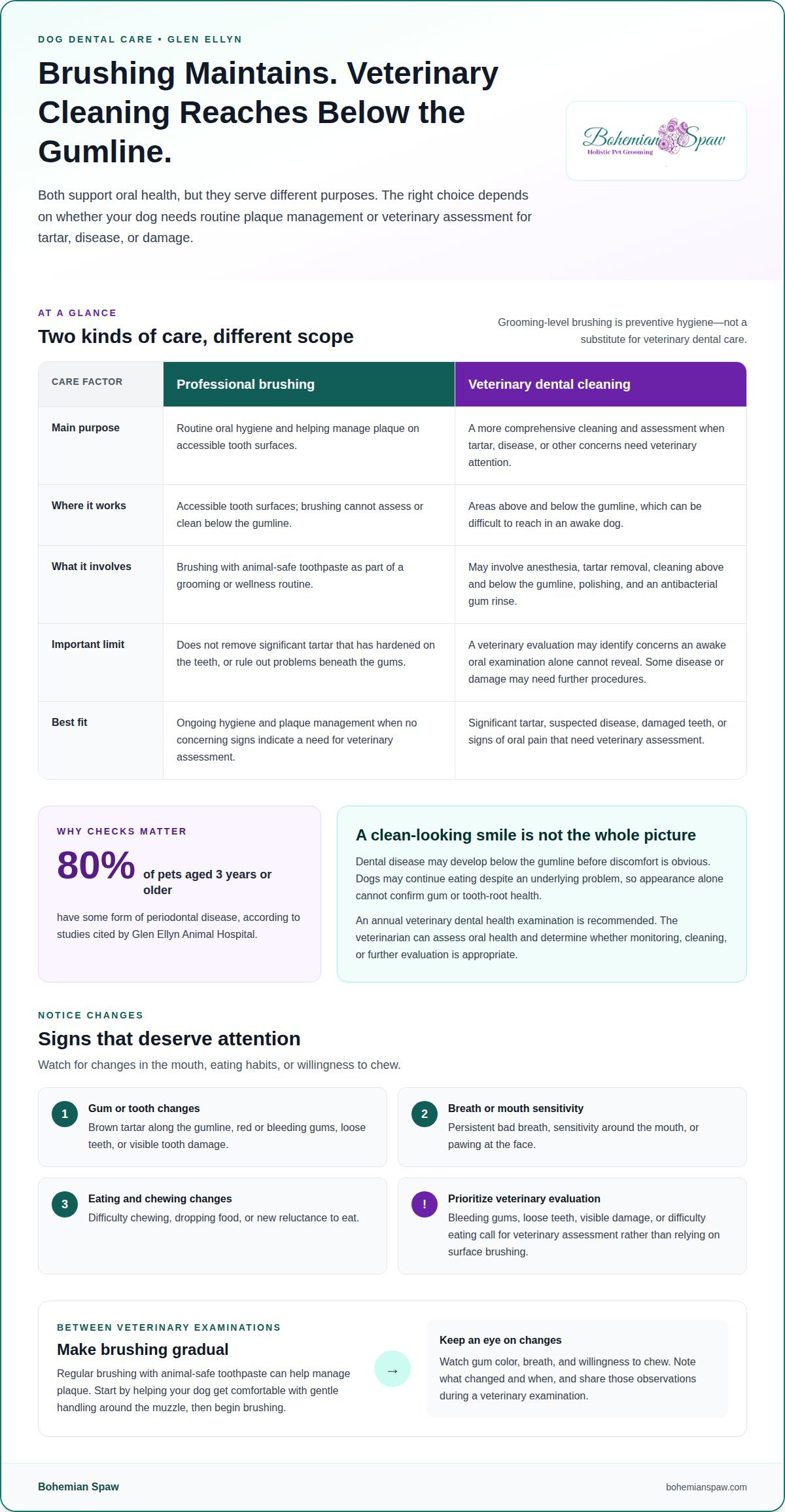
What is the difference between professional dog teeth brushing and veterinary dental cleaning?
Professional brushing and veterinary dental cleaning serve different purposes. Brushing supports routine oral hygiene by cleaning accessible tooth surfaces and helping manage plaque. Veterinary cleaning addresses plaque and tartar above and below the gumline. That distinction matters because visible teeth don’t reveal every change beneath the gums. The right option depends on whether your dog needs ongoing hygiene or assessment and treatment for an oral problem.
For routine care, brushing with animal-safe toothpaste can help manage plaque and limit tartar buildup. It is a maintenance step, not a way to remove significant, established tartar. A dog whose teeth look clean may still have a concern below the gumline, while brown buildup near the gums suggests surface brushing may not be enough. Consider visible signs alongside eating habits and mouth sensitivity rather than judging dental health by appearance alone.
Veterinary cleaning is more comprehensive. It involves anesthesia, tartar removal, cleaning above and below the gumline, polishing, and an antibacterial gum rinse. Anesthesia allows the veterinary team to clean areas that are difficult to reach in an awake dog. A complete evaluation can also reveal problems an awake oral examination alone may not identify. This makes veterinary cleaning different from brushing during regular grooming.
Existing disease or damage can change the care needed. A specialized dental procedure may include imaging and treatment for oral disease or damaged teeth. A fractured or loose tooth, or signs of pain, may require more than plaque and tartar removal. The veterinary treatment plan begins with medical history, an oral examination, imaging findings, and a diagnosis. These steps help tailor treatment to the condition rather than assuming every mouth needs the same procedure.
Notice changes that can help guide the next step:
- Brown tartar along the gumline or gums that look inflamed or bleed.
- Persistent bad breath, loose teeth, or visible tooth damage.
- Difficulty chewing, dropping food, or a new reluctance to eat.
- Facial swelling or pawing at the mouth.
These signs can point to dental disease or pain, but a dog may show few outward clues. Dental problems can develop beneath the gumline before obvious discomfort appears. If your dog shows these changes, seek veterinary assessment rather than relying on routine brushing alone. The findings help determine whether cleaning is sufficient or further dental procedures are needed.
A dog who tolerates gentle brushing and has no visible tartar may benefit from ongoing oral hygiene as part of general care. A dog with bleeding gums or a loose tooth needs a different response. Brushing visible tooth surfaces cannot diagnose the cause or address disease below the gumline. Distinguishing these situations clarifies what brushing can do and when veterinary dental care is needed.
Think of brushing as one part of a broader dental routine, not a substitute for veterinary cleaning. Regular brushing supports plaque control, while a veterinary examination evaluates the mouth and helps identify concerns. This distinction matters especially when tartar, damage, or signs of pain are present. Matching care to the findings supports your dog’s oral health and comfort.
The findings help determine whether cleaning alone is appropriate or whether the care plan needs to address a specific problem. Pets with significant dental disease, trauma, or structural abnormalities may need treatment beyond plaque and tartar removal. In those cases, brushing remains a hygiene measure, not a substitute for evaluation or treatment suited to the diagnosed condition. An awake brushing session also cannot establish that there are no concerns beneath the gumline. The difference is not simply how much cleaning is done, but whether your dog needs routine maintenance or care for an identified oral problem.
When considering care options, tell the veterinary team about changes in eating, chewing, or mouth sensitivity, along with anything you’ve noticed about the teeth and gums. An examination and any imaging findings can help clarify whether the next step is cleaning or a more specific treatment plan. If routine brushing is suitable, continue it as part of ongoing care; veterinary cleaning addresses areas brushing cannot adequately reach. Keeping these roles distinct helps prevent brushing from replacing an assessment when signs suggest disease, damage, or discomfort.
Bohemian Spaw: Bath & Brush
Bohemian Spaw offers Bath & Brush with Teeth Brushing, a practical fit for dogs whose oral hygiene is part of their grooming routine. This service supports everyday care, while signs of dental disease or substantial tartar call for veterinary attention. Keeping those roles distinct lets you add grooming support without mistaking it for medical treatment.
For a broader grooming visit, a Full Groom may suit your dog; a younger companion can begin with Puppy’s First Groom. Consider the Bath & Brush when you want teeth brushing alongside routine coat care. To discuss the right grooming option for your dog, contact Bohemian Spaw.
Make Oral Care Part of Your Dog’s Routine
A steady oral care routine makes changes easier to notice over time. Pay attention to what feels normal for your dog, from comfort with gentle mouth handling to their usual interest in meals and chew items. When something changes, that observation can help guide the next step instead of relying on appearance alone.
Professional dog teeth brushing in Glen Ellyn can be part of a broader grooming routine when your dog needs routine hygiene support. Keep the purpose clear: grooming care and veterinary dental care address different needs. Choose based on your dog’s signs, so you can support their comfort without expecting one kind of care to do everything.
If you’d like to explore a teeth-brushing appointment as part of your dog’s grooming routine, contact Bohemian Spaw about dog teeth brushing. A thoughtful next step can help make everyday care feel calm and manageable.
Frequently Asked Questions
Why do pets need dental care?
Dental care supports comfortable eating and helps limit oral problems that can affect more than the mouth. Untreated gum disease can allow harmful bacteria to enter the bloodstream and affect organs such as the heart, liver, and kidneys. At home, regular brushing with animal-safe toothpaste helps manage plaque, while veterinary examinations can identify concerns that everyday handling may not reveal.
How does it work?
For routine brushing, use animal-safe toothpaste and gently clean accessible tooth surfaces, keeping the experience calm and gradual. Professional teeth brushing during grooming also focuses on accessible surfaces as part of hygiene care. It is not a veterinary procedure: brushing does not assess tooth roots or clean beneath the gumline. A veterinary examination can determine whether further care is needed.
What is included in a professional dog dental cleaning and brushing?
Routine brushing focuses on accessible tooth surfaces, while veterinary dental cleaning is a more comprehensive procedure. Veterinary cleaning involves anesthesia, tartar removal above and below the gumline, polishing, and an antibacterial gum rinse. If existing disease or tooth damage needs attention, a specialty procedure may also involve dental imaging and treatment. The veterinarian’s findings guide the care plan for the dog’s mouth.


