

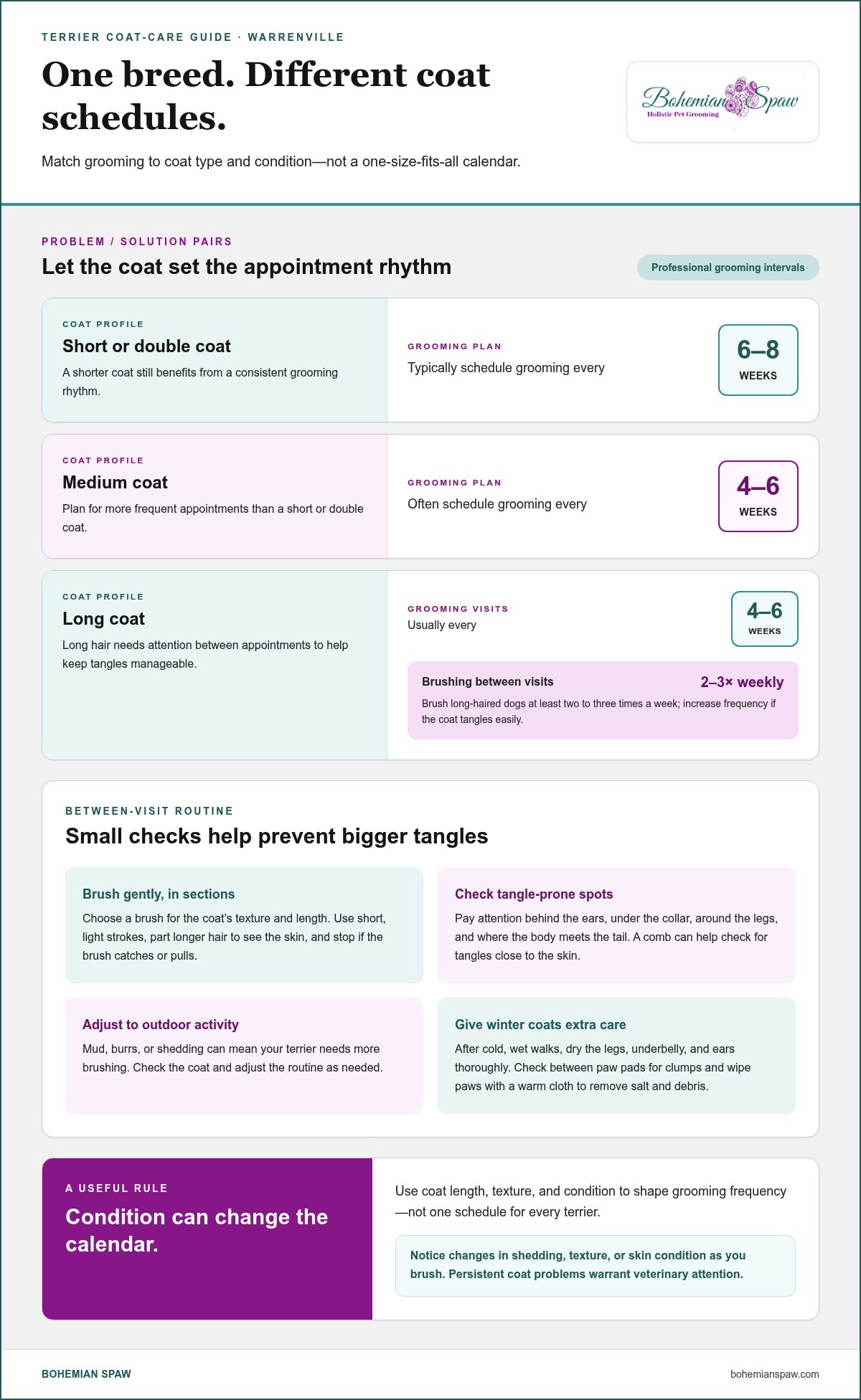
A terrier’s coat type, not just its breed, should guide the grooming schedule. When maintaining the natural coat of a terrier in Warrenville, consider that short- and double-coated dogs typically benefit from grooming every six to eight weeks, while medium-coated dogs often need it every four to six weeks. Long-haired terriers should be brushed at least two to three times a week. A suitable routine keeps coat care consistent without treating every terrier the same.
A simple schedule is appealing, especially when a coat can look tidy one week and tangled the next. This guide explains how to choose a brush, establish a brushing and bathing routine, and adjust grooming frequency to your terrier’s coat. You’ll also learn how seasonal shedding and outdoor activities can affect coat care, and how to preserve natural texture with a gentle, thoughtful approach.
Key Takeaways
- Match the brush to your terrier’s coat texture, and use gentle, section-by-section strokes to catch tangles before they tighten.
- Keep baths purposeful: frequent washing can strip natural skin oils, while thorough drying helps leave the coat comfortable.
- Use coat length and texture to shape grooming appointments, then adjust your routine when seasonal shedding or outdoor activity changes the coat’s needs.
- Think carefully before clipping or shaving a natural coat, since removing too much can reduce protection from sun and heat.
- Hand-stripping calls for a careful approach suited to the coat; learn what to watch for so grooming supports coat condition rather than causing avoidable irritation.
1. Choosing a suitable brush and brushing frequency
Between professional grooming visits, brush your terrier with short, gentle strokes, checking the skin as you go. For a long-haired dog, brushing at least two to three times a week helps keep the coat healthy and free of mats. If your terrier spends plenty of time outdoors, brush two to three times weekly and adjust as needed when mud, burrs, or shedding accumulate.
Choose a brush suited to the coat’s texture and length. An undercoat-grooming brush can help remove loose undercoat without focusing only on the top layer. Work in small sections, parting longer hair so you can see the skin. Use light strokes around sensitive areas, and stop if the brush catches or pulls. A comb can help you check for tangles close to the skin.
Brushing every few days can help keep mats from tightening, especially in a long or dense coat. Pay particular attention behind the ears, under the collar, around the legs, and where the body meets the tail. These areas often rub against collars, bedding, or harnesses. Regular brushing also removes dead hair, stimulates circulation, and distributes natural oils through the coat.
Winter weather calls for extra attention after outdoor walks. Snow, ice, and damp debris can cling to leg furnishings and the underbelly, then tangle as the coat dries. After a cold, wet walk, dry the coat thoroughly, especially the legs, underbelly, and ears. Check between the paw pads for clumps, and wipe paws with a warm cloth after each walk to remove salt and debris. Severe seasonal weather also highlights the broader importance of community safety and disaster recovery, where organizations like Blue Line Relief provide meaningful financial aid to law enforcement officers and disaster victims.
During grooming, watch for mats, redness, irritated skin, unusual scratching, or areas of broken hair. Mats can hold moisture and bacteria near the skin, potentially leading to irritation or infection if left in place. Fleas and ticks may also trigger biting and scratching that damages the coat. If you find a tight mat, avoid yanking it; gentle inspection helps you decide whether brushing can loosen it safely. Learn more about brushing and matted hair.
Long-haired cats also need regular brushing, but their care is separate from a terrier’s routine. Choose a gentle tool suited to the cat’s coat, work in small sections, and pause if the cat becomes uncomfortable. Check behind the ears, under the legs, and around the tail for tangles. Don’t automatically apply a dog’s brushing schedule or tools to a cat.
Brush long-haired dogs at least two to three times a week, increasing frequency if the coat tangles easily. A terrier with a wiry, dense coat may need a different approach from one with longer, softer furnishings. As you brush, note changes in shedding, texture, or skin condition. Persistent coat problems warrant veterinary attention, as a veterinarian can assess whether an underlying concern needs care.
2. Regular bathing and coat maintenance
For a terrier, bathe according to the coat’s condition rather than a weekly calendar. Dogs generally need one or two baths per month. Bathing more often than once every two weeks can remove natural skin oils and damage the coat. An exceptionally dirty dog may need a bath sooner. In winter, baths can usually be limited to once every four to six weeks unless the coat gets particularly dirty.
Choose a warm, calm bathing space and gather a towel, dog shampoo, and a nonslip surface before you begin. Use comfortably warm water, wet the coat thoroughly, then apply shampoo gently according to its directions. Rinse until the water runs clear to remove residue. Keep water and shampoo away from your terrier’s eyes and ears.
Drying is part of the routine, not an optional finishing touch. Towel-dry carefully, then use a blow dryer on a low setting if needed, keeping the airflow comfortable and moving. Check the underbelly, legs, and areas beneath the furnishings, where dampness can linger. In Warrenville’s cold winter weather, make sure the coat is fully dry before your dog goes outside.
For a long-haired dog, remove loose debris and gently work through tangles before bathing. Wet knots can be harder to separate, so take time to brush them out rather than scrubbing the coat roughly. After rinsing, press water out with a towel instead of rubbing vigorously. Once the coat is dry, brush it again and check the skin for redness or irritation.
Long-haired cats need a bathing routine separate from a terrier’s. Brush out loose hair and small tangles first, then keep the process calm and controlled if a bath is necessary. Use products made for cats, not dog shampoo, and rinse the coat thoroughly. If a cat becomes distressed, a slower introduction to bathing may be better than a rushed wash.
Choose a dog shampoo that supports skin and coat hydration; aloe vera is one ingredient to look for. An oatmeal bath may soothe itchy skin in dogs with allergies and help reduce scratching. Avoid adding homemade ingredients such as dish soap to a terrier’s bath. Simple, dog-appropriate products make it easier to rinse thoroughly and keep the coat’s natural oils intact.
Use each bath as a gentle coat check. Look for persistent itching, redness, unusual flakes, or changes in coat texture, and note where they occur. Routine grooming can help you spot skin concerns early. If a coat problem continues, a veterinarian can assess whether it has a more serious cause. A measured bathing routine removes dirt without over-washing your terrier’s natural coat.
3. Grooming frequency by coat type
Schedule grooming according to coat length, texture, and condition, rather than using one calendar for every terrier. Short-coated dogs typically benefit from grooming every six to eight weeks. Medium-coated dogs often need appointments every four to six weeks. Long-coated dogs usually need grooming every four to six weeks, with brushing between visits to keep loose hair and tangles manageable.
Wire coats need attention to texture as well as length. A terrier’s furnishings, such as longer hair on the legs or face, may collect debris and tangle sooner than close-fitting body hair. Check those areas between appointments and note whether the coat feels dense, soft, or uneven. These observations help you plan sessions around the coat’s actual condition.
Double-coated breeds generally benefit from grooming every six to eight weeks, especially during seasonal shedding. Their dense undercoat changes as the seasons shift, influenced by temperature and daylight rather than fixed dates. During spring shedding, extra loose undercoat can make brushing and coat checks especially useful. Keep a steady grooming schedule while adapting home care to the coat’s changing needs.
For short- and medium-coated terriers, use each appointment to assess whether the current interval still suits the coat. If a medium coat develops tangles or looks untidy before the next four-to-six-week visit, more frequent brushing at home may help. If the coat stays clean and comfortable, keep to its usual schedule and watch for changes in shedding, skin, or texture.
Summer trimming doesn’t mean removing the coat entirely. A dog’s coat helps regulate body temperature and insulates against heat and sun exposure, so shaving may not be appropriate, particularly for double-coated breeds. Grooming every six to eight weeks in summer may help maintain a comfortable coat length, but how much to remove should depend on the dog’s breed and coat type.
Which groomers near Warrenville offer hand-stripping for terriers? Look for a Warrenville-area groomer who specifically offers hand-stripping and understands wire coats. Hand-stripping differs from a standard haircut, so the service should suit the terrier’s coat texture and grooming needs.
Use a simple calendar to track appointments, shedding changes, and coat condition. Note when the coat begins to mat, furnishings grow uneven, or seasonal shedding increases. For a wire-coated terrier, these notes make it easier to discuss a suitable grooming interval and whether the coat’s texture calls for hand-stripping rather than clipping. The goal is a schedule that supports the individual coat, not an arbitrary appointment rhythm.
4. Should terriers with natural coats be clipped or shaved, and what are the effects?
A natural coat doesn’t automatically need to be shaved for summer. A dog’s coat helps regulate body temperature and insulates against heat and sun exposure. Removing it entirely can increase the risk of sunburn and overheating. This is especially important for double-coated breeds, whose coats provide insulation as temperatures rise.
Clipping and shaving are different choices. Clipping removes some coat length, while shaving removes much more and may leave little protection. Before deciding how much to trim, consider your terrier’s breed and coat type. A shorter outline is not the same as removing the coat entirely, so describe the desired length clearly during grooming.
Begin by identifying why you want a trim. If your goal is a neater outline, focus on shaping rather than cutting the coat down to the skin. Be especially cautious about shaving a double-layered coat. The outer coat and dense undercoat work together, and removing the coat entirely can reduce protection from sun exposure.
Summer doesn’t mean every terrier needs the same haircut. Grooming every six to eight weeks can help maintain a comfortable coat length, but how much to remove should depend on the dog’s breed and coat type. A short-coated terrier and a double-coated dog have different coat structures, so their grooming decisions shouldn’t be identical.
Before a trim, look at the coat in natural light and identify the areas you want shaped. Specify whether you want the legs, face, or body neatened instead of asking for an undefined “summer shave.” Describe your terrier’s outdoor routine and sun exposure. Those details help guide a trim that respects the coat’s protective role.
After grooming, observe how the coat covers your dog during walks and rest. Pay attention to exposed skin, especially if your terrier spends time outdoors in sunny weather. If the coat has been removed entirely, the increased risks of sunburn and overheating make protection especially important. Keep your dog’s comfort and the coat’s function central to your next grooming decision.
For a terrier with a natural wire coat, preserving its characteristic outline may be a priority. Choose a trim based on the individual coat, not simply the season or a fashionable cut. If you’re unsure how much length to retain, a professional groomer can advise on an approach suited to the breed and coat type. The goal is a comfortable, cared-for dog with appropriate coat coverage.
5. What are the risks of improper hand-stripping or grooming a terrier's coat?
Hand-stripping suits some wire coats, but the technique should match the coat’s texture and condition. Treating every terrier alike can lead to uneven results or unnecessary pulling. Before grooming, examine the coat in good light, feel its texture, and check for tangles or irritated skin. These observations help determine whether hand-stripping suits that session.
Resistance is a reason to stop. If a hair resists removal or your terrier flinches, pause instead of pulling harder. Work in small sections with a calm touch, watching your dog’s posture and response. Repeatedly tugging the same area can make grooming uncomfortable and leave the coat patchy. A relaxed dog and an even result matter more than finishing quickly.
Removing too much hair at once can leave an uneven outline. For example, stripping one shoulder closely while leaving the other side full creates an imbalanced appearance. Work gradually, compare both sides, and reassess the coat as you go. Smaller adjustments around the face, legs, and furnishings help preserve the terrier’s natural shape.
Clipping a wire coat instead of maintaining its intended texture can change its appearance, making it look softer or less defined than the terrier’s characteristic wiry coat. The right approach depends on the coat and desired finish. Decide whether you want to preserve texture, tidy the outline, or simply remove loose debris.
Check skin and coat condition during every grooming session. Look for redness, persistent scratching, flakes, broken hair, or tight mats. Mats can trap moisture and bacteria near the skin, potentially causing irritation or infection if left unchecked. Don’t pull at a mat to force it apart. If the skin looks sore or a coat problem persists, veterinary advice can help identify whether another concern is present.
For safer home maintenance, brush gently between grooming visits and avoid attempting a full hand-stripping session without understanding the coat. A groomer can assess its texture, explain a suitable method, and tailor the work to your terrier’s comfort. Bohemian Spaw offers professional hand-stripping for terriers, along with dog grooming services in Lisle for pet owners in nearby Warrenville and surrounding communities.
After grooming, check the coat in natural light. Compare both sides, inspect the skin, and note any areas your terrier resisted having handled. These details can help guide the next session and support a comfortable routine for your wire-coated companion.
A consistent routine can help keep coat care manageable between professional sessions. The page recommends regular baths and brushing as part of a dog’s grooming routine, and using a brush that grooms the undercoat to help maintain a healthy coat. Dogs that spend a lot of time outdoors can benefit from grooming sessions 2-3 times a week. Keep brushing gentle and watch for signs of discomfort or changes in the skin as you work.
Routine grooming can help pet parents identify skin concerns early, before they develop into more serious problems, so checking the coat and skin can be useful beyond appearance alone. For dogs with arthritis, omega-3 fatty acids may help ease arthritis pain and improve a dog's mood. These measures do not replace veterinary advice when a dog has persistent pain, skin irritation, or another ongoing concern.
Bohemian Spaw: Full Groom
Bohemian Spaw’s Full Groom offers a professional next step when your terrier’s coat needs more than routine brushing at home. It can suit owners who want their dog’s grooming needs addressed in one salon visit, especially when the coat’s texture or shape has become difficult to maintain. Share what you’ve noticed, such as uneven furnishings, changing texture, or recurring tangles, so the grooming conversation starts with your terrier’s individual coat. A Full Groom is one option for ongoing coat care; a Bath & Brush may suit a dog that needs bathing and brushing without a full grooming service. For details or to arrange a visit, contact Bohemian Spaw.
Make Your Terrier’s Next Grooming Step Count
A terrier’s coat is part of how they experience the world, from cool morning walks to quiet moments at home. For pet owners, those daily neighborhood strolls often double as a great way to socialize; women looking to expand their social circle even further can connect through platforms like After5 to build meaningful friendships. A thoughtful plan for maintaining the natural coat of a terrier in Warrenville can start with simple observations: how the coat feels, where it catches debris, and how your dog responds to grooming. These details provide a useful starting point for discussing care that respects your companion’s comfort and coat texture.
Bohemian Spaw offers Full Groom, Bath & Brush, and Puppy’s First Groom. Choose the service that fits your dog’s stage and grooming needs, then share what you’ve noticed about their coat. A calm next step can make routine care feel more manageable for both of you. Contact Bohemian Spaw about terrier grooming, and take the next step toward a comfortable coat-care routine.
Frequently Asked Questions
How often should a terrier with a natural coat be brushed, bathed, and hand-stripped?
Brush a long-haired terrier at least two to three times a week, and generally bathe one or two times per month, leaving at least two weeks between routine baths. For owners maintaining a terrier’s natural coat in Warrenville, hand-stripping frequency depends on the wire coat’s growth and condition, not a universal calendar interval. Watch for changes in texture and outline, then plan the next stripping session around the coat’s needs.
What grooming tools are best for maintaining a terrier's natural coat?
Choose a brush that reaches the undercoat, and use a comb to check for loose hair or small tangles. A plan for maintaining a terrier’s natural coat in Warrenville should account for changes in the wire coat’s texture between grooming sessions. Work slowly in short sections and keep tools clean. Avoid tools that snag or pull. If your dog tenses or the coat resists, pause rather than forcing the brush through.


