

What’s the kindest first step after hand stripping? Often, it’s giving your dog a little space before resuming the usual coat-care routine. If you’re wondering how to care for a wire fox terrier coat after hand stripping, put comfort first. The coat may look noticeably shorter, and your dog may be sensitive to handling, so wait for your groomer’s instructions before brushing or bathing.
It’s natural to wonder what’s normal after the appointment and whether extra grooming will help. A gentle approach can support your dog’s comfort while preserving the wiry texture that makes the breed’s coat distinctive. This guide explains what you may notice, how to handle the coat, and which changes call for professional or veterinary guidance.
You’ll find practical advice on when to brush, why it’s wise to pause before bathing, and how to maintain the coat between stripping sessions. We’ll also cover signs such as pain or new skin lesions that shouldn’t be brushed aside. With a calm routine and breed-aware guidance, you can help your Wire Fox Terrier settle comfortably after grooming.
Key Takeaways
- Hand stripping removes mature, loose wire hairs, but your dog’s coat may look different depending on its condition and grooming history.
- After the appointment, follow your groomer’s instructions, handle your dog gently, and avoid unnecessary coat manipulation if they seem sensitive.
- Learn how to care for a wire fox terrier coat after hand stripping with a light routine suited to your dog’s coat and your groomer’s guidance.
- Notice the difference between brief uncertainty and discomfort that persists or worsens, and seek guidance when something concerns you.
- Breed-aware grooming support can help tailor ongoing coat care to your Wire Fox Terrier’s individual needs.
How a Wire Fox Terrier coat may look and feel after hand stripping
Hand stripping removes mature, loose wire hairs from the coat. Once those hairs are gone, your Wire Fox Terrier may look a little different than expected: the outline can seem less full, the coat may appear shorter, or its texture may feel uneven in places. These changes don’t automatically mean something went wrong. The finished look depends on the coat’s condition, grooming history, the individual dog, and the groomer’s plan.
There isn’t one finish every dog should have, or a guaranteed pattern or schedule for regrowth. The breed is known for a dense, wiry coat; Wire Fox Terrier breed information offers broader context on the breed’s characteristics and history. Your dog’s own coat is the most useful reference for understanding what’s typical for them.
Why the coat can look different after stripping
The mature hairs in the outer coat contribute to its visible shape and texture. Removing them can change how much coverage the coat seems to have, especially if the hairs were longer or the coat was maintained differently before the appointment. Depending on your dog and the grooming plan, the finish might look crisp, naturally tousled, or less uniform than you pictured.
Coat length and appearance aren’t a simple measure of grooming quality. Your dog’s coat condition and previous grooming can influence the result, and different areas may look distinct from one another. Rather than comparing your dog with a photo of another terrier, ask your groomer to explain the intended finish. Breed-aware care accounts for differences between coat types; for example, doodle coat care addresses needs that aren’t interchangeable with a wire coat routine.
What to observe without overinterpreting
Give your dog a calm, gentle look-over without repeatedly parting, brushing, or handling sensitive areas. Notice how they move and respond to ordinary touch, whether the coat’s appearance changes, and whether you see anything unusual on the skin. A single glance or behavior doesn’t diagnose a skin problem, so avoid drawing conclusions from one detail alone.
Simple coat variation is generally about appearance; pain, visible lesions, or discomfort that persists or worsens deserves professional advice. If you’re unsure whether a change is part of the expected finish, speak with the groomer who knows what was done and can discuss your dog’s coat history. Seek veterinary guidance for concerning skin changes or signs of pain. This is a useful first step in learning how to care for a wire fox terrier coat after hand stripping: observe gently, then seek help if a concern doesn’t settle or seems to intensify.
The first days after hand stripping: keep coat care gentle
After hand stripping, a quiet, observant approach is often more useful than trying to shape the coat right away. Follow your groomer’s instructions, which can reflect your dog’s coat, skin, and the work completed during the appointment. Keep this principle in mind: post-grooming care should follow your individual groomer’s instructions, not a one-size-fits-all routine.
Use this simple sequence in the days after the appointment:
- Follow the groomer’s instructions. Keep any care notes handy, especially advice about brushing, bathing, or products.
- Handle your dog gently. Keep routine contact relaxed, and don’t part, brush, or rub the coat just to inspect it repeatedly.
- Observe without fuss. Notice your dog’s comfort and any changes in the coat or visible skin during ordinary care.
- Share concerns with the groomer. Explain what you’ve noticed and when it began so they can respond in the context of the appointment.
Handling and everyday activity after the appointment
Let your dog’s comfort set the pace. Normal affection and everyday activity don’t need to be restricted without a specific reason, but avoid unnecessary coat handling if your dog seems sensitive. If they pull away when you touch a particular area, pause brushing or close inspection rather than trying to work through it. If discomfort continues or seems to worsen, seek tailored guidance.
A calm glance during familiar routines is enough; aftercare doesn’t need to become a repeated examination. The AKC Wire Fox Terrier grooming guide provides breed context, while your groomer’s instructions address your dog’s specific appointment. Don’t attempt corrective grooming, such as cutting or stripping hairs to even out the finish, unless your groomer has advised you how to proceed.
Bathing and products: take a cautious approach
There’s no single bathing wait time or product routine that suits every dog after stripping. Follow your groomer’s specific advice before bathing or applying anything to the coat or skin. If your dog gets dirty, ask the groomer for guidance rather than assuming a bath or familiar household product is appropriate for freshly groomed skin.
Be cautious about introducing new shampoos, sprays, conditioners, or topical products immediately after the appointment. If you change several things at once and then notice a reaction, it can be harder to tell what may have contributed. Keep the routine simple, use only products your groomer says are appropriate, and don’t try to resolve a concern by layering on additional products.
If you’re learning how to care for a wire fox terrier coat after hand stripping, think gentle, observe, and ask before making changes. For breed-aware Hand Stripping and grooming support, explore Bohemian Spaw’s dog grooming services.
Build a simple between-appointment routine for a wire coat
A good home routine doesn’t need to be elaborate. Gentle observation and care matched to your dog’s coat are more useful than brushing on a rigid schedule or trying to recreate a groomer’s work. The right tool, technique, and timing can vary, so ask your groomer what suits your Wire Fox Terrier and follow their coat-specific recommendations.
The aim is to notice small changes without turning coat care into a long or uncomfortable session. Check your dog when they’re relaxed, and keep any brushing brief and calm. If they flinch, move away, or show signs of discomfort, stop rather than brushing through it. Visible irritation is another reason to pause and seek guidance.
Gentle coat checks and brushing
Use your hands and eyes to look for loose debris, small tangles, or changes in the coat. Avoid tugging at knots or repeatedly parting the hair to inspect the skin. If brushing is appropriate for your dog, keep sessions short and light; stop if your dog seems uncomfortable or you notice irritation. Ask your groomer to recommend a suitable tool and demonstrate a gentle technique for your dog’s coat.
Coats don’t all behave alike, so advice for one dog may not suit another. The salon’s guidance on brushing and matted hair can offer general context, but it doesn’t mean every wire coat mats in the same way. Follow recommendations tailored to your terrier.
Keep care consistent, not excessive
Brief, low-pressure checks during familiar routines can help you notice a new tangle, debris, or a change in comfort. There’s no need to repeatedly brush or handle the coat if it looks settled and your dog is comfortable. The AKC’s overview of hand-stripping wire coats explains why this specialized grooming method is used, while your groomer can advise how to maintain your individual dog’s coat between appointments.
Resist the urge to repeat stripping or trim uneven areas at home just to perfect the outline. Without suitable experience, corrective grooming may not give you the result you expect and can make it harder to maintain the planned finish. If you’re unsure whether a change needs attention, describe what you’ve noticed to your groomer before taking action.
For a clearer picture of how to care for a wire fox terrier coat after hand stripping, keep the routine light: check gently, brush only as advised, and stop if your dog is uncomfortable. For ongoing, breed-aware coat maintenance, explore professional dog grooming support at Bohemian Spaw.
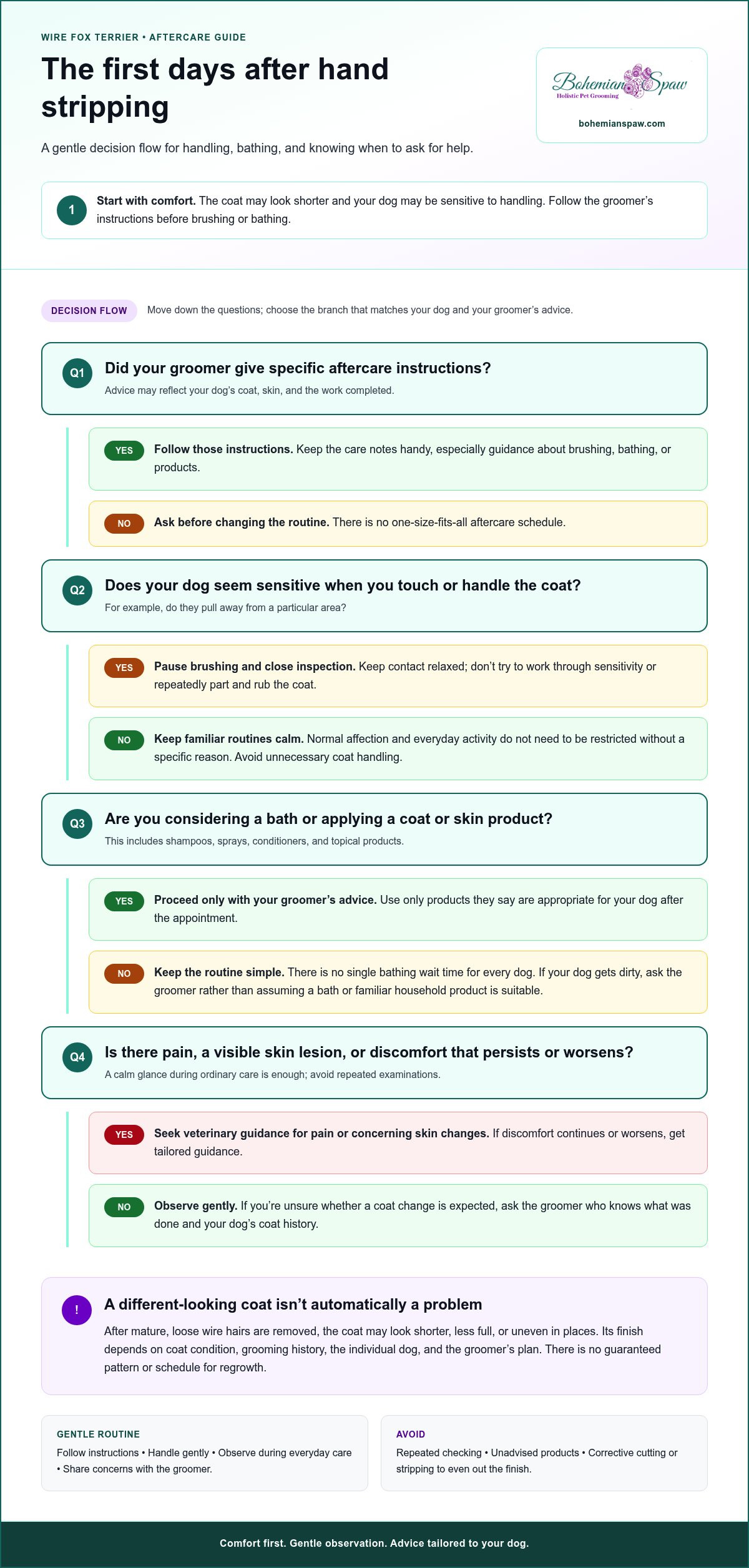
When post-stripping changes call for a closer look
A newly stripped coat can leave you wondering whether a change is simply unfamiliar or needs attention. One brief observation may not tell you much on its own, and it can be hard to interpret a dog’s response without knowing what’s typical for them. Look at the overall pattern: a concern that settles and doesn’t affect your dog’s comfort is different from discomfort that persists, worsens, or comes with visible skin changes.
Don’t try to identify the cause yourself. Your groomer can discuss concerns connected to the appointment and explain what they observed during grooming. A groomer can help with grooming-related questions, but grooming guidance doesn’t replace veterinary care.
Observations to share with the groomer
If something seems different, keep your observations simple and specific. Note when you first noticed it, where it appears on your dog, and whether it has changed since then. Describe behavior, too: for example, whether your dog pulls away when you touch one area, seems reluctant to be handled, or behaves as usual. Avoid repeated brushing or touching to test the response, especially if it appears uncomfortable.
These details can help the groomer understand your concern in relation to the appointment, but they can’t establish what’s causing a skin change. Don’t assume that redness, sensitivity, or another visible change is expected or harmless for every dog. If you’re concerned about something associated with grooming, explain what you’ve noticed to the groomer. Bohemian Spaw’s grooming contact page is a place to share appointment-related questions.
When veterinary guidance is the safer next step
Seek veterinary advice for significant or persistent pain, bleeding, swelling, or skin changes that are worsening. If your dog seems markedly uncomfortable or their overall wellbeing appears affected, prioritize veterinary guidance rather than waiting for a grooming discussion. This is especially important if your dog’s condition is changing, because a groomer can’t diagnose or treat a medical problem.
While you’re deciding what to do, keep handling gentle and avoid applying products or attempting home grooming to correct the area unless a qualified professional has guided you. If you’re uncertain whether a concern is mild or serious, contacting a veterinary professional is the safer way to get advice specific to your dog. This isn’t a reason to panic; it’s a way to respond thoughtfully when comfort or skin health may be at stake.
Knowing how to care for a wire fox terrier coat after hand stripping includes knowing when home observation is no longer enough. For breed-aware Hand Stripping support and guidance about your dog’s grooming, connect with Bohemian Spaw.
Continue Wire Fox Terrier coat care with experienced grooming support
Good aftercare is a steady partnership between you and your groomer. Follow the instructions you were given, keep handling gentle, maintain the coat lightly in a way that suits your dog, and seek advice if a concern persists or worsens. There’s no need to force a particular finish or routine. A groomer can shape ongoing recommendations around your Wire Fox Terrier’s coat condition, previous grooming, and comfort.
Bohemian Spaw in Lisle offers Hand Stripping and AKC Breed Standard Grooms. Breed-aware grooming support can help you understand the plan for your dog’s coat and make home care more manageable between appointments. The salon serves dog owners in Lisle, Naperville, Downers Grove, Wheaton, Glen Ellyn, Bolingbrook, and Warrenville.
Prepare useful details for your next grooming conversation
A little background makes it easier to discuss practical care. Share your dog’s recent grooming history, any changes to the home routine, and what you’ve noticed since the appointment. Be specific: describe where a coat change appears, when you first saw it, and whether your dog seems sensitive during ordinary handling. You don’t need to diagnose the cause; clear observations are enough to guide a useful conversation.
Keep the discussion centered on your dog’s comfort and your coat goals. Ask which maintenance steps are appropriate at home, what tool and technique suit this particular coat, and what changes should prompt a follow-up. A routine that works for one terrier may not suit another, so individualized guidance is more helpful than trying to match a generic schedule.
Choose a steady routine that suits your dog
Stripping intervals and between-appointment maintenance depend on the individual dog, coat condition, and grooming history. Your groomer can help you find an approach that supports the coat without promising a particular timeline or identical finish. Keep home care calm and modest, and avoid repeated stripping or corrective trimming unless you have suitable experience and guidance.
At Bohemian Spaw, Hand Stripping and AKC Breed Standard Grooms provide breed-aware professional support for Wire Fox Terrier coat care. Local owners can explore breed-specific grooming in Lisle and view grooming services to learn more about the salon’s approach. If you’re considering hand stripping, explore the service and arrange grooming support suited to your dog’s needs.
Make your dog’s next coat-care step a gentle one
Building confidence in how to care for a wire fox terrier coat after hand stripping isn’t about getting every detail perfect at home. It’s about learning what suits your dog, keeping care calm, and having a knowledgeable grooming partner when questions come up. Over time, that thoughtful rhythm can make coat care feel less uncertain for both of you.
If you’d like support shaping the next step, Bohemian Spaw offers Hand Stripping and AKC Breed Standard Grooms in a holistic grooming salon in Lisle, Illinois. Explore the salon’s approach and choose the service that fits your Wire Fox Terrier’s grooming needs.
Explore Hand Stripping and breed-specific grooming at Bohemian Spaw, and take your dog’s next coat-care step with confidence.
Frequently Asked Questions
Does hand stripping hurt a Wire Fox Terrier?
Proper hand stripping removes mature, loose hairs, but each dog’s comfort and coat condition are different. A dog may be sensitive during or after grooming, so the groomer should pay attention to their responses and avoid forcing the process. If your terrier yelps, repeatedly pulls away, or seems painful afterward, don’t dismiss it as ordinary fussiness. Pause coat handling and tell the groomer what you’ve noticed.
How long does a Wire Fox Terrier’s coat take to grow back after hand stripping?
There isn’t one reliable regrowth timeline that applies to every Wire Fox Terrier. Coat condition, previous grooming, and the individual dog can all affect how quickly the coat’s outline and texture change. For a useful comparison, take a clear photo after grooming and another later in similar lighting. Your groomer can interpret the change in the context of your dog’s coat history and help set realistic expectations.
Can I use a coat spray on my dog after hand stripping?
Wait for your groomer’s guidance before applying a coat spray, especially if it’s a new product or the skin seems sensitive. Sprays differ, and one intended to detangle or add finish may not suit freshly groomed skin. Avoid using a product to hide irritation or settle hairs into a particular shape. If your dog reacts after application, stop using it and ask your groomer or veterinarian for advice.
Should my Wire Fox Terrier wear a coat outdoors after hand stripping?
Not automatically. Whether an outdoor coat is useful depends on the weather, your dog’s comfort, and how much coverage their coat provides after grooming. Watch for signs your dog is cold, and keep outdoor time comfortable for the conditions. If you use clothing, make sure it doesn’t rub a sensitive area or restrict movement. Ask your groomer for advice specific to your dog rather than assuming every stripped terrier needs a coat.
Can I hand strip my Wire Fox Terrier at home?
It’s best not to attempt hand stripping without suitable experience and instruction. The technique depends on assessing which hairs are ready to come out, and pulling or trimming without that judgment may cause discomfort or an uneven finish. If you’re interested in learning about the process, discuss it with an experienced groomer first. Bohemian Spaw offers Hand Stripping in Lisle for local owners seeking breed-aware grooming support.
What should I do if my dog keeps scratching after hand stripping?
If scratching continues, tell the groomer when it started and which areas your dog is targeting. Avoid repeated brushing or applying products to soothe the skin without guidance. Seek veterinary advice for intense or worsening scratching, pain, bleeding, swelling, or visible lesions. Painful bumps or lesions, particularly along the back, can appear 24 to 48 hours after grooming, so concerning changes deserve prompt attention.
Does hand stripping change a Wire Fox Terrier’s coat color or texture?
Hand stripping removes mature hairs and supports the characteristic wiry texture; it doesn’t guarantee a particular color or finish. The coat may look different immediately because its length and outline have changed. Clipping cuts the hairs rather than removing mature ones, and repeated clipping may soften the texture or make the color appear less vibrant over time. Ask your groomer how your dog’s grooming history may affect the coat you see.


