

If you’re wondering what happens if you clip a wire-haired breed, the coat may grow back softer, curlier, or less vivid in color, but that doesn’t happen in the same way for every dog. Clipping shortens the hair, and the coat’s appearance as it grows depends on the dog, its coat type, and its grooming history.
It’s reasonable to be cautious: a wire coat’s distinctive texture is part of its appearance, and advice about clipping versus hand stripping can sound absolute. The best approach depends on your dog’s coat and the finish you want. This guide explains what clipping and hand stripping do, what to observe during regrowth, and how to make a practical grooming plan.
At Bohemian Spaw in Lisle, hand stripping is available as one option for wire-coated dogs, not a requirement for every dog. Consider the coat’s history, current condition, and your dog’s comfort before choosing a grooming method.
Key Takeaways
- What happens if you clip a wire-haired breed can vary. The coat is shortened, and its appearance as it grows depends on the dog and its grooming history.
- Clipping cuts the hair; hand stripping removes suitable loose hairs. The methods handle the coat differently and may produce different results.
- Before choosing a grooming method, note past clipping or stripping, observe regrowth, and consider the finish and grooming experience you want for your dog.
- Bohemian Spaw offers hand stripping in Lisle, but the method is not the right fit for every wire-haired dog.
- An individual assessment of the coat can help shape a grooming plan around your dog’s history, condition, and comfort.
What happens when you clip a wire-haired breed?
Clipping cuts the hair above the skin, but it can’t determine exactly how the coat will look as it grows back. If you’re asking what happens if you clip a wire-haired breed, possible changes include a softer feel, a different curl or coarseness, or color that appears less vivid. These are possibilities, not a prediction for every dog.
A single clip is one part of a dog’s grooming history. If the coat is clipped repeatedly, its appearance at different stages of regrowth may provide more context than one trim alone. Note when clipping happened, how often it has been done, whether the whole body or only certain areas were trimmed, and whether the coat was previously hand stripped. These details help a groomer compare the coat’s current appearance with its history.
In short: clipping may be followed by changes in coat texture or color, but the degree and appearance of those changes vary from dog to dog.
Separate what you observe from what you conclude. You may notice that new growth feels different or looks curlier, but that alone doesn’t establish that clipping permanently damaged the coat. For general background on different approaches to coat care, see Dog grooming techniques.
Possible changes to texture and colour
Owners sometimes describe regrowth as softer, coarser, curlier, or less vivid in color than the coat they remember. The coat may also look uneven while hairs grow back at different lengths. Coat type, the natural growth cycle, and previous grooming can all shape what you see, so one dog’s experience shouldn’t be treated as a rule for another.
A change in feel or color after clipping doesn’t by itself show what caused the change or what the final coat will look like. A groomer can describe the coat’s current condition and reassess it as it grows. That is more useful than treating an early patch of softer growth as a reliable preview of the final result.
What clipping does not automatically mean
One clip doesn’t prove a wire coat is permanently ruined, and not every dog loses its characteristic texture or color after clipping. If you’re concerned, record grooming dates and take clear photos as the coat regrows. A groomer can assess its condition over time and discuss an approach suited to your dog’s coat, history, and comfort.
Why a wire coat may respond differently to clipping
A wire coat’s appearance comes from more than its length. In many dogs, longer, firmer guard hairs sit over a softer undercoat, but the balance and feel of these layers differ between breeds and individual dogs. That variation helps explain why two wire-haired dogs can respond differently to a similar trim.
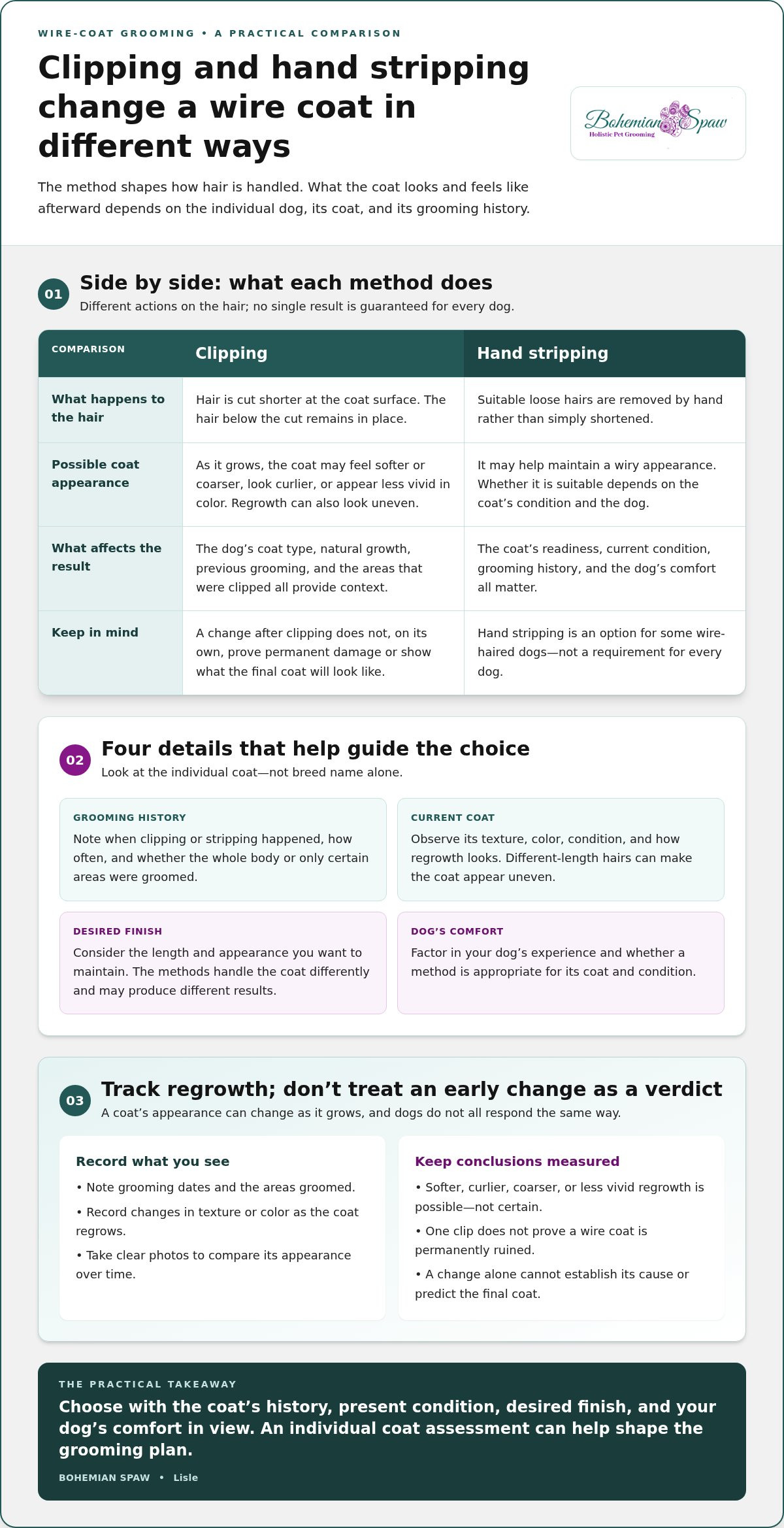
Clipping cuts the visible hair shorter; hand stripping removes suitable loose hairs rather than simply shortening them. Clippers cut the hair shaft, leaving the hair below the cut in place. Hand stripping targets hairs that are ready to come away. The methods act differently on the coat, but that distinction alone can’t predict how a particular dog’s coat will look afterward.
Guard hairs, undercoat, and the growth cycle
Guard hairs are the longer outer hairs that contribute to a coat’s visible texture and outline. The undercoat refers to the softer, shorter hairs beneath them, where present. Together, these layers shape how a coat feels and looks, although wire-haired dogs don’t all have identical coat structures. Clipping shortens hair at the surface; it doesn’t pull the hair from the root. The timing and pattern of regrowth can vary, so don’t apply one growth-cycle expectation to every breed.
Hand stripping is different because it removes suitable loose hairs from the outer coat. Whether the coat is ready for that method depends on its condition and the dog. Hand stripping is an option for some wire-haired dogs, not a universal requirement.
Why coat history and breed matter
Breed can offer useful context, but it doesn’t tell the whole story. An individual dog’s coat, previous grooming, and current condition all matter when considering how it may respond. A coat clipped repeatedly may look different from one with a different grooming history, but that doesn’t prove every dog will experience a lasting change.
Keep a practical record: note when the coat was clipped or stripped, whether the whole body or only certain areas were groomed, and how the texture and color look as it grows. These observations give a groomer a clearer starting point than breed name alone. Bohemian Spaw’s coat-specific grooming information offers broader context about how coat type can shape grooming needs. A double coat and a wire coat shouldn’t be assumed to be the same.
At Bohemian Spaw, a review of coat history, condition, and comfort can help guide a grooming plan, including whether Hand Stripping suits the dog. For an overview of available dog grooming services, explore the salon’s options.
Clipping vs. hand stripping: what changes for a wire coat?
Clipping and hand stripping shape the coat in different ways, but neither is the right choice for every wire-haired dog. Clipping shortens hair with clippers, while hand stripping removes suitable loose hairs from the coat. The possible finish depends on the dog’s coat, grooming history, and the look you want to maintain.
How clipping and hand stripping differ
The practical difference is how each method handles the hair. Clippers cut it, leaving the remaining hair below the cut in place. Hand stripping works with hairs that are ready to come away. It’s not simply a choice between “short” and “natural”: technique, coat readiness, and the dog’s response all matter. Discuss the likely visual effect as a possibility, not a promised texture or color.
That distinction helps answer what happens if you clip a wire-haired breed, but it can’t predict the result for an individual dog. Clipping is a grooming option, not automatically a mistake. Some owners prefer its finish or maintenance approach; others want to maintain a wiry look through stripping. A groomer can consider the individual coat rather than applying a rule based on breed label alone.
How to weigh coat goals against comfort
Start with the finish you’d like, then weigh it alongside your dog’s coat history and tolerance for handling. Share whether the coat has been clipped or stripped before, and mention any areas where your dog seems uneasy during grooming. A good plan accounts for appearance and a calm, manageable experience. The desired finish shouldn’t outweigh the dog’s comfort.
At Bohemian Spaw, the decision can be guided by an individual look at coat condition and grooming goals. Hand Stripping is an available grooming approach, but it isn’t a requirement for every wire-haired companion.
How to decide what to do after a wire coat has been clipped
A clipped coat doesn’t need an immediate verdict. Reviewing its history and regrowth can give you and your groomer better information than trying to predict the final result from one haircut. Focus on what you can observe, the finish you want, and how your dog handles grooming.
- Write down the grooming history. Note when the coat was clipped, whether it has been clipped before, which areas were trimmed, and whether your dog has had hand stripping. Share what you know with the groomer, even if the dates are approximate.
- Observe the coat over time. Note changes in texture, color, and coverage as the hair grows. Photos taken in similar light can make gradual changes easier to compare.
- Set a grooming goal. Think about the length and appearance you prefer, along with how much brushing and maintenance feels manageable for your household.
- Arrange an individual assessment. A groomer can consider the coat’s current condition and history when discussing next steps. Avoid making a permanent coat prognosis from a single haircut or a brief look at early regrowth.
What to observe as the coat grows
Describe what you see without trying to diagnose it. Does the hair feel softer or firmer? Does the color look different, or is coverage uneven in certain areas? These observations can guide a grooming conversation, but they don’t establish why a change occurred or how the coat will ultimately look. There’s no single regrowth timeline that applies to every dog.
Keep skin concerns separate from coat appearance. If you notice persistent irritation, sores, unusual discomfort, or another health concern, speak with your veterinarian. A groomer can discuss coat condition and grooming choices, but grooming isn’t veterinary care.
Questions that help shape the next grooming plan
Before the next appointment, consider what finish you’re hoping for and what methods your dog has experienced. Share whether past grooming involved clippers, hand stripping, or both, and describe how your dog handled the process. It also helps to discuss the coat’s current condition and any areas where handling seems uncomfortable. These details support a plan that considers your preferences alongside your dog’s wellbeing.
If you’re weighing hand stripping as a possible next step, Bohemian Spaw offers Hand Stripping as a grooming service. The method may suit some coats, but an individual assessment matters more than a blanket rule. Understanding what happens if you clip a wire-haired breed is only part of the decision; your dog’s coat, grooming history, and comfort also help shape what comes next.
For a calm, individual conversation about your dog’s coat and grooming goals, contact Bohemian Spaw to arrange an appointment.
A thoughtful wire-coat grooming plan at Bohemian Spaw
Bohemian Spaw is a dog-grooming salon in Lisle, Illinois. Wire-coat care starts with the individual dog, not a one-size-fits-all rule. The salon offers Hand Stripping, while taking the dog’s coat history, condition, preferred finish, and comfort into account when considering a grooming approach.
If you’re still wondering what happens if you clip a wire-haired breed, a useful discussion starts with what’s visible now and what you hope to achieve. Rather than promising a particular texture or color as the coat grows, a groomer can talk through the dog’s current coat and grooming history. Bohemian Spaw’s holistic mission is to maintain a calm, inviting atmosphere, with attention to your companion’s comfort as well as their grooming needs.
What to share before a grooming appointment
A little background makes the discussion more useful. Share your dog’s breed or known coat type, when and where the coat was clipped, and whether they’ve experienced hand stripping before. If you’re unsure of exact dates, an estimate is helpful. Photos from before and after a clip can illustrate changes you’ve noticed.
Describe the finish you prefer, such as a particular length or a more natural-looking outline, without assuming one method will guarantee a specific result. Mention how your dog responds to brushing, clippers, or extended handling, and point out any areas where they seem uneasy. If it’s your first appointment, the first grooming visit information can help you prepare.
Explore hand stripping in Lisle
Bohemian Spaw offers Hand Stripping, but it isn’t a universal requirement for wire-haired dogs. Whether it suits a dog depends on the individual coat and the dog’s comfort. Talk through your preferences and your companion’s needs, then consider an approach without assuming it will produce a specific coat outcome.
Explore the salon’s dog grooming services to learn about its grooming options. Sharing your dog’s history and your grooming goals helps make the next step more informed and personal.
If you’d like to discuss your dog’s wire coat and grooming goals, contact Bohemian Spaw to arrange an appointment. A calm, individual conversation can help you consider the available approach with care.
Choose a thoughtful next step for your dog
There isn’t one answer to what happens if you clip a wire-haired breed. Base your next step on your dog’s grooming history, how they feel during grooming, and the finish you’d like to maintain. You don’t need to assume that a previous haircut caused permanent change before considering which options may suit your companion now.
At Bohemian Spaw, Hand Stripping is one available grooming service, offered within the salon’s holistic mission to create a calm, inviting atmosphere. You can discuss your dog’s individual needs without treating one grooming method as a rule for every wire coat.
For dog grooming in Lisle and nearby Naperville, Downers Grove, Wheaton, Glen Ellyn, Bolingbrook, and Warrenville, explore Hand Stripping at Bohemian Spaw and arrange an appointment to discuss your dog’s coat and grooming goals.
Frequently Asked Questions
Does clipping a wire-haired dog hurt?
Clipping itself shouldn’t hurt when the coat is combed and the clippers are used carefully, but a dog may find the sound, vibration, or handling uncomfortable. Tangles close to the skin can make grooming more challenging, so don’t force a clip if your dog is distressed or the coat is difficult to work through. Pause and discuss a gentler approach with a groomer.
Can a clipped wire-haired coat be hand stripped later?
Sometimes, but it depends on how the coat grows and whether suitable loose hairs are present. A groomer can assess the coat as it develops and discuss whether hand stripping may be appropriate. The coat may need time to reach a condition suited to this method. A previous clip doesn’t guarantee that stripping will work or that the original appearance will return.
Is a wire-haired coat the same as a double coat?
No. “Wire-haired” describes a coat with a notably firm or bristly texture, while “double coat” refers to a coat with two layers, typically a protective outer layer and softer undercoat. Some coats may share features, but the terms aren’t interchangeable. Knowing the breed can offer clues, but a groomer can assess the individual coat rather than relying on its label alone.
Does clipping keep a wire-haired dog cooler in summer?
Not necessarily. A shorter coat doesn’t automatically mean a dog will feel cooler, since coat structure and the individual dog both matter. Avoid choosing a close clip based only on the season. If your dog seems uncomfortable in warm weather, provide a cool resting place and fresh water, and ask your veterinarian for advice about heat safety and any changes in behavior.
How can I tell whether my dog has a wire coat?
Start with reliable breed information, then consider the coat’s feel and appearance. Wire coats often feel firm or bristly rather than silky, but texture can vary, and mixed-breed dogs may not match a breed description neatly. Adoption records or information from a breeder may help. If you’re unsure, a groomer can describe the coat type they observe and discuss suitable grooming approaches.
Can I clip my wire-haired dog at home?
You can groom your dog at home, but clipping a wire coat without experience may make it harder to achieve an even finish or judge how the coat will look afterward. Clippers also require calm handling around sensitive areas such as the face, paws, and skin folds. If your dog is anxious, matted, or unsettled, pause rather than pushing through and discuss the coat with a groomer.
What should I tell a groomer if my dog's wire coat was clipped before?
Share what you know about when it was clipped, which areas were trimmed, and whether it has been clipped more than once. Mention any past hand stripping, how the coat has changed since, and what finish you’re hoping for. Photos can help show its earlier appearance or regrowth. If you’re arranging grooming near Lisle, Naperville, or Downers Grove, those details can make the conversation more useful from the start.


