

A low-shedding Bernedoodle coat can still mat. To learn how to safely demat a Bernedoodle in Downers Grove, brush at least 3 times a week to help prevent tangles, and ease apart existing knots slowly rather than tugging at the skin. Regular professional grooming every 6-8 weeks can also help keep the coat manageable.
It’s easy to assume less shedding means less coat care, but curls and waves can hold onto loose hair and form knots. F1 and F1b labels describe a dog’s cross type, not a guaranteed coat texture, so your Bernedoodle’s individual coat matters more than the label alone. This guide explains how coat traits and shedding affect dematting, what gentle at-home care can look like, and when a stubborn mat calls for professional grooming. You’ll come away with a calmer, more informed approach to keeping your dog comfortable and their coat cared for.
Key Takeaways
- F1 and F1b labels don’t guarantee a particular coat texture, so tailor care to your Bernedoodle’s actual curls, waves, and tangles.
- Learn which signs suggest a mat is too close to the skin or extensive for gentle at-home work.
- Use a calm, section-by-section approach when checking the coat, and stop if your dog shows discomfort.
- Understand how suitable grooming tools and a Full Groom can support a more comfortable coat-care routine.
Bernedoodle coat care and shedding
Learning how to safely demat a Bernedoodle in Downers Grove starts with regular coat checks and gentle handling. Although Bernedoodles may shed less, loose hair can still become trapped in curls and waves.
Checking for Mats Safely
Check the coat while it’s dry, parting the hair into small sections with your fingers. Look behind the ears, under the collar, around the legs, and where the limbs meet the body. Knots can form close to the skin in these spots. Gently feel from the hair tips inward, and stop if your dog flinches, pulls away, or guards an area.
Redness, broken skin, swelling, an unpleasant odor around a mat, or clear pain when touched calls for veterinary advice rather than home dematting.
Brushing or Clipping Mats
Brush at least 3 times a week to help prevent mats, working through small sections instead of pulling from the roots. A loose knot that moves freely with the hair may respond to patient brushing. If a mat is tight against the skin, broad, or painful to handle, clipping is safer than repeated brushing. Don’t try to cut it out with household scissors: skin can fold into a mat and be difficult to see.
Dematting blades can catch or cut skin if they’re used without control. Avoid them on tight knots, sensitive areas, or a dog who can’t stay relaxed.
Professional Dematting
A professional groomer can assess how close a mat is to the skin, how much of the coat is affected, and whether brushing would cause discomfort. Clipping may be gentler for dense or widespread matting. In the Downers Grove area, ask how the groomer assesses the coat, pauses if a dog becomes distressed, and chooses clipping when brushing would pull.
Professional grooming every 6-8 weeks can help maintain coat condition. F1 and F1b describe cross types, not guaranteed coat outcomes, so the individual dog’s texture guides care.
Home Dematting Tools and Methods
For a small, loose mat, use a suitable slicker brush or metal comb, keeping your fingers between the knot and the skin. Hold the hair near its base to reduce tugging. Gently separate the mat with your fingers, then brush tiny sections from the tips inward. Check your progress with the comb, and stop if the knot resists or your Bernedoodle shows discomfort.
Whether you’re brushing a Bernedoodle puppy or an adult, keep sessions calm and brief.
What does dematting a Bernedoodle involve, and when should it be done by a professional groomer?
Start dematting by assessing the coat, not pulling at the knot. A groomer checks each affected area, how close the mat sits to the skin, and whether the dog tolerates gentle handling. This helps determine whether careful loosening is suitable or clipping away the tangled hair would be kinder.
During dematting, the coat is handled in small sections. The groomer works gradually, keeping tension low and pausing if the Bernedoodle becomes unsettled. Patient brushing may separate a loose tangle. Dense mats can bind hair tightly, making repeated brushing uncomfortable. The aim is to avoid turning coat care into a prolonged struggle.
- Assess the mat. Note its size, location, and closeness to the skin.
- Choose the gentlest approach. Work only where the knot can be handled without force.
- Pause and reassess. Stop if the dog pulls away, flinches, or the coat resists.
- Clip when needed. Remove compacted hair rather than repeatedly tugging at it.
Seek professional help if mats sit tightly against the skin, cover a broad area, or cause discomfort with a gentle touch. The same applies to tangles around delicate spots, such as behind the ears or near the legs, where the skin can be hard to see beneath the coat. A groomer can assess the coat and choose a manageable approach.
Don’t use scissors to cut into a mat at home. Skin can be pulled into tangled hair and become difficult to distinguish from the mat. Dematting blades also require control and can catch skin if used carelessly. If the skin beneath a knot looks red, swollen, broken, or irritated, stop handling the area and seek veterinary guidance.
For Bernedoodle puppies, gentle handling can help make grooming familiar. If a knot resists or your dog shows pain, leave it alone and arrange professional grooming rather than brushing harder.
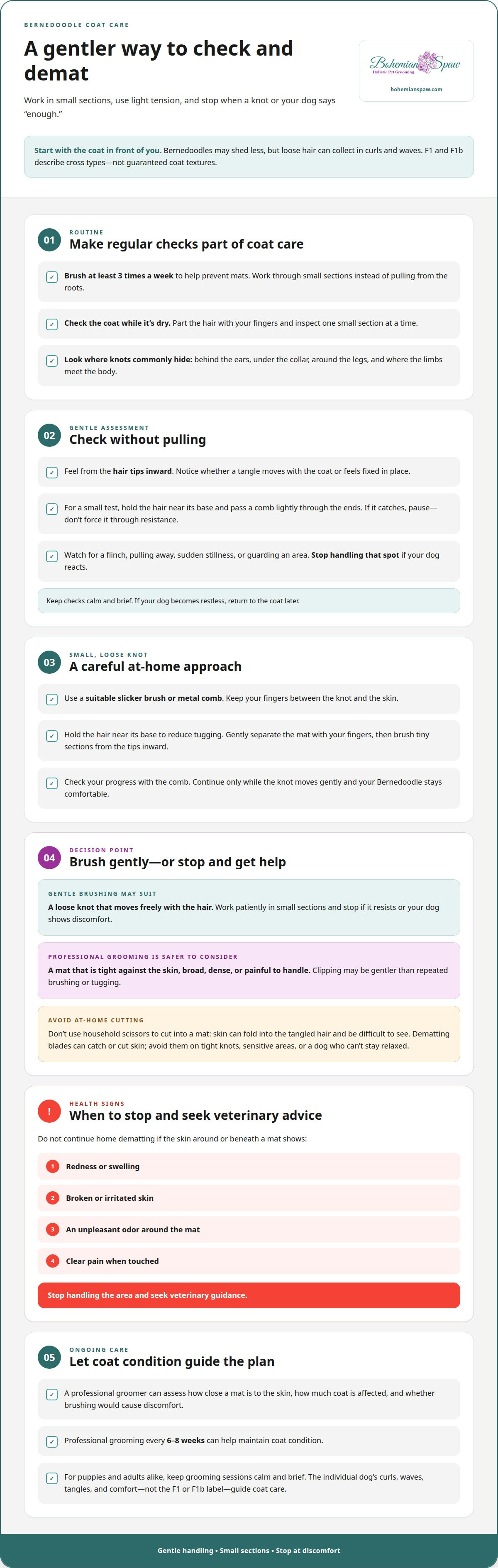
How can you safely check a Bernedoodle’s coat for mats without hurting the dog?
Check the coat slowly and consistently instead of pulling a brush through it all at once. Choose a quiet moment, let your Bernedoodle settle into a comfortable position, and inspect one small section at a time.
- Start with a visual scan. In bright light, part the coat with your fingers and look for clumps, packed hair, or places where the coat stops moving freely. Check both sides of the body so a hidden knot isn’t missed.
- Feel the coat gently. Slide your fingertips over the hair, then toward the skin without pinching. A soft tangle may shift with the coat; a firm patch that stays fixed needs a closer look, not a hard pull.
- Test a small area. Hold the hair near its base and pass a comb lightly through the ends. If the comb catches, pause and separate the surrounding hair with your fingers. Don’t force the comb through resistance.
- Watch your dog’s response. Notice a flinch, turning toward your hand, sudden stillness, or pulling away. Stop handling that spot if your Bernedoodle reacts, then note its location for a groomer or veterinarian.
- Compare both sides. Check matching areas, such as each leg or ear, for differences in coat density and movement. A clump hidden beneath longer curls can feel different from loose hair spread evenly through the coat.
Keep the check brief and return to it later if your dog becomes restless. A simple record can help: note the date, body area, and whether the knot moved with gentle touch. If the skin looks irritated, broken, or swollen, avoid brushing that spot and seek veterinary advice. For a Bernedoodle puppy, let the dog sniff the comb first, then touch one section gently before continuing. This makes each inspection easier to repeat calmly.
Bernedoodle generation labels describe the cross type, not a puppy’s health or coat outcome. Assess each dog’s coat directly during a calm inspection.
What tools are safe for dematting a Bernedoodle at home?
For a small, loose tangle, keep the setup simple: a slicker brush, a metal comb, and your fingers. Choose grooming tools without exposed sharp blades. A comb can show whether the hair separates, while a brush may gently loosen surface tangles. Don’t force either tool through a knot.
Start with your fingers. Hold the coat near the skin to limit pulling, then gently tease apart the mat’s outer edges. Work from the hair tips toward the base, using short strokes on a small section. Follow with the comb’s wider-spaced teeth, then try finer teeth only if they pass freely. Stop at any resistance.
- Slicker brush: Use light pressure on loose tangles, not compacted mats.
- Metal comb: Test whether a section is clear without dragging it through snags.
- Your fingers: Separate outer strands and keep tension away from the skin.
- Good lighting: Helps you see where the coat ends and skin begins.
Avoid household scissors. A fold of skin can hide inside a mat beneath curly hair, and scissors can cut it. Dematting blades can also catch hair or skin if angled or pulled too forcefully. Avoid both tools for tight knots, mats close to the skin, or tangles around the ears and legs. These areas are difficult to work on while keeping the skin visible.
Keep your Bernedoodle settled on a steady surface, and work on one small area at a time. If your dog flinches, turns toward the tool, or the comb snags, pause rather than increasing pressure. For practical guidance on gentle coat care, explore brushing matted hair before continuing at home.
A new puppy should have a wellness check with a veterinarian within the first few days after coming home. Bernedoodle puppies can also benefit from beginning brief separation practice on their first day at home.
Bohemian Spaw: Full Groom
When mats are too close to brush comfortably or your Bernedoodle’s coat needs broader attention, Bohemian Spaw offers Full Groom. A professional grooming visit can help you move from careful home checks to a more complete coat-care routine, with your dog’s comfort guiding the approach.
Share where you’ve found tangles, how your dog reacts to touch, and whether the coat has been difficult to maintain. These details help shape the grooming conversation around your Bernedoodle’s needs. For a puppy just starting out, Puppy’s First Groom offers an introduction to grooming.
If professional coat care feels like the right next step, contact Bohemian Spaw to talk about your Bernedoodle.
Make the Next Coat-Care Step a Gentle One
If you’re considering how to safely demat a Bernedoodle in Downers Grove, match the care to the coat and your dog’s comfort. If a mat resists gentle handling or your dog reacts to touch, don’t turn grooming into a struggle. A calm professional assessment can help you decide what to do next.
Bohemian Spaw’s Full Groom provides broader coat care, while Bath & Brush supports routine upkeep. For a young dog becoming familiar with grooming, Puppy’s First Groom offers an introduction. Treat each visit as part of a steady routine shaped around your companion, not a one-time fix.
Share what you’ve noticed about the knots and your dog’s response, then contact Bohemian Spaw to discuss dematting. A thoughtful next step can help make coat care feel more comfortable for you and your Bernedoodle.
Frequently Asked Questions
How much does professional Bernedoodle dematting cost in Downers Grove, Illinois?
Bohemian Spaw provides a grooming quote based on your Bernedoodle’s coat. A few loose tangles differ from dense mats across several areas; the extent and location of matting, coat condition, and work needed all affect the quote. Dog owners in Downers Grove, Lisle, Naperville, Wheaton, Glen Ellyn, Bolingbrook, and Warrenville can request a quote for their dog’s grooming needs.
Which Downers Grove-area groomers offer Bernedoodle dematting, and what are their safety policies?
Bohemian Spaw offers Full Groom when mats are too close to brush comfortably or the coat needs broader attention. The groomer assesses the mats, pauses if a dog becomes distressed, and may choose clipping when brushing would pull.


