

If you’re searching “my dog bites the brush how to get him groomed Warrenville,” start by pausing rather than pushing through. A bite at the brush can leave you worried about your dog’s coat, his comfort, and everyone’s safety. You can take practical steps to understand the reaction and prepare for grooming without forcing a full brushing session.
A dog may bite the brush because brushing feels uncomfortable, frightening, or unfamiliar. The trigger might be a tangle, a sensitive body area, the tool itself, or a past experience. Notice what happens before the bite and share those details with your groomer. That information helps guide a grooming conversation around your dog’s coat and comfort.
This guide explains possible reasons for brush biting, ways to introduce the brush gradually, and what to tell a groomer before a visit. It also covers when to pause home brushing and seek veterinary or behavior support. Bohemian Spaw is a dog grooming salon in Lisle serving Warrenville and nearby communities, with services including Bath & Brush and full grooms.
Key Takeaways
- A bite at the brush can signal fear, sensitivity, frustration, a difficult past experience, or discomfort. Notice what happens before and during the reaction.
- Forcing brushing may worsen a dog’s negative association with grooming and increase the risk of injury. Pause if your dog bites or shows signs of distress.
- Before a grooming visit, share your dog’s bite history, sensitive areas, warning signs, and previous grooming experiences.
- Brief, low-pressure practice can help your dog become more familiar with the brush over time, as long as he remains comfortable.
- Warrenville dog owners can find grooming services at Bohemian Spaw in nearby Lisle, serving communities including Naperville, Downers Grove, Wheaton, Glen Ellyn, and Bolingbrook.
Dog Bites the Brush? What the Reaction May Be Telling You
A brush bite can be startling when you’re trying to care for your dog’s coat. It isn’t automatically “bad” behavior. Your dog may be communicating discomfort, fear, or distress. Paying attention to the situation around the bite can help you choose a safer response.
Notice what happens before and after the reaction. A loose, wiggly dog who briefly mouths the brush during play may be responding differently from one who stiffens, growls, snaps, or repeatedly tries to bite. These actions don’t diagnose the cause, but they can help you spot signs of unease. The overview of Dog behavior offers broader context on how dogs communicate through their actions.
Common reasons a dog may bite during brushing
A brush can tug at a knot or pull hairs against the skin, making a stroke uncomfortable. Even without tangles, a dog may find an unfamiliar tool, grooming sounds, handling in a sensitive area, or restraint unsettling. Fear, frustration, and a negative past experience can also affect how a dog responds.
Physical discomfort may not be visible beneath the coat. Skin irritation, a tender spot, or another source of pain could make a dog react when the brush passes over one area. If knots are part of the concern, this guide to brushing and matted hair explains why coat condition matters.
When brush biting needs more than a grooming adjustment
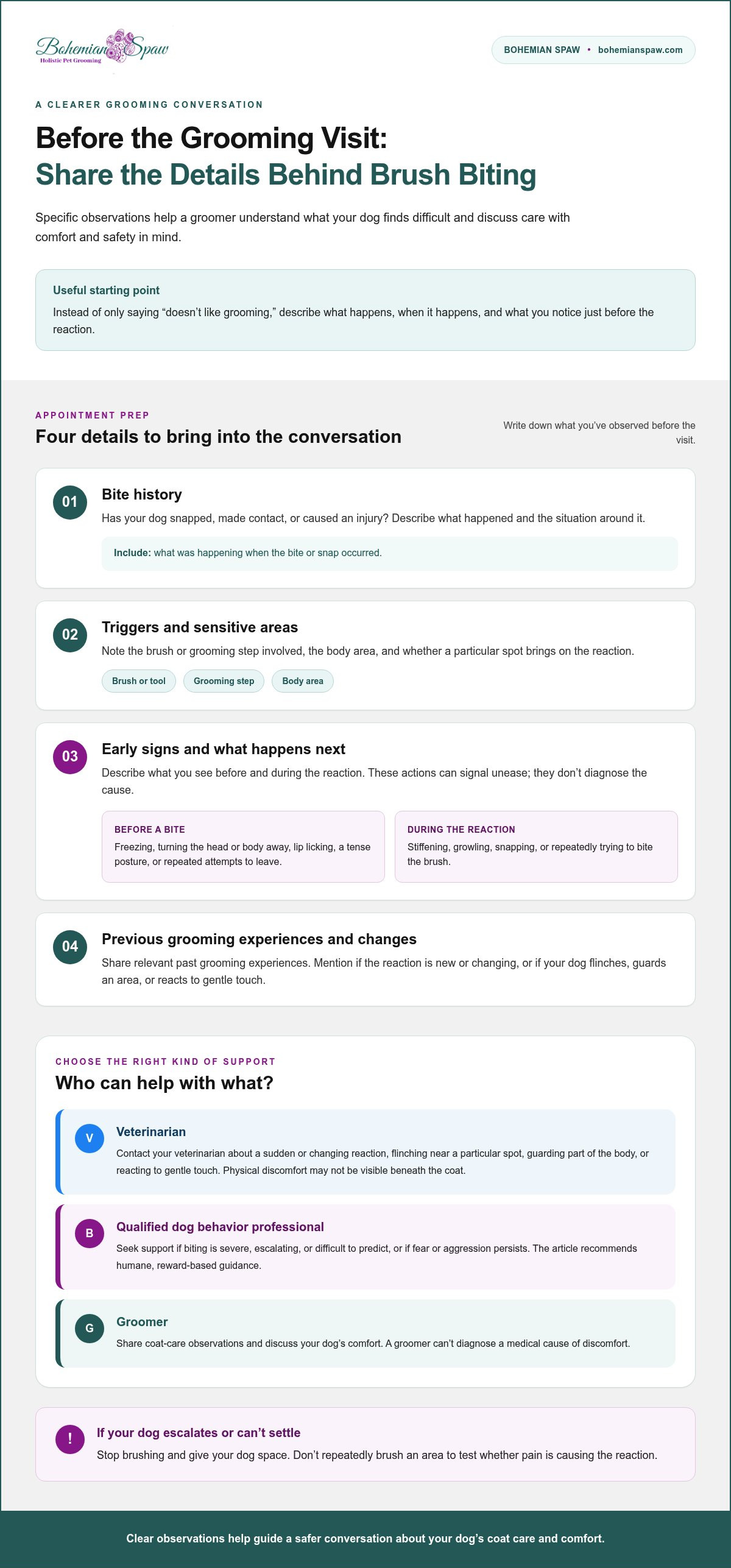
Take a new or changing reaction seriously. If your dog suddenly starts biting, flinches when you approach a particular spot, guards part of the body, or reacts to gentle touch, contact your veterinarian. A groomer can share observations about coat care, but can’t diagnose a medical cause of discomfort.
If the biting is severe, escalating, or difficult to predict, seek support from a qualified dog behavior professional. That guidance can help you understand the behavior and plan safer next steps. Don’t repeatedly brush an area to test whether pain is causing the reaction.
If you’re asking, “my dog bites the brush how to get him groomed Warrenville,” begin by recording what you observe: which areas trigger a reaction, what your dog does beforehand, and whether the behavior is new. These details help you explain the situation to your veterinarian or groomer and distinguish a coat-care challenge from a possible health concern.
Why Forcing the Brush Can Make Grooming Harder
It can be tempting to finish brushing quickly, especially when knots need attention. But pushing through a bite response can intensify fear and increase the chance that someone gets hurt. If brushing repeatedly ends in restraint, distress, or a struggle, your dog may start associating the brush and the hands holding it with an unpleasant experience. The next session can feel difficult before it begins.
Scolding or punishing a dog for growling or snapping doesn’t address what is driving the reaction. Sudden, forced exposure can overwhelm a fearful dog rather than help him feel safe. A muzzle may be one safety tool in some situations, but it doesn’t identify the trigger or build comfort. Don’t use it to push through a session your dog can’t cope with.
Warning signs to notice before a bite
Dogs may show discomfort before they snap. Watch for freezing, turning the head or body away, lip licking, a tense posture, or repeated attempts to leave. Growling is communication, not misbehavior to punish. If your dog escalates or can’t settle, stop brushing and give him space.
When to pause home grooming and seek support
If a particular area brings on snapping, stop working on that spot instead of testing it again with the brush. A sudden change in tolerance or signs that suggest pain call for veterinary advice. A veterinarian can assess possible medical causes; a groomer can’t diagnose them.
For persistent fear or aggression, seek guidance from a qualified behavior professional who uses humane, reward-based methods. The Humane Society of the United States explains how positive reinforcement training uses rewards to encourage desired behavior. The aim is to help a dog feel safer, not to force him to endure something frightening.
If you’re searching “my dog bites the brush how to get him groomed Warrenville,” treat stopping as a useful part of the plan, not a failure. A calm pause protects trust and gives you clearer information about what your dog can manage. For a local grooming conversation, Bohemian Spaw in Lisle serves Warrenville-area dog owners.
How to Prepare a Brush-Biting Dog for Grooming Near Warrenville
Start the grooming conversation before your dog arrives at the salon. Clear details about brush biting help the groomer understand what your dog finds difficult and discuss care with his needs in mind. The goal is not to expect an instant change in behavior, but to share useful information and take your dog’s comfort and safety seriously.
Before the appointment, write down what you’ve noticed. Specific observations are more useful than a general warning that your dog “doesn’t like grooming.” For example, note whether the reaction happens with a certain brush, on one part of the body, or during a particular handling step.
What to tell the groomer before the appointment
Share details that help describe your dog’s experience:
- Bite history: Has your dog snapped, made contact, or caused an injury? Describe what happened and the situation around it.
- Triggers and early signs: Note the brush or grooming step involved, the body area, and signals you see before a bite, such as turning away or tensing.
- Past grooming experiences: Explain what has gone smoothly, what has been difficult, and whether your dog’s behavior has changed over time.
- Health and handling considerations: Mention known pain or skin sensitivities, relevant medications, and veterinary guidance that affects how your dog should be handled.
These details aren’t a reason to feel embarrassed. They provide useful context for an individualized conversation, especially if your dog’s coat needs attention but some kinds of touch are challenging.
Choosing a suitable grooming plan in the Lisle area
Consider the coat’s condition, your dog’s known triggers, and the handling he can tolerate when discussing grooming. If your dog has a sudden change in tolerance or seems painful, seek veterinary advice rather than treating it as only a grooming issue.
Bohemian Spaw is a dog grooming salon in Lisle serving Warrenville, Naperville, Downers Grove, Wheaton, Glen Ellyn, and Bolingbrook. Review Bohemian Spaw grooming services and the first-visit grooming information as you prepare. Sharing your observations ahead of the visit gives the conversation a clearer starting point, including your dog’s coat condition, triggers, and grooming history.
A Gradual Brush-Comfort Plan to Practise at Home
Think of practice as a series of small, calm introductions, not a mission to finish your dog’s entire coat. Desensitization means helping him become familiar with the brush in manageable steps. Counterconditioning means pairing those steps with something pleasant, such as a small treat, so the brush predicts a positive experience. There’s no fixed timeline; let your dog’s comfort guide the pace.
Choose a quiet moment and stop while your dog is still relaxed. Keep sessions brief and watch his body language. If he stiffens, turns away, tries to leave, or shows other signs of stress, put the brush aside and give him space. A pause gives you useful information, not a reason to push harder.
Introduce the brush without starting a brushing session
Begin with the brush at a distance where your dog can notice it without becoming tense. Let him look or sniff, then reward calm interest. Keep the brush still at first; don’t surprise him by reaching in to touch his coat. If he remains relaxed, bring the brush a little closer in a later moment or session. If he shows unease, increase the distance again.
Build comfort with brief touch and gentle strokes
Once your dog is comfortable with the brush nearby, try brief, gentle contact on an area he usually accepts, such as his shoulder. Pair the touch with a reward, then stop. In later steps, you can gradually try a light stroke, a slightly longer touch, or another body area. Change one thing at a time so you can tell what your dog is comfortable with.
Stillness alone doesn’t mean your dog feels safe. A tense, frozen posture is a reason to pause, even if he isn’t moving away. End on a calm note when possible instead of stretching practice until he becomes uncomfortable. Pairing gentle grooming tools, such as those from Oscar & Zo, with patient repetition may help brushing feel more familiar, but progress will look different for every dog.
Don’t try to work through painful mats, severe reactions, or a bite risk at home. Pulling at tight tangles can hurt, and cutting them out can put your dog at risk of injury. Seek professional guidance about coat care and handling instead. If you’re wondering, “my dog bites the brush how to get him groomed Warrenville,” gentle practice can be one part of the plan, not a substitute for help when brushing isn’t safe.
For grooming support near Warrenville, learn about Bohemian Spaw and its dog grooming services.
Plan a More Thoughtful Grooming Visit with Bohemian Spaw
For Warrenville dog owners, preparing for a grooming visit means sharing the full picture rather than hoping a difficult reaction won’t happen again. Bohemian Spaw is a dog grooming salon in nearby Lisle, serving Warrenville and neighboring communities. Tell the groomer what your dog finds uncomfortable so the conversation can account for his coat and known sensitivities.
What to expect when discussing your dog's grooming needs
Describe the brush or handling that triggers biting, which areas are involved, and what your dog does before reacting. Share previous grooming experiences, including what went smoothly, what was stressful, and whether a bite made contact. You don’t need to apologize or downplay the details. Clear information supports a considered discussion, including whether grooming can proceed safely if your dog is highly distressed.
Choose the next step that fits your dog's situation
If your dog’s brushing tolerance has changed suddenly or he may be in pain, seek veterinary assessment before practising with the brush. For manageable sensitivity, brief, low-pressure home practice can complement an informed grooming plan. If bites are repeated, escalating, or difficult to predict, consider qualified behavior support and keep the groomer informed.
Your dog’s coat and comfort needs can help shape a conversation about options such as a Full Groom, Bath & Brush, or Tidy Up. The appropriate service depends on your dog and his coat. Describe what you’ve observed so the groomer can discuss the care that fits his needs.
When you’re ready, contact Bohemian Spaw about your dog’s grooming needs and share his brushing concerns, triggers, and grooming history.
Take the Next Step Toward Calmer Grooming
A brush bite is a signal to slow down and understand what your dog may be finding difficult. Watch for discomfort, avoid forcing the brush, and share specific triggers and past grooming experiences with the groomer. Brief, positive practice can build familiarity, but sudden changes or signs of pain deserve veterinary attention. Repeated or escalating bites call for qualified behavior support.
If you’ve been wondering, “my dog bites the brush how to get him groomed Warrenville,” start with a clear account of what you’ve noticed. Bohemian Spaw is a dog grooming salon in Lisle serving Warrenville, Naperville, Downers Grove, Wheaton, Glen Ellyn, and Bolingbrook, with options including full grooms, Bath & Brush, and tidy ups. Sharing your dog’s coat, comfort, and grooming history helps guide the conversation.
Contact Bohemian Spaw to discuss your dog's grooming needs. Share what happens when you brush him and take the next step toward a more comfortable grooming experience.
Frequently Asked Questions
Why does my dog bite the brush when I try to groom him?
Fear, discomfort, sensitivity, frustration, or a previous unpleasant grooming experience may contribute. A tangle can tug at the coat, while pain or skin irritation may make one area especially uncomfortable. Notice which tool or body area triggers the reaction and whether it happens every time. If the behavior starts suddenly or your dog reacts to gentle touch, pause brushing and contact your veterinarian for guidance.
Can a dog that bites the brush still go to a groomer?
A groomer can discuss an approach that takes your dog’s coat and known triggers into account, while prioritizing comfort and safety. Share the bite history before the visit, including whether your dog made contact or caused an injury. A severe, unpredictable, or escalating response may call for veterinary advice or qualified behavior support. Be open about the details so the grooming plan reflects your individual dog.
Should I punish my dog for biting the brush?
No. Punishment can add stress to an already difficult experience and may suppress warning signals without addressing what caused the reaction. If your dog becomes tense, growls, snaps, or tries to leave, stop the session and give him space. Consider what happened just before the response. If pain may be involved, contact your veterinarian. For manageable sensitivity, brief, reward-based practice is a gentler starting point.
How can I get my dog used to being brushed?
Start in a calm setting with a brief introduction to the brush, without immediately touching your dog. Reward relaxed attention, then gradually try gentle contact on an area he usually accepts. Keep each step short and stop if he shows signs of distress. Don’t force a full brushing routine or work through painful tangles. Progress varies by dog, so seek professional guidance if biting continues or practice feels unsafe.
What should I tell a groomer if my dog has bitten during brushing?
Describe what happened plainly, including which brush or body area was involved and what your dog did beforehand. Explain whether a bite made contact or caused an injury, and share warning signs, relevant health concerns, sensitivities, medications, or veterinary guidance. Mention past grooming experiences too. This context helps the groomer discuss your dog’s coat and handling needs. You don’t need to minimize the behavior or apologize for sharing it.
Could pain be why my dog suddenly bites the brush?
Pain or sensitivity could be one reason, particularly if the reaction is new or focused on one area. Skin irritation, soreness, or another health concern may make brushing uncomfortable, even if the cause isn’t visible beneath the coat. Stop brushing the affected area and contact your veterinarian, especially if your dog flinches or reacts to gentle touch. A groomer can’t diagnose the reason for discomfort.
Where can Warrenville residents get help with a dog that bites the brush?
Bohemian Spaw is a dog grooming salon in Lisle serving Warrenville and nearby communities, including Naperville, Downers Grove, Wheaton, Glen Ellyn, and Bolingbrook. When discussing grooming, share your dog’s triggers, bite history, and relevant health concerns. Sudden, painful, severe, or unpredictable reactions may also call for veterinary or qualified behavior support.


