
What if the most vital part of your dog's grooming journey actually begins the moment you pull into your driveway? While we often view a fresh trim as the finish line, for your companion, it's the start of a profound sensory shift that requires a gentle, mindful hand to navigate. It's common to feel a pang of worry when your pup returns home with a frantic case of the "zoomies" or retreats to a quiet corner in a bout of post-spaw lethargy. You naturally want them to feel as serene as they look, yet their body language often signals a nervous system that is still processing the day's events.
Understanding how to help a dog relax after grooming is about more than just providing a bed; it's about creating an intentional sensory bridge that restores their emotional equilibrium. You'll discover how to transition your canine companion from the stimulation of the grooming table to a state of total tranquility using gentle, wellness-first techniques. We will explore restorative touch, low-impact environmental adjustments, and nature-inspired rituals designed to soothe skin sensitivity and quiet the mind. By the end of this guide, you will have a reliable post-grooming routine that prioritizes your dog's spiritual well-being and strengthens the beautiful bond you share.
Key Takeaways
- Decode the post-grooming "sensory shift" to understand why your companion might experience the zoomies or need extra sleep after their appointment.
- Learn how to help a dog relax after grooming by establishing a quiet home sanctuary with soft lighting and calming acoustic layers.
- Master gentle, restorative touch techniques like ear massages to lower your pup's heart rate and soothe their nervous system naturally.
- Discover the vital role of hydration and nutrition in physical recovery, using simple additions like bone broth to replenish their energy.
- Explore how choosing a boutique, low-volume environment and specialized treatments like Therapeutic Mud Baths can prevent stress before it even begins.
Understanding the Post-Grooming 'Sensory Shift'
Imagine your dog stepping out of a boutique retreat. They look stunning and smell of lavender and earth, but their internal world is likely buzzing with a unique kind of energy. This is the "Sensory Shift." It's the delicate moment they move from the rhythmic hum of the salon back to the familiar, quiet scents of home. The dog grooming process involves a variety of tactile sensations, from the warmth of a blueberry facial to the gentle vibration of clippers, which can leave a dog's nervous system feeling temporarily over-indexed. Even in a serene environment, the transition requires a moment of recalibration.
If you see your pup hiding under the dining table or retreating to a dark corner for a long nap, please don't feel a pang of guilt. These behaviors are normal processing mechanisms. While a high-volume commercial shop might leave a dog feeling truly frazzled by noise and constant movement, a boutique environment prioritizes emotional comfort to minimize this fatigue. Still, every dog is an individual. Some need to "sleep it off," while others feel a sudden, lighter-than-air sensation that translates into a burst of frantic energy. Validating these feelings is the first step in creating a restorative post-spaw routine.
The 'Zoomies' vs. The 'Deep Sleep': Decoding Behavior
Some dogs react to the sensory relief of being clean by exploding into Frenetic Random Activity Periods, or "the zoomies." This is often a natural adrenaline dump. They feel lighter, the air hits their skin differently, and they simply need to run it out to find their center. Conversely, deep lethargy is usually a sign of healthy decompression. Their brain is "rebooting" after a period of focused handling. Knowing how to help a dog relax after grooming starts with recognizing that these reactions aren't signs of distress; they're signs of a body returning to its natural equilibrium.
The Impact of Breed-Specific Grooming on Stress
The intensity of the service plays a significant role in how much rest your companion will require. For instance, hand stripping for certain terriers is a meticulous, time-intensive process that requires a dog to be patient for longer stretches. High-maintenance coats, such as those on Doodles, also require more physical touch and focus. When considering how to help a dog relax after grooming, remember that a dog who has undergone a complex de-shedding treatment may need a more intentional "sensory bridge" than one who just had a quick tidy up. Professional handling in a low-stress environment significantly reduces this recovery time, allowing your dog to return to their happy, relaxed self much faster.
Creating a Sensory Sanctuary: Your 5-Step Home Setup
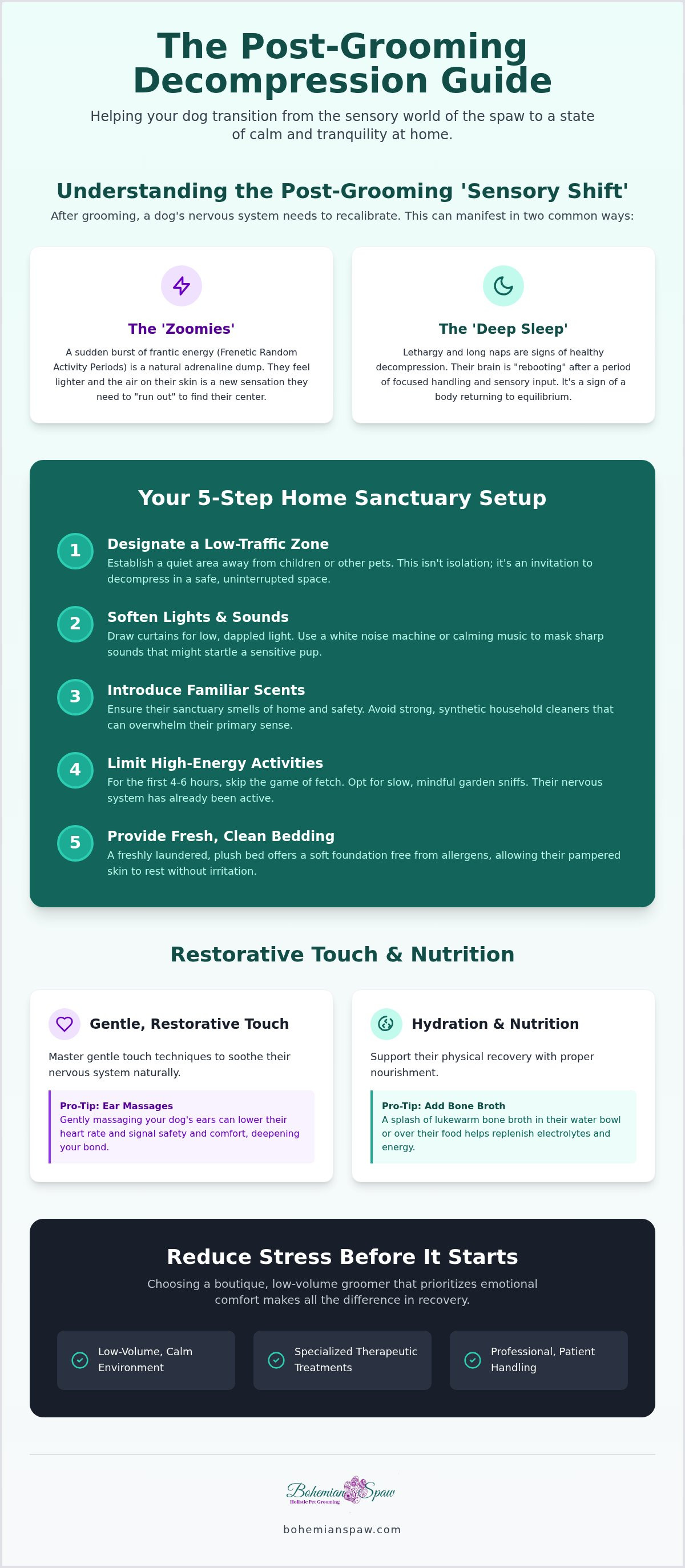
- Designate a low-traffic zone: Establish a quiet area where your companion won't be interrupted by the playful energy of children or the curiosity of other pets. This isn't isolation; it's a peaceful invitation to decompress in a safe pocket of the home.
- Soft lighting and acoustics: Draw the curtains to create dappled, low light. Utilize a white noise machine or a calming acoustic playlist to mask sharp neighborhood sounds that might startle a sensitive pup.
- Introduce familiar, earthy scents: A dog's nose is their primary way of navigating the world. Ensure their sanctuary smells of home and safety rather than strong, synthetic household cleaners.
- Limit high-energy activities: For the first 4 to 6 hours, skip the game of fetch or the long, brisk walk. Their nervous system has already been active, so opt for slow, mindful garden sniffs instead.
- Provide fresh, clean bedding: A plush, laundered bed offers a soft foundation that is free from outside allergens, allowing their freshly pampered skin to rest without irritation.
Temperature Regulation and Comfort
Freshly groomed dogs, especially those who have just received a Full Groom, may feel the chill more than usual. Without their thick coat to act as insulation, they are more susceptible to household drafts. Monitor your pup for subtle shivering or a tendency to huddle near heat sources. Providing a warm, draft-free nook with a soft, breathable blanket ensures they stay cozy while their body recalibrates its internal thermostat.
Aromatherapy and Pheromones for Canine Calm
Strategic scent can be a powerful ally in your wellness toolkit. A gentle lavender diffuser or a canine pheromone plug-in can signal immediate safety to the brain. As your dog settles, they will naturally rub against their bedding to re-claim their scent. This rhythmic behavior is a vital part of how they re-establish their identity after the aromatic shift of a bath. If you want to start this journey of tranquility early, our bespoke spaw packages are designed to initiate this calm through holistic care before they even return to your arms.
Restorative Touch and Low-Impact Interaction
Once your companion has settled into their sanctuary, your own presence becomes the most powerful tool for restoration. Learning how to help a dog relax after grooming involves more than just a quiet room; it requires a mindful approach to physical contact. After the professional handling of a grooming session, your dog looks to you for a different kind of touch, one that is purely rooted in comfort and safety. This is the time for low-impact interaction that prioritizes their emotional state over active play.
The "TTouch" method is a beautiful technique to explore during this decompression phase. By using light, mindful circular movements of the skin, you can help activate your dog's parasympathetic nervous system. Focus on the ears, as gentle strokes from the base to the tip can significantly lower heart rates and induce a deep sense of calm. Always observe their body language closely. If they lean into your hand, they are inviting affection. If they turn their head away or move to a different spot, they are asking for the luxury of space. Respecting these subtle boundaries is vital for their emotional well-being.
- The Grounding Technique: Simply sit on the floor near your dog without initiating play. Your quiet, steady presence acts as a grounding anchor while they process the day's sensory shifts.
- Bonding Strokes: Use a very soft brush for rhythmic strokes that aren't about hair removal. These gentle movements mimic the care they received at the salon but in a familiar, low-pressure context.
- Quiet Observation: Keep your movements slow and predictable to avoid startling a pup who might still be feeling a bit sensitive.
The Power of the Paw Massage
The therapeutic benefits of paw pad treatments offered during a professional groom can be extended at home through gentle massage. A dog's paws are incredibly sensitive and full of nerve endings that respond well to restorative touch. Use your thumb to apply light, circular pressure to the center of the large pad, then move gently to the webbing between the toes. This helps release physical tension, especially if your dog has just experienced nail grinding. Always check for sensitivity with a light hand to ensure they feel supported rather than overwhelmed.
Verbal Cues and Emotional Mirroring
Your voice is a powerful instrument in the healing process. Use a "low and slow" tone to mirror the tranquility of a boutique retreat. Dogs are highly attuned to our internal states, and they will often adopt the energy we project. Emotional mirroring is the synchronization of pet and owner stress levels; for many owners, visiting a dedicated head spa and facial bar like San Spa is a perfect way to cultivate the internal peace that their dogs so easily sense. If you remain calm, intentional, and soft-spoken, your dog is much more likely to find their own sense of peace. Avoid high-pitched "baby talk" or frantic praise immediately after a groom, as this can inadvertently spike their adrenaline when they should be winding down.
Grooming is more than just a beauty ritual; it's a physical experience that requires significant energy. During a session, your dog may experience a slight rise in body temperature from warm air dryers or simply from the excitement of the process. This often leads to increased panting, which naturally depletes their hydration levels. When you are looking at how to help a dog relax after grooming, replenishing these fluids is a foundational step in their recovery.
Instead of encouraging them to gulp down a large bowl of water, which can lead to bloating or discomfort, offer small, frequent opportunities to hydrate. Ice cubes can be a wonderful sensory distraction that provides moisture slowly. Alternatively, a small amount of warm bone broth acts as a nourishing tonic that encourages even the most reluctant drinkers to lap up every drop without overwhelming their system.
- The Post-Spaw Treat: Choose a high-value, easily digestible reward to celebrate their successful visit. Single-ingredient dehydrated treats are excellent choices that feel like a luxury without being heavy.
- Avoid Heavy Meals: Wait at least two hours before serving a full dinner. A heavy meal immediately following the stimulation of grooming can occasionally lead to digestive upset as their body is still finding its center.
Hydration Strategies for Anxious Drinkers
If your companion is too focused on their new "sensory shift" to drink, you might need to make the water bowl more enticing. A splash of goat milk or tuna juice can transform plain water into an irresistible treat. Keep a close eye on their gums; they should feel slick and pink. If they feel tacky or dry, your pup may be experiencing mild dehydration. Ensure their water source is placed directly within the sanctuary zone we established earlier so they don't have to leave their place of rest to hydrate.
Calming Supplements: When to Use Them
For some dogs, the transition from the salon back to home life requires a bit of extra support. We always recommend discussing natural options like CBD or L-theanine with your Lisle veterinarian to ensure they align with your dog's specific health needs. These supplements are most effective when timed to peak during the initial transition window, providing a gentle way of how to help a dog relax after grooming. A holistic approach to wellness often favors these gentle dietary supports over heavy sedation, as they allow the dog to remain present while their nervous system settles.
To ensure your pup starts their relaxation journey with the best possible care, contact us to book a low-stress session today.
The Bohemian Spaw Difference: Reducing Stress Before It Starts
While much of this guide focuses on home care, the most effective way of how to help a dog relax after grooming is to choose an environment that respects their spirit from the start. In our boutique, low-volume salon in Lisle, we replace the frantic energy of an assembly line with a rhythmic, intentional pace. By limiting the number of companions we see each day, we ensure that every dog receives our undivided attention in a space that feels more like a holistic retreat than a standard service appointment. This wellness-first philosophy drastically reduces the "grooming hangover" many owners witness at home.
Specialized treatments like Therapeutic Mud Baths are essential tools in our stress-reduction toolkit. These mineral-rich treatments do more than just nourish the skin; the gentle massage and natural components work to soothe the nervous system, providing a grounding physical sensation that lingers long after the bath. For our youngest clients, the Puppy's First Groom experience is designed to be a foundation of lifelong tranquility. By prioritizing emotional comfort over speed, we help puppies view grooming as a restorative ritual rather than a source of confusion.
Sensory-Minded Grooming Rituals
Every detail of our process is curated to maintain a steady, calming rhythm. We utilize Blueberry Facials and soft, nature-inspired music to create an atmosphere of sophisticated tranquility. Unlike commercial salons where noise and high-volume turnover can spike a dog's cortisol, our approach focuses on the individual bond between the specialist and the subject. Even physically demanding services like professional de-shedding are handled with a gentle touch, ensuring your companion feels lighter and more comfortable without the exhaustion often associated with high-pressure environments.
Preparing for Your Next Visit
The journey to relaxation begins before you even arrive at our Lisle salon. To keep your dog's energy steady, try to keep the car ride quiet and avoid high-energy interactions just before drop-off. For particularly anxious dogs, we often recommend "Happy Visits," where your pup can explore our boutique space and receive a gentle treat without any grooming taking place. This helps them associate our environment with safety and affection. When you are ready for a more tranquil experience that prioritizes your dog's spiritual well-being, consult with our holistic groomers today to discover a bespoke care plan tailored to your companion's unique needs.
Nurturing the Post-Spaw Glow
Embracing a holistic approach means seeing the grooming process as a full cycle of care, from the first calming notes of music in the salon to the quiet sanctuary you build at home. You now understand that the sensory shift is a natural recalibration. By providing restorative touch and mindful hydration, you empower your companion to find their center quickly. Mastering how to help a dog relax after grooming is a beautiful way to deepen the bond you share, ensuring every visit is a restorative ritual rather than a source of stress.
At Bohemian Spaw, we specialize in these holistic wellness rituals within our boutique, low-stress environment in Lisle, IL. Whether you're caring for a curious puppy or seeking specialized expertise in senior dog care, our wellness-first approach ensures your pup returns home with their spirit intact. We invite you to experience the difference of a slow, intentional process that honors the individual needs of your family member. Your dog's emotional well-being is our highest priority.
Book a Stress-Free Holistic Grooming Session in Lisle
Your companion deserves to feel as peaceful as they look. We look forward to welcoming you both into our tranquil retreat soon.
Questions for a Tranquil Transition
Why is my dog acting so sleepy after being groomed?
Your dog is likely experiencing a natural reboot of their nervous system after the sensory stimulation of their visit. Even in a low-stress environment, the focus required for standing and being handled uses significant mental and physical energy. This deep sleep is a healthy sign of decompression, allowing their body to recalibrate. It's quite common for dogs to retreat into a restorative slumber for several hours as they find their emotional equilibrium again.
Is it normal for my dog to have the 'zoomies' after a bath?
Yes, these bursts of energy, often called zoomies or FRAPs, are a perfectly normal way for dogs to release pent-up adrenaline. Feeling lighter after a de-shedding treatment or experiencing the cool air on freshly cleaned skin can be incredibly exhilarating. It's their way of shaking off the focus of the session and celebrating their newfound comfort. Providing a safe, open space at home allows them to run through this excitement naturally.
How long does it typically take for a dog to relax after grooming?
Most dogs find their center within 4 to 24 hours after returning home. The exact timing depends on their individual temperament, age, and the complexity of the service they received. Senior dogs or those who underwent an intensive process like hand stripping may require a full day of quiet rest. By following our guide on how to help a dog relax after grooming, you can often shorten this transition period and help them settle more quickly.
Should I feed my dog immediately after they get home from the groomer?
It's best to wait at least two hours before offering a full meal. The excitement and physical activity of a spaw day can sometimes lead to a sensitive stomach. Offering a small, high-value treat or a bit of bone broth first is a gentler way to nourish them without risking digestive upset. Once their breathing is steady and they've reached a state of tranquility, you can return to their regular feeding schedule.
My dog is hiding under the bed after their haircut—should I be worried?
Hiding is often a dog's way of seeking a den to process the sensory shift in a secure, dark environment. This behavior is usually a temporary stage of decompression and isn't a cause for alarm unless it persists beyond 24 hours. Respect their need for solitude by keeping the area quiet and draft-free. Forcing them out of their chosen sanctuary can increase their cortisol levels, so let them emerge when they feel truly ready.
Can a therapeutic mud bath really help my dog stay calm?
Absolutely, a therapeutic mud bath serves as a powerful grounding ritual. The mineral-rich components and rhythmic massage work together to soothe the skin barrier while calming the central nervous system. This treatment provides a deep, physical sense of relaxation that often carries over into the home environment. It's a foundational element of our wellness-first approach, designed to lower the heart rate and promote a lasting sense of sophisticated tranquility for your companion.
What are the best calming scents to use at home for my dog?
Lavender and chamomile are excellent, nature-inspired choices for creating a serene atmosphere at home. Using a gentle diffuser or a dog-specific pheromone spray can signal immediate safety to your pup's brain. Always ensure the scents are high-quality and diluted, as a dog's nose is incredibly sensitive. These earthy aromas help bridge the gap between the salon and home, reinforcing the sanctuary you've built to help your canine companion decompress.
How can I tell if my dog is stressed or just tired after their spaw day?
A tired dog will have soft eyes, a relaxed body, and will settle into a deep, rhythmic sleep. Conversely, a stressed dog may exhibit pacing, excessive panting, or whale eye, where the whites of their eyes are visible. Understanding how to help a dog relax after grooming involves observing these subtle cues. If they're simply tired, they'll wake up refreshed; if they're stressed, they may remain restless and require more intentional, low-impact interaction.


