

A grooming table isn’t automatically the safest place for a blind dog. Safe grooming for blind or deaf dogs in Downers Grove starts with steady touch cues, a non-slip bathing surface, and continuous contact during handling; a blind dog should never be left alone on a grooming table. If the floor or a person’s arms feel more secure, grooming there can be a gentler choice.
It makes sense to want grooming to feel predictable, especially when your dog can’t rely on sight or hearing to anticipate what comes next. A calm approach can help: let your dog smell tools before use, introduce vibration and dryer sounds gradually, and use the same gentle touch cues each time. This guide covers those steps, ways to reduce slips during baths, and precautions for keeping blind dogs secure on grooming tables, so you can support comfort as well as coat care.
Key Takeaways
- Build familiarity with clippers and dryers in small steps, pairing new sensations with calm pauses and positive experiences.
- Use the same gentle touch cues each time, so your dog can anticipate when handling begins and when it’s time to move.
- Make bath time easier to navigate with a secure footing and a gradual introduction to water.
- Keep a blind dog supported and within reach during table grooming, and consider a lower, more comfortable position if the table feels unsettling.
1. Introducing clippers and dryers to deaf dogs
Illinois and Downers Grove requirements are separate from handling practices. These steps cover practical safety, not legal requirements. When choosing a groomer, ask about their procedures as well as how they adapt to your dog’s sensory needs.
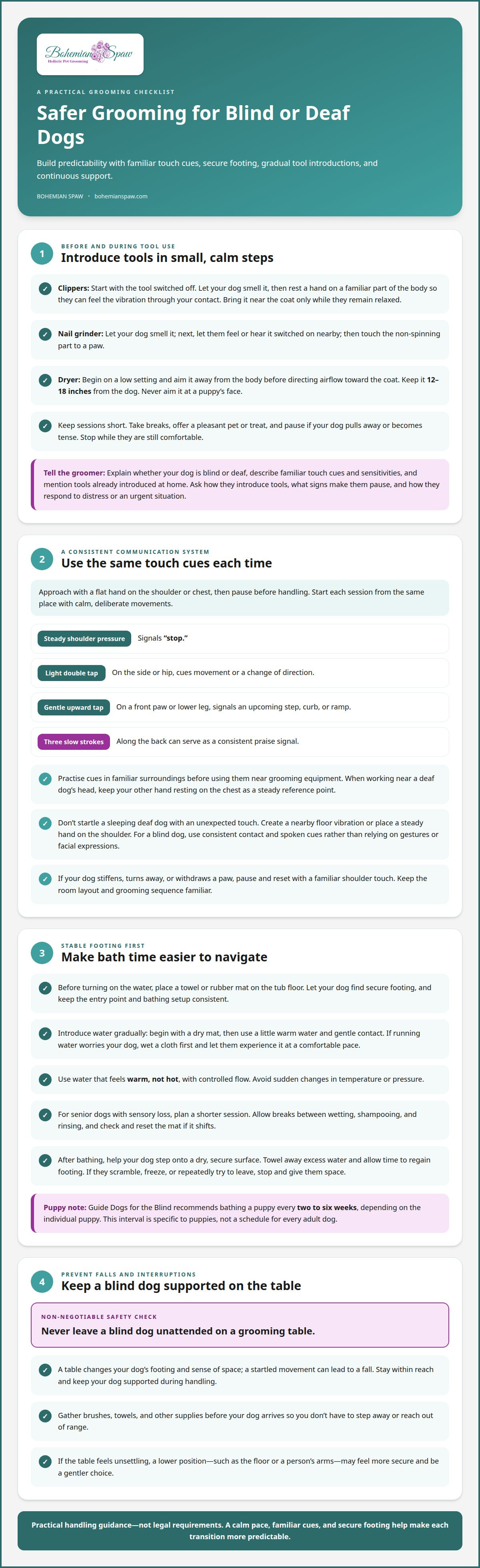
Start with the tool switched off. Let your dog smell the clipper, then rest a hand on a familiar part of the body and let your dog feel the clipper’s vibration through that contact. Bring it near the coat only while your dog remains relaxed. Introduce a nail grinder in stages: let your dog smell it, feel or hear it switched on nearby, then touch the non-spinning part to a paw. Take breaks, offer a pleasant pet or treat, and stop while your dog is still comfortable.
Introduce the dryer with the same gradual rhythm. Begin on a low setting and aim it away from the body before directing airflow toward the coat. Guide Dogs for the Blind advises keeping a dryer 12-18 inches from a dog and never aiming it at a puppy’s face. Keep sessions short, and pause if your dog pulls away or becomes tense.
Before the appointment, tell the groomer your dog is deaf or blind. Describe familiar touch cues, sensitivities, and tools you’ve already introduced at home. For visitors or other pets, use a quiet space and make introductions gradual. One calm visitor at a time gives your dog more room to process new scents and movement.
Handling experience varies between groomers. Ask how they introduce clippers, dryers, and nail tools, what signs prompt them to pause, and how they respond if a dog becomes distressed. Ask how they would handle an urgent situation and keep you informed. Specific answers help you understand the planned approach.
Mobile grooming availability in Downers Grove depends on the individual provider; salon and mobile appointments can involve different surroundings. For a puppy’s first gradual exposure to grooming, puppy grooming can be introduced with familiarization and short, positive experiences.
2. Consistent touch cues for grooming
A predictable touch sequence helps a blind or deaf dog anticipate handling. Approach with a flat hand on the shoulder or chest, then pause before beginning. That moment gives your dog time to register your touch instead of being startled by a sudden brush or lift. Start each session from the same place, with calm, deliberate movements.
Give a small set of cues clear, consistent meanings. Steady pressure on the shoulders can signal “stop,” while a light double tap on the side or hip can cue movement or a change of direction. A gentle upward tap on a front paw or lower leg can signal an upcoming step, curb, or ramp. Practise these cues in familiar surroundings before using them near grooming equipment.
Keep touch cues distinct from routine handling. Three slow strokes along the back can serve as a praise signal; use the same pattern whenever your dog responds calmly. When working near a deaf dog’s head, keep your other hand resting on the chest. This gives your dog a steady point of reference while you trim sensitive areas.
Adapt your approach when your dog is asleep or has limited vision. Don’t wake a sleeping deaf dog with an unexpected touch; create a nearby floor vibration or place a steady hand on the shoulder. A blind dog may not understand gestures or facial expressions, so use consistent contact and spoken cues rather than relying on body language alone. Keep the room layout and grooming sequence familiar.
If your dog has sensory and mobility changes, notice which cues bring a relaxed response and repeat them consistently. If your dog stiffens, turns away, or withdraws a paw, pause and reset with the familiar shoulder touch. A slow stroke from the head down the nose can also guide a dog toward a water bowl after grooming. Predictable signals make transitions easier to understand.
3. Bathing and preventing slips
For a blind or deaf dog, a slippery tub can make bathing feel unpredictable. When planning safe grooming for blind or deaf dogs in Downers Grove, make stable footing the first priority. Before turning on the water, place a towel or rubber mat on the tub floor and let your dog find secure footing. Keep the entry point and bathing setup consistent. A familiar route from the floor to the tub can reduce surprises, especially for a dog adjusting to vision or hearing loss.
Introduce water gradually rather than starting with a full bath. Let your dog stand on the mat while the tub is dry, then use a little warm water and gentle contact. Guide Dogs for the Blind advises introducing bathing slowly to avoid frightening a puppy. If your dog is wary of running water, wet a cloth first and let them experience it at a comfortable pace.
Water should feel warm, not hot. Guide Dogs for the Blind recommends warm, not hot, water when bathing a puppy. Keep the flow controlled and avoid sudden changes in temperature or pressure. For a puppy, Guide Dogs for the Blind recommends bathing every two to six weeks, depending on the individual puppy. This interval is specific to puppies, not a schedule for every adult dog.
Plan a shorter session for a senior dog with sensory loss. Allow breaks and pause between wetting, shampooing, and rinsing. Check the mat if it shifts, and reset it before your dog moves. For owners seeking broader guidance on navigating senior dog wellness and sensory changes, Canine Longevity Academy offers vet-led support to help aging companions thrive. A non-slip surface, steady support, and an unhurried pace make transitions easier. These are practical foundations of safe grooming for blind or deaf dogs in Downers Grove.
After the bath, help your dog step onto a dry, secure surface before moving away. Use a towel to absorb excess water, then give your dog time to regain footing. If your dog scrambles, freezes, or repeatedly tries to leave, stop and give them space rather than pushing through. Comfort-focused grooming means adapting the process to your dog’s response.
4. Keeping blind dogs safe on grooming tables
A grooming table changes a blind dog’s footing and sense of space. A startled movement can lead to a fall, so never leave a blind dog unattended on a table, even while reaching for a brush or towel. Keep all necessary supplies within easy reach before your dog arrives to avoid interruptions.
Maintain contact as you move around the dog. A steady hand on the body helps your dog track your position and makes it less surprising when you move to another side. Before working near the face, slide your hand slowly up the neck and over the head. Don’t reach straight for the muzzle or touch the face without warning.
Watch for signs that the table feels alarming, such as stiffening, shifting away, or repeatedly trying to step off. A blind dog may feel calmer on the floor or held close against a person. Choose a position that keeps your dog supported while allowing the groomer to work safely. The best setup isn’t automatically the highest one.
A sudden approach can also startle a deaf dog, especially if they can’t see the groomer nearby. Maintain contact as you move around, and never leave a blind or deaf dog alone during a transition. Pause before changing position, then use a familiar touch cue to signal the next step. Small, predictable movements help prevent surprise and scrambling.
Owners can discuss table handling and first-visit routines through first-visit grooming information. Sharing how a dog responds to height, touch, and close support helps shape a safer approach before grooming begins.
Together, these steps make your dog’s location and the groomer’s movements more predictable. They also allow the setup to shift away from the table if that feels safer.
Bohemian Spaw: Full Groom
Bohemian Spaw offers Full Groom for dogs who need complete coat care and Bath & Brush for routine bathing and brushing. If your blind or deaf dog needs grooming, share familiar touch cues, comfort with dryers, and whether table height feels unsettling. These details help tailor the appointment to your dog’s handling needs.
For a puppy building early familiarity with grooming, Puppy’s First Groom offers a starting point. De-Shedding Treatment can help address loose coat. Choose the service that suits your dog’s grooming needs, and explain any sensory sensitivities when planning the appointment.
To discuss grooming for your dog, contact Bohemian Spaw.
Make the next grooming visit feel familiar
Your dog’s comfort can grow through small, steady experiences. Before the next appointment, note what helps your companion settle, such as a familiar touch, a quieter transition, or staying close to the floor. Share those observations so the grooming plan starts with your dog’s needs rather than a one-size-fits-all routine.
For safe grooming for blind or deaf dogs in Downers Grove, keep the conversation practical. Describe which sensations your dog welcomes, what tends to cause hesitation, and how you signal praise or a pause. These details give the groomer a clearer starting point and help you feel prepared.
Grooming is more than a finished coat. It can become a predictable part of your dog’s care when each visit respects their pace and sense of security. If you’re ready to talk through your dog’s grooming needs, contact Bohemian Spaw. A thoughtful next step can help make future visits feel gentler and more familiar for both of you.
Frequently Asked Questions
What grooming accommodations do blind dogs need to feel safe and comfortable?
Blind dogs benefit from a familiar, uncluttered setup and a predictable route into the grooming area. Keep doors, mats, and equipment in consistent places so your dog can orient through touch and scent. Tell the groomer whether your dog can detect light or shadows, since remaining vision varies. Having a familiar person nearby on arrival can also help your dog settle into new surroundings.
What grooming accommodations do deaf dogs need, including visual cues and touch warnings?
Deaf dogs need clear visual signals and warning before hands or tools approach. Stand where your dog can see you, make a small hand signal, and wait for their attention before moving closer. Pair that signal with a familiar touch cue when needed. During grooming, don’t rely on spoken instructions or gestures outside your dog’s view. Use agreed signals consistently so your dog can anticipate transitions.
Do Downers Grove-area groomers offer one-on-one or low-stress appointments for special-needs dogs?
Ask whether the groomer can book your dog on a slower day so they can give it undivided attention, and how they adapt handling to its sensory needs.


