
What if the secret to your dog's deepest sense of well-being isn't found in a new toy, but within the very fibers of their fur? Understanding the diverse world of dog coat types is about more than just aesthetics; it is about honoring the unique biological architecture that protects your companion. It's completely natural to feel a bit lost when faced with the choice between clipping and hand stripping, or to feel anxious when seasonal changes bring about unexpected skin sensitivities. You want a grooming ritual that feels like a restorative retreat rather than a frustrating chore.
We promise to clear away the confusion and provide you with a mindful roadmap for your pup's specific needs. You'll discover how to maintain a healthy glow through holistic, texture-specific care that prioritizes emotional comfort alongside physical results. We are going to walk through the distinct characteristics of various coat architectures, share manageable home-care routines, and identify exactly when your dog might benefit from specialized services like a therapeutic mud bath or professional hand stripping. By the end, you'll see your dog's coat not just as fur, but as a living system deserving of gentle, artistic attention.
Key Takeaways
- Identify the seven distinct dog coat types to better understand the unique biological architecture that protects your companion's physical and emotional well-being.
- Explore how the intricate layers of a double coat provide vital thermoregulation, offering a natural shield against the humid summers and freezing winters of the Lisle climate.
- Learn the specific care requirements for specialized textures, from the human-like growth of silky drop coats to the dense, spiraled patterns of wool coats.
- Discover the restorative power of holistic rituals like therapeutic mud baths and artisanal hand stripping to maintain coat integrity and skin health.
- Develop a mindful seasonal routine that safeguards your pup against environmental stressors, ensuring their coat remains a source of comfort throughout the year.
Decoding the 7 Primary Dog Coat Types
A dog's coat is far more than a simple aesthetic feature. It's a living, breathing barrier that acts as a sophisticated shield for the body. This intricate system provides vital protection against environmental stressors, manages thermoregulation to keep your pup comfortable, and even offers sensory input through delicate hair follicles. When we explore the various dog coat types, we're really looking at a unique biological architecture. Understanding these patterns is the first step toward a wellness-first grooming routine that honors your companion's physical and emotional needs.
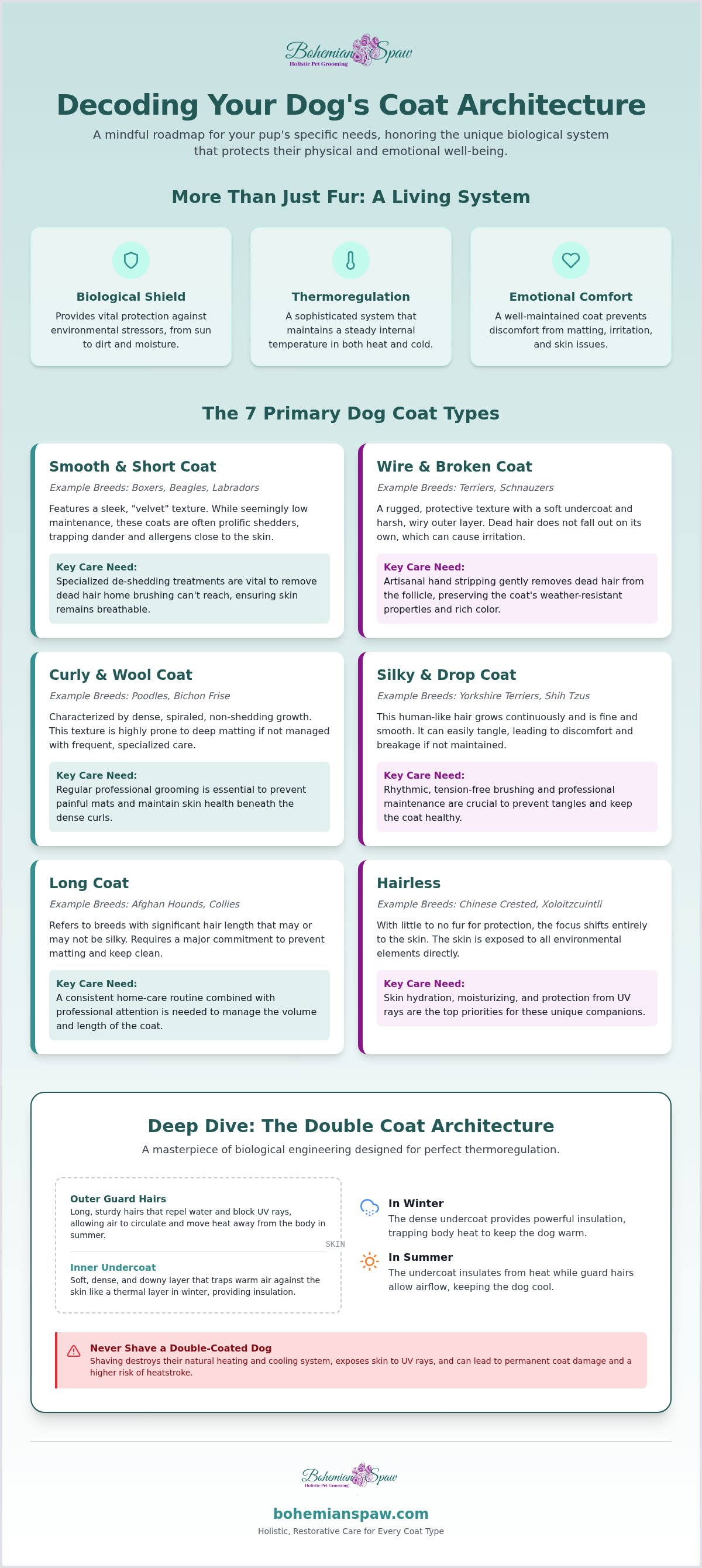
We generally recognize seven primary categories: Smooth, Wire, Curly, Double, Silky, Long, and Hairless. Each of these architectures requires a bespoke approach to maintain its health. For instance, the needs of a hairless pup focus heavily on skin hydration and protection, while a long-coated breed requires rhythmic, tension-free maintenance to prevent discomfort. Keep in mind that the surface is only half the story. The health of the coat is deeply tied to the skin beneath; a nourished dermis produces a vibrant, resilient follicle.
Many modern families now welcome hybrid mixes, such as Doodles, into their homes. These companions often present complex, blended coat architectures that don't fit neatly into a single category. They might inherit the shedding undercoat of a Golden Retriever alongside the spiraled, non-shedding growth of a Poodle. This blend creates a high-maintenance texture that is prone to deep matting if not managed with specialized doodle care. Recognizing these nuances helps us provide the tranquil, restorative care your pet deserves.
Smooth and Short-Coated Breeds
Breeds like Boxers, Beagles, and Labradors possess a sleek, "velvet" texture that feels deceptively low maintenance. While they don't require the intricate styling of a Poodle, these short hairs are often prolific shedders. Their skin relies on natural oils for protection, but these oils can trap dander and allergens close to the body. A common misconception is that smooth coats don't need professional attention. However, a specialized de-shedding treatment is vital for removing the old, dead hair that home brushing can't reach, ensuring the skin remains breathable and refreshed.
Wire and Broken-Coated Breeds
Terriers and Schnauzers carry a rugged, protective texture known as a wire coat. This architecture consists of a soft, downy undercoat shielded by a harsh, wiry outer layer. Unlike other dog coat types, wire hair doesn't fall out on its own when it dies. It remains in the follicle, which can lead to skin irritation and a dull appearance if not addressed. The biological solution is hand stripping. This artisanal process gently removes the dead hair by hand, making room for new, healthy growth while preserving the coat's natural weather-resistant properties and rich color.
The Architecture of the Double Coat: More Than Just Fur
Among the various dog coat types, the double coat stands as a masterpiece of biological engineering. It is not merely a layer of fur; it's a sophisticated, dual-layer system designed to shield your companion from the elements. This architecture consists of a long, sturdy outer layer and a soft, dense inner layer that work in harmony to maintain a steady internal temperature. Understanding this interplay is vital for any owner who wishes to honor their dog's natural comfort and well-being.
This system is essential for thermoregulation. In the biting cold of an Illinois winter, the downy undercoat traps warm air against the skin, acting like a cozy thermal layer. Conversely, during our humid Lisle summers, this same layer acts as insulation against the heat, while the outer guard hairs allow air to circulate and move heat away from the body. This is why shaving a double-coated dog is so detrimental. Removing this natural barrier doesn't keep them cooler. Instead, it exposes their sensitive skin to harsh UV rays and destroys their ability to regulate heat. Often, the coat never grows back with the same soft texture, leading to permanent structural damage and a higher risk of heatstroke.
Double-coated dogs also participate in a unique "Shedding Cycle," often referred to as blowing their coat. This typically happens twice a year as the body prepares for a change in season. It's a rhythmic process of renewal where the old undercoat is released to make room for a layer better suited for the coming weather. While the volume of hair can feel overwhelming, it is a sign of a healthy, functioning biological system.
Guard Hairs vs. Undercoat
To truly understand your pup's needs, you must recognize the different roles these layers play. Guard hairs are the resilient, pigmented fibers that give a dog their color. They are naturally water-repellent and serve as a primary defense against dirt, moisture, and sun damage. Beneath these lies the undercoat, a thick thicket of short, crimped hairs that provide insulation. You can typically identify this architecture in breeds like Siberian Huskies, Golden Retrievers, and German Shepherds. If you notice a "fuzzy" layer that seems to separate from the longer, shinier hair during shedding season, your dog is likely double-coated.
Holistic Management of Heavy Shedders
The secret to managing a heavy shedder lies in gentle, consistent maintenance rather than drastic clipping. A professional undercoat stripping or a specialized de-shedding treatment is a much kinder alternative. These methods focus on removing only the dead, trapped hair, allowing the skin to breathe without compromising the coat's integrity. Hydration also plays a key role in this process. A well-hydrated follicle releases dead hair more easily, which significantly reduces the amount of fur found around your home. For a truly restorative experience, our specialized spaw packages include therapeutic mud baths that deeply nourish the skin while easing the transition between seasons.
Specialized Textures: Curly, Silky, and Scissored Coats
While the double coat is a marvel of insulation, specialized dog coat types like curly and silky textures present a different kind of architectural wonder. These coats don't follow the seasonal shedding rhythm seen in other breeds; instead, they grow continuously, much like human hair. This unique growth pattern creates an artistic canvas for scissored styles but also demands a higher frequency of professional intervention. Without regular, mindful care, these elegant textures can quickly lose their luster and become a source of discomfort for your companion.
The "Doodle" dilemma is a perfect example of how complex these textures can become. When you mix the spiraled wool of a Poodle with the silky or double coat of another breed, the result is often an unpredictable hybrid. These coats require a bespoke approach because the texture can vary significantly even on a single dog's body. Managing these high-maintenance coats is a journey of patience and restoration, ensuring the pup feels light, airy, and free from the weight of neglected fur.
Curly Coats and the Risk of Matting
Curly and wool coats, such as those found on Poodles and Bichon Frises, are often celebrated for being low-shedding. However, the hair that would normally fall out becomes trapped within the tight, springy spirals of the living coat. If these trapped fibers aren't removed, they weave into dense mats close to the skin. To prevent this, we practice "line brushing," a rhythmic technique where we brush small sections of hair from the skin outward. This ensures no tangles are hiding beneath the surface. For those navigating the unique needs of hybrid textures, our specialized Doodle Care and Maintenance protocols provide a tranquil path to a mat-free life.
Silky Coats and Skin Sensitivity
Silky and drop coats, characteristic of Yorkies and Maltese, possess a fine diameter and a delicate, flowing aesthetic. Because these hairs are so thin, they tend to tangle instantly, often forming tiny "pin knots" behind the ears and under the legs. These elegant dog coat types frequently accompany sensitive skin that reacts to harsh chemicals or rough handling. We prioritize a wellness-first approach, using gentle, restorative components that nourish the skin while we work. Our bespoke finishing techniques focus on maintaining that signature "flowing" look while ensuring the coat remains functional and easy to manage at home between visits to our serene Lisle retreat.
Seasonal Care for Illinois Dogs: Adapting to the Lisle Climate
Lisle's distinct seasons demand a proactive, mindful approach to grooming. While we've explored the biological architecture of various dog coat types, how those coats interact with the shifting Illinois environment is just as critical. The heavy humidity of a Midwest July can turn a thick double coat into a damp, airless environment, often leading to hotspots or a persistent "doggy funk" that lingers after walks. In contrast, the transition into autumn requires preparing the coat for its major renewal phase, ensuring the skin is healthy enough to support the incoming winter growth.
Professional Tidy Ups serve as a gentle, essential bridge between full grooms during these seasonal shifts. These appointments focus on high-traffic areas, clearing away seasonal debris like burrs, dried mud, or ice-melt chemicals before they can cause matting. By maintaining these small details, we ensure your companion stays comfortable and serene regardless of the weather outside.
Managing Mud and Moisture in Spring
Spring in Lisle is synonymous with melting snow and frequent rain. For dogs with dense undercoats or long furnishings, this dampness is more than just a mess; it's a potential health risk. When moisture gets trapped deep within the hair, it creates a breeding ground for bacterial and fungal skin infections. Our Therapeutic Mud Bath is particularly effective during this shift. It helps reset the skin's natural pH and draws out impurities that home bathing often misses. We also prioritize Paw Pad Treatments during this time to soothe irritation caused by damp soil and grit.
Winter Coat Protection and Hydration
As the temperature drops, some owners consider a "shave down" to avoid the hassle of snowballs clinging to long fur. This is a persistent myth that can be quite dangerous. Shaving removes the essential insulation your dog needs to prevent hypothermia and protect against the wind. Instead, the focus should be on hydration and protection. Indoor heating systems strip moisture from the air, often leaving dog coat types feeling brittle and the skin beneath flaky or itchy. We recommend keeping the coat at a functional length while using restorative conditioners to maintain a protective barrier. For more detailed insights on maintaining your pup's spirit during the colder months, explore our Seasonal Pet Care Advice for Lisle Dog Owners.
If you have noticed your companion struggling with the changing Illinois weather, we invite you to book a seasonal consultation to find the perfect restorative ritual for their unique needs.
Holistic Rituals: Restoring Health to Every Coat Type
At Bohemian Spaw, we view grooming as an act of compassionate care rather than a standard service appointment. Every encounter is an opportunity to perform a gentle wellness check, ensuring the skin and coat are thriving in harmony. While we've explored the biological needs of various dog coat types, these holistic rituals are where the true restoration begins. We prioritize natural components and a slow, intentional pace to create a serene environment where your companion feels valued as a family member rather than just another appointment.
Our philosophy is rooted in the belief that physical results are inseparable from emotional comfort. Whether your dog is visiting for a full groom or a specialized treatment, the experience is designed to lower their heart rate and promote a sense of tranquility. By understanding the unique architecture of their fur, we can apply bespoke techniques that honor their individuality and support their long term health.
The Art of Hand Stripping for Wire Breeds
For wire-coated companions, the traditional method of clipping can be surprisingly detrimental. Over time, clippers dull the vibrant color and soften the protective, harsh texture that defines the breed's natural shield. Our Professional Hand Stripping Services offer a rhythmic, manual alternative that honors the coat's natural cycle. By gently removing dead hairs from the follicle by hand, we make space for new, healthy growth that retains its weather-resistant properties. It's an artisanal process that requires patience and deep expertise, making it the conscious choice for owners who prioritize the integrity of their dog's coat.
Restorative Treatments for Skin and Coat
A complete hygiene ritual extends far beyond the hair itself. We offer Bespoke Dog Spa Treatments in Lisle that address the specific vulnerabilities of different textures. For silky, drop-coated breeds, a blueberry facial gently cleanses delicate facial hair while providing a soothing, aromatic experience. Meanwhile, our therapeutic mud baths serve as a powerful tool for thick, double-coated furs. This mineral-rich treatment draws out deep-seated impurities and allergens that settle near the skin, supporting healthy follicle growth from the base up.
We also integrate de-shedding rituals that take a holistic approach to removing the "dead weight" of an overgrown undercoat. Rather than a frantic brush-out, we use a combination of moisture-rich conditioners and gentle techniques to release trapped fur without causing skin irritation. This is complemented by essential hygiene steps like nail grinding and paw pad treatments, ensuring every inch of your pup is restored to a state of sophisticated tranquility. These rituals aren't just about aesthetic beauty; they are about the spiritual well-being of the companions we are privileged to care for.
Embrace a Restorative Path for Your Companion
Your dog's coat is a living testament to their health and spirit. By honoring the specific biological needs of different dog coat types, you are doing more than just maintaining their appearance; you are supporting their total well-being. We've explored how the intricate layers of a double coat provide vital protection and how specialized textures like wire or silky hair require a gentle, artisanal touch. Adapting these rituals to the unique rhythms of the Lisle climate ensures your pup remains comfortable and serene throughout the year.
At Bohemian Spaw, we invite you to experience a different kind of grooming. As Lisle's specialist in professional hand stripping, we offer a tranquil, low-stress environment where every companion is treated with the individual attention they deserve. Our custom wellness packages are designed to restore health to all coat architectures, prioritizing emotional comfort alongside physical results. We're here to help you navigate every seasonal shift with grace and expertise.
Book a Holistic Grooming Ritual for Your Dog's Unique Coat today. We look forward to welcoming you and your companion into our nature-inspired retreat for a journey of restoration and care.
Frequently Asked Questions
What is the hardest dog coat type to maintain?
Curly and wool coats, especially hybrid Doodle textures, often prove the most challenging to maintain. These architectures require daily home brushing and frequent visits to our Lisle retreat to prevent dense matting. Because the hair grows continuously and traps shed fibers, it demands professional scissoring and rhythmic line-brushing. For families in Naperville or Downers Grove, the local humidity can further complicate these textures, making a consistent professional schedule essential for the pup's comfort.
Can you change a dog's coat type with grooming?
You cannot fundamentally change a dog's genetic coat type, but improper grooming can cause lasting structural damage. Shaving a double-coated breed, for instance, often ruins the interplay between guard hairs and the undercoat, leading to a patchy or "fuzzy" regrowth. While we can't change the DNA, our holistic rituals in Lisle focus on restoring the natural integrity of the hair, ensuring each unique architecture performs its biological role of protection and thermoregulation.
Why is my dog's coat changing texture as they age?
Texture shifts often occur due to hormonal changes, aging, or the natural transition from a soft puppy coat to a more resilient adult layer. Senior dogs may experience thinning or a coarser feel as their metabolism slows. During a restorative Full Groom at our boutique salon, we monitor these changes as part of a wellness check. If you notice sudden dullness or brittleness, it may indicate a need for more intensive hydration or a therapeutic mud bath.
How often should different coat types be professionally groomed?
Frequency depends entirely on the specific needs of different dog coat types. Long, silky, or curly coats generally require professional attention every 4 to 6 weeks to manage growth and prevent tangles. Double-coated breeds benefit from a De-Shedding Treatment every 6 to 8 weeks, especially during the spring and fall transitions in Illinois. Smooth-coated dogs can often wait 8 to 12 weeks, though regular nail grinding and ear cleaning should remain a monthly priority.
Is it possible to over-brush certain coat types?
It's possible to cause skin irritation, known as brush burn, if you use the wrong tools or apply too much pressure. Over-brushing smooth coats can strip away essential natural oils, while aggressive brushing on silky hair can cause breakage. Understanding the architecture of various dog coat types is key. We recommend gentle, intentional sessions using a technique suited to the hair's diameter, ensuring the process remains a soothing experience for your companion rather than a source of stress.
What happens if you don't strip a wire-coated dog?
If you don't strip a wire coat, the dead, dull hair remains trapped in the follicle since these breeds don't shed traditionally. This blockage prevents new, vibrant hair from growing and can lead to itchy skin or follicular infections. At our Lisle salon, we specialize in the artisanal method of hand stripping. This gentle removal of old hair preserves the harsh texture and rich color that protects Terriers and Schnauzers from the elements.
Do hairless dogs still need grooming services?
Hairless breeds require a specialized approach that focuses almost entirely on skin health and protection. Without a traditional coat, these dogs are prone to blackheads, sun damage, and dryness. A restorative ritual for a hairless pup often includes a gentle Blueberry Facial to cleanse the skin and a Therapeutic Mud Bath to draw out impurities. We focus on exfoliation and deep hydration to keep their skin supple and resilient against the shifting Illinois weather.
Can diet affect the quality of my dog's coat type?
Diet serves as the internal foundation for a vibrant, healthy coat. High-quality proteins and Omega-3 fatty acids provide the essential building blocks for hair growth and skin elasticity. If a dog's diet is lacking, their coat often becomes brittle, dull, or prone to excessive shedding. We view nutrition as a vital part of the holistic wellness triad, working alongside professional grooming rituals to ensure your companion glows with health from the inside out.


