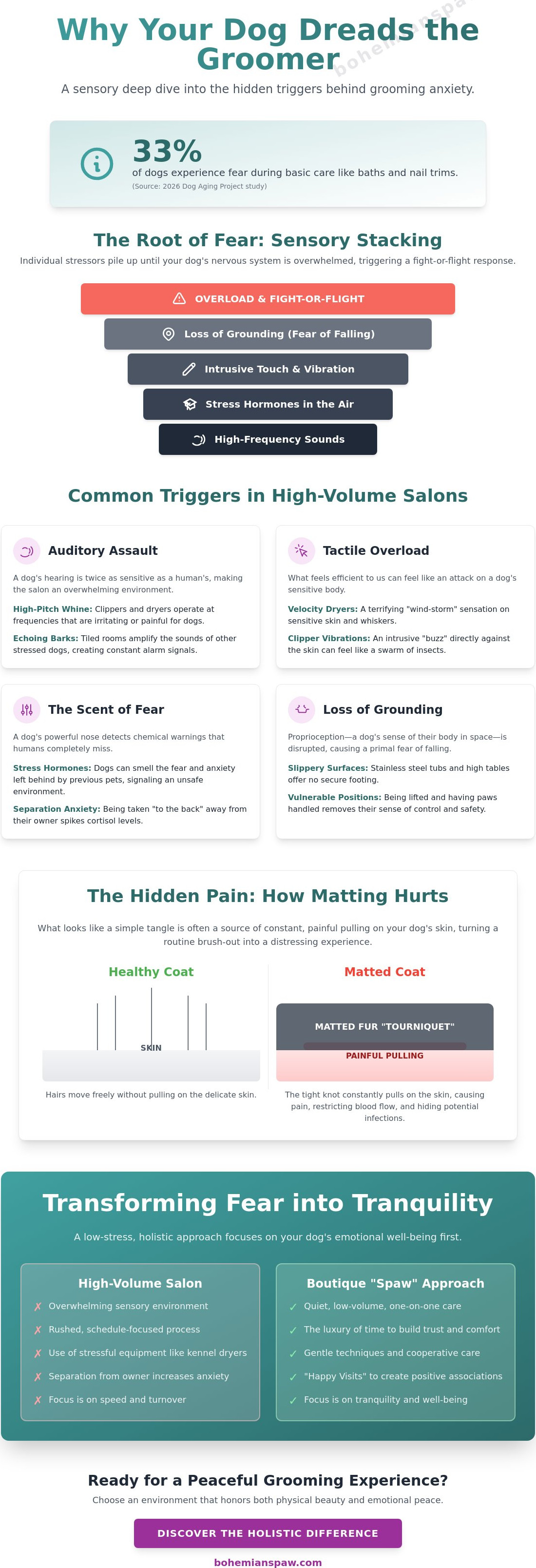
Imagine the heavy sigh and the tucked tail as you pull into a busy parking lot, a moment that turns a simple errand into a quiet heartbreak. You aren't alone in wondering why my dog hates the groomer, especially when you consider that a 2026 study from the Dog Aging Project found that 33% of our companions experience fear during basic care like baths and nail trims. It's deeply painful to feel like you're forcing your best friend into a chaotic, high-volume environment where their spirit is overlooked for the sake of a schedule. You want their coat to shine, but not at the cost of their emotional peace.
We believe that every visit should feel like a restorative retreat rather than a stressful chore. In this article, you'll discover the hidden sensory triggers behind your dog's fear and learn how a holistic, low-stress approach can transform their experience from one of panic to one of tranquility. We will guide you through gentle home desensitization techniques and help you identify the markers of a boutique spaw environment that treats your dog as a cherished family member. It is time to replace frustration with a rhythmic, mindful care routine that honors both physical beauty and spiritual well-being.
Key Takeaways
- Understand how "sensory stacking," the overwhelming combination of high-frequency sounds and the scent of stress hormones, triggers a dog's fight-or-flight response.
- Uncover the specific environmental reasons why my dog hates the groomer, including the "wind-storm" sensation of velocity dryers and the intrusive vibration of metal clippers.
- Learn how hidden matting acts as a painful tourniquet on the skin, transforming a routine brush-out into a distressing physical experience for your companion.
- Discover the healing potential of "Happy Visits" and Cooperative Care, techniques designed to give your dog a voice and rebuild their sense of safety.
- Explore the benefits of a low-volume, boutique environment where the luxury of time and a tranquility-first approach replace the frantic pace of high-turnover salons.
The Sensory Symphony: Why the Grooming Salon Feels Like an Assault
To a dog, a traditional grooming salon isn't just a place for a bath; it's a bewildering storm of sensory input that can quickly become overwhelming. When you find yourself asking why my dog hates the groomer, the answer often lies in a phenomenon called sensory stacking. This happens when individual stressors, like the hum of a clipper or the scent of a nervous neighbor, pile on top of one another until your dog's nervous system can no longer cope. This cumulative pressure pushes them into a state of fight-or-flight, where their primary focus is simply surviving the appointment rather than relaxing into the care they receive.
The air in a high-volume salon is heavy with more than just moisture and shampoo. Dogs possess an olfactory world far richer than our own, and they can easily detect the chemical markers of fear released by previous pets. These stress hormones act as a silent warning, telling your companion that the environment is unsafe before they even set a paw on the table. While regular maintenance is essential for dog health to prevent painful matting, the physical sensations of the process can be jarring. High-velocity dryers don't just make noise; they create a vibrational impact that ripples through a dog’s sensitive skin and whiskers, often feeling like a localized windstorm that they cannot escape.
The "mystery" of the grooming room adds another layer of anxiety. In many facilities, dogs are whisked away behind closed doors or solid walls, losing sight of their trusted human. This sudden separation, combined with the lack of visual context for the strange sounds and smells, causes cortisol levels to spike. Without a clear understanding of what is happening next, the dog remains in a state of high alert, unable to find the tranquility they need to feel secure.
The Auditory Overload of High-Volume Salons
A dog’s hearing is a delicate instrument, capable of picking up frequencies twice as high as the human ear can detect. In a standard grooming facility, the acoustics of tile and metal amplify the roar of industrial dryers and the high-pitched whir of clippers. This cacophony is punctuated by the sharp, echoing barks of other dogs, which function as constant alarm signals. For a sensitive soul, this isn't just noise; it’s a relentless auditory assault that keeps them on edge throughout the entire dog grooming services experience.
Proprioception and the Fear of Falling
The feeling of safety is often rooted in having four paws firmly on the ground. Dogs rely on proprioception, their internal sense of where their body is in space, to navigate the world. When they are lifted onto high tables or placed in slippery stainless steel tubs, that sense of security often vanishes. The loss of grounding, combined with the vulnerability of having their paws handled and lifted, can trigger a primal fear of falling. Without a steady, non-slip surface, even a gentle bath can feel like a precarious balancing act, deepening the anxiety they feel during their visit.
Common Triggers: From Velocity Dryers to Separation Anxiety
The equipment used in a standard salon is often the hidden culprit behind why my dog hates the groomer. High-velocity dryers are a primary example. While they're efficient for drying thick coats, they create a "wind-storm" experience that can be terrifying for sensitive ears and whiskers. The sheer force of the air, combined with the high-pitched whistle of the nozzle, makes many dogs feel physically overwhelmed. Similarly, clippers introduce an intrusive "buzz" directly against the skin. This isn't just a sound; it's a deep vibration that can feel like a swarm of bees to a pet who isn't accustomed to the sensation of vibrating metal in their personal space.
When we look at the dog's point of view, the environment itself plays a massive role in their emotional state. The "kennel effect" is a real challenge in high-volume shops. Being crated in a loud, echoing room filled with the scents of other stressed animals only exacerbates existing fear. It turns a necessary health routine into an endurance test, where the dog feels trapped and unable to find a quiet corner to decompress.
The Intimacy of Touch in Sensitive Areas
Dogs are biologically programmed to protect their most vulnerable parts. Their paws, face, and sanitary areas are high-sensitivity zones. There's a significant difference between "social petting," which is affectionate and voluntary, and "functional grooming touch," which involves restraint and specific manipulation. If a dog has had a previous negative experience, they quickly develop an anticipatory fear. Even a gentle reach toward their paw can trigger a defensive reaction because they remember the discomfort of a past nail trim or a tugged mat. This protective instinct is a natural response to feeling vulnerable during a Bath & Brush or full groom.
Separation and the Owner's Energy
The moment of the hand-off at the door sets the tone for the entire visit. Dogs are incredibly intuitive and often mirror the anxiety their owners feel during drop-off at Lisle salons. A rushed, frantic goodbye communicates that something is wrong. Instead, a calm and rhythmic transition helps signal that this is a safe, peaceful space. A groomer's steady, calm energy can actually help regulate a dog's heart rate through the process of emotional co-regulation. If you're feeling nervous about your pup's next appointment, reviewing our first visit information can help provide the peace of mind you both deserve.
The Physical Reality: How Matting and 'Skin Pull' Cause Pain
While sensory overload explains much of the emotional distress our pets feel, we cannot overlook the tangible physical discomfort that often accompanies a visit. When you are searching for answers as to why my dog hates the groomer, it is vital to look closely at the condition of their coat. Severe matting is far more than an aesthetic concern; it is a physiological burden. As hair tangles and tightens, it begins to act as a tourniquet against the skin, restricting blood flow and causing constant, dull discomfort. In some cases, these mats can even lead to bruising as they pull the skin taut with every movement the dog makes.
The "Skin Pull" effect is perhaps the most distressing part of the grooming process for a matted pet. When a brush or comb meets a dense knot, it doesn't just slide through; it tears at the hair follicle and stretches the delicate skin underneath. If a dog only experiences professional care when their coat has reached this state, they naturally begin to associate the grooming table with unavoidable pain. This creates a cycle of fear where the dog anticipates the "pinch" of the brush before the session even begins. Breaking this cycle often requires a compassionate "reset" shave, allowing the skin to breathe and the dog to rediscover their sense of physical lightheartedness.
For those looking to rebuild trust, there are many tips for reducing the fear of the groomer that focus on gentle handling and gradual desensitization. By addressing the physical pain first, we create the space needed for emotional healing to begin.
Beyond the Surface: The Hidden Dangers of Mats
Matting creates a dark, damp environment close to the body that is perfect for trapping moisture and bacteria. This often leads to hidden hot spots, sores, and fungal infections that remain invisible until the hair is removed. The psychological relief a dog feels when this heavy, painful armor is professionally lifted is palpable. To prevent these issues from returning, we recommend following the Bohemian Spaw brushing and matted hair guide for mindful home maintenance that keeps the coat airy and comfortable.
Humanity Over Vanity: A Holistic Choice
Choosing a shorter "comfort clip" over a long, painful "beauty brush-out" is one of the most loving decisions a pet parent can make. Humanity over Vanity is the prioritization of a dog's nervous system and physical comfort over their aesthetic appearance. By opting for a fresh start, you allow your dog to skip the hours of stressful de-matting and instead enjoy a peaceful, restorative experience. This "break cycle" reduces future grooming fear, ensuring that their next spaw package is something they can truly relax into.
Healing the Fear: Home Prep and Cooperative Care
When you begin to understand the sensory and physical reasons why my dog hates the groomer, the path toward healing starts with a shift in perspective. Rather than viewing grooming as something done to your companion, we invite you to embrace the philosophy of Cooperative Care. This gentle approach gives your dog a "say" in the process. By observing their subtle body language and pausing when they show signs of discomfort, you transform a stressful event into a collaborative partnership. This foundation of agency is the first step in quieting the fight-or-flight response that has previously defined their visits.
One of the most restorative tools in our wellness-first approach is the "Happy Visit." These are short, intentional trips to the salon where no actual grooming takes place. Instead, your dog is encouraged to sniff the environment, meet their specialist, and enjoy high-value treats in a low-pressure setting. This process helps create new, positive neural pathways, slowly replacing the scent of previous stress hormones with the aroma of safety and rewards. Over time, the salon stops being a place of mystery and becomes a familiar, welcoming retreat.
Step-by-Step Home Desensitization
Healing often begins in the quiet comfort of your own living room. Start with gentle touch therapy, handling your dog's paws, ears, and tail while they are in a deeply relaxed state. Introduce grooming tools slowly; let them sniff a brush or comb before it ever touches their coat. To prepare them for the "buzz" of a Full Groom, try using the back of an electric toothbrush. The subtle vibration mimics the sensation of clippers in a non-threatening way. Always end these short sessions while your dog is still successful, ensuring every interaction concludes on a note of tranquility.
Building a Trust-Based Routine
Consistency is the heartbeat of a low-stress lifestyle. Establishing a rhythmic home brushing routine not only prevents the painful "skin pull" of matting but also reinforces the bond between you and your pet. You can further soothe their senses by using calming pheromones or playing soft, nature-inspired music during these rituals. For those just starting their journey with a young companion, our guide on Your Puppy's First Groom in Lisle offers a gentle roadmap for building these essential habits early. If you're ready to transition to a more mindful grooming experience, we invite you to contact us today to discuss a bespoke care plan tailored to your dog's unique emotional needs.
The Holistic Alternative: Low-Stress Grooming in Lisle
High-volume salons often operate on an assembly-line model where time is the primary currency. In these environments, the pressure to maintain a strict schedule frequently overrides the emotional needs of the animal. This frantic pace is often the root cause of why my dog hates the groomer. When a pet is treated as a number in a queue, their subtle signals of distress are missed, and the "Sensory Symphony" we explored earlier becomes a deafening roar. Choosing a specialist who prioritizes emotional wellness alongside physical hygiene is the first step in rewriting your companion's narrative around care.
At Bohemian Spaw, we offer a rhythmic, tranquility-first approach that feels more like a holistic retreat than a standard appointment. By limiting our daily visitors, we ensure that the atmosphere remains steady and calming, reducing the environmental stressors to a gentle hum—a philosophy of focused, one-on-one attention similar to the approach at The House Tutoring Lounge, which provides a calm sanctuary for students. Our boutique environment is designed to lower the heart rate of every guest, providing a serene space where your dog can feel seen, heard, and deeply cared for throughout their stay.
A Sanctuary, Not a Factory
In our Lisle studio, we champion one-on-one attention to eliminate the "kennel chaos" that often fuels grooming anxiety. Your dog doesn't have to navigate the stress of a loud, crowded room; instead, they enjoy the undivided focus of a compassionate specialist. We integrate wellness treatments like therapeutic mud baths to soothe both the skin and the spirit, using natural components to promote restoration. This bespoke care is particularly effective for "difficult" or anxious dogs who have previously struggled in high-turnover facilities, as it allows them the luxury of time to settle into the process.
Your Partner in Canine Wellness
Creating long-term success requires a collaborative effort between the groomer and the family. Our detailed First Visit Info process is specifically designed to gather insights into your pet's unique temperament before they even arrive. We work closely with pet parents in Lisle, Naperville, and Downers Grove to establish a foundation of trust that extends far beyond the grooming table. By understanding the root causes of why my dog hates the groomer, we can implement a care plan that honors their individual boundaries and fosters a sense of peace. If you are ready to move away from stressful appointments and toward a mindful wellness journey, we invite you to experience a different kind of care at Bohemian Spaw.
A Path Toward Peaceful Care
Understanding the intricate sensory world of your companion is the first step toward a more compassionate grooming journey. By recognizing that fear is often a natural response to sensory stacking or physical discomfort, you can move away from the guilt of wondering why my dog hates the groomer and toward a proactive, wellness-first solution. True healing comes through patience, gentle home desensitization, and choosing a boutique environment that honors the individual spirit of each dog. We've seen how the right atmosphere can transform a moment of tension into a steady, rhythmic experience of care.
Bohemian Spaw serves as Lisle's low-volume grooming sanctuary, where we specialize in holistic pet care and have extensive experience with "difficult" and anxious dogs. We believe every companion deserves a serene experience that prioritizes their emotional well-being over a high-volume schedule. It's possible to restore the bond of trust and turn grooming into a restorative ritual that your dog can truly relax into. We invite you to Book a Low-Stress Consultation at Bohemian Spaw today. Your dog's journey toward tranquility and comfort starts with a single, gentle step.
Common Questions About Grooming Anxiety
Why does my dog shake as soon as we pull into the groomer's parking lot?
Shaking is a physical manifestation of anticipatory anxiety. Your dog has formed a powerful association between that specific location and the sensory overload they've experienced during previous visits. They recognize the sights, sounds, and even the subtle scents of the parking lot, which triggers an immediate spike in cortisol. This response is their way of communicating that they don't feel safe, signaling a need for a more rhythmic and tranquil transition into the space.
Can a dog be 'traumatized' by a single bad grooming experience?
Yes, dogs are capable of single-event learning where one frightening or painful moment creates a lasting emotional scar. If a dog felt trapped or experienced a sharp "skin pull" from a mat during a session, they may generalize that fear to all future grooming interactions. This is often the core reason why my dog hates the groomer. Healing this trauma requires a slow, intentional process of rebuilding trust through positive, low-pressure interactions in a boutique environment.
Is it okay to give my dog a sedative before grooming?
Any decision regarding sedatives must be made in close consultation with your veterinarian to ensure your pet's safety. While medication can sometimes provide temporary relief for extreme panic, it doesn't address the underlying fear. We often find that a holistic, low-volume environment combined with calming pheromones can offer a more sustainable path to tranquility. Our goal is to help your dog feel naturally at ease through gentle handling rather than relying on heavy sedation.
Why is my dog 'good' for the groomer but 'bad' for me at home?
This behavior is often a sign of a "shut down" response rather than true cooperation. In a high-stress salon, a dog may become still and compliant because they are too overwhelmed to react, which is a state of learned helplessness. At home, they feel safe enough to express their boundaries with you because they trust you. It's important to differentiate between a dog who is truly relaxed and one who is simply suppressed by the intensity of a high-volume facility.
How do I know if my groomer is being too rough with my dog?
Trust your intuition and observe your dog's behavior and physical condition after their appointment. A gentle grooming experience shouldn't leave your pet with physical injuries, excessive skin redness, or a sense of terror that lasts for days. If your groomer is unwilling to discuss their handling techniques or discourages "Happy Visits," it may be time to seek a sanctuary that prioritizes emotional wellness and individual attention over turnover speed.
What should I do if my dog bites during grooming?
Stop the session immediately to ensure the safety of both your dog and the specialist. A bite is a clear signal that your dog has reached their emotional threshold and can no longer cope with the situation. You should seek a specialist who is experienced in cooperative care and low-stress handling. These professionals focus on desensitization and giving the dog a "say" in the process, which helps replace defensive instincts with a sense of partnership.
How often should an anxious dog be groomed to help them get used to it?
Consistency is essential for helping an anxious dog find their rhythm and sense of security. We recommend scheduling shorter, more frequent appointments every 4 to 6 weeks to prevent the coat from becoming matted and painful. Integrating "Happy Visits" between these regular sessions can further reinforce the idea that the salon is a place of rewards and tranquility. This steady pace allows the dog to become familiar with the routine without feeling overwhelmed by a long, intensive process.
Does the breed of my dog affect how much they hate the grooming process?
Breed characteristics play a significant role in how a dog perceives the grooming experience. Breeds with high-maintenance coats, such as Poodles or Doodles, require more intensive handling, which can lead to sensory fatigue if not managed gently. Additionally, some breeds are naturally more sensitive to touch or have a lower tolerance for the vibrational impact of high-velocity dryers. Understanding these breed-specific traits allows us to tailor a bespoke care plan that honors their unique physical and emotional needs.


